
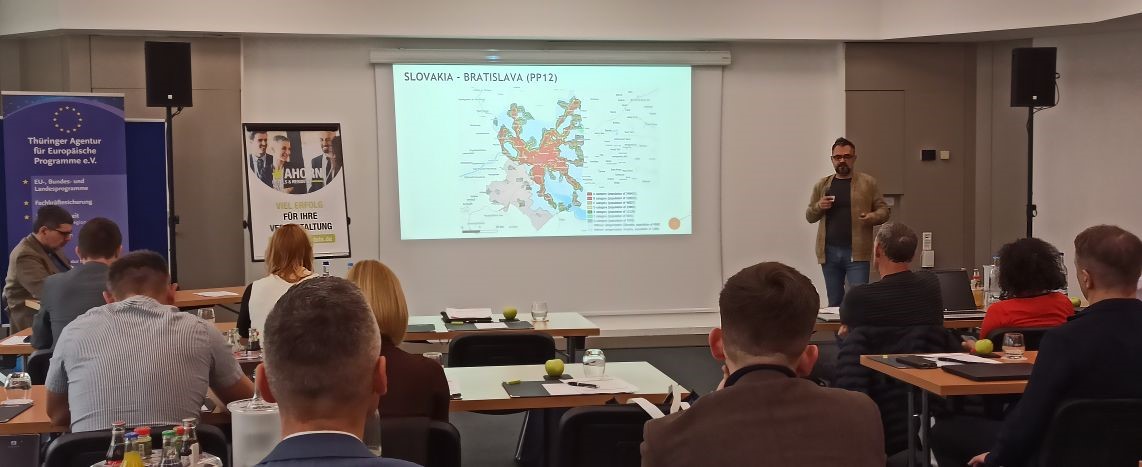
Partner Meeting No. 4 of the NUTSHELL@CE project (hybrid version), hosted by PP11/Crawinkel in Oberhof, Germany, took place on 21–22 April 2026 and brought together project partners for two intensive working days dedicated to sustainable mobility solutions for rural and peripheral areas. The meeting was officially opened by Mr. Daniel Fischer, Mayor of Oberhof. Throughout the meeting, the overall coordination and management on behalf of the Lead Partner was guided by Giovanni Fini (LP, Union of Municipalities of the Savio Valley River/Italy).
The meeting programme confirmed progress across all project work packages, with the respective WP leaders guiding and moderating the relevant thematic sections. Day 1 focused mainly on Work Package 1 and Work Package 2. Partners reviewed progress in capacity building, data collection and joint analysis, including the closure of Activity A1.5 based on the PTSQC status quo analysis and feedback to the planning tool under Activity A1.6. A substantial part of the programme was dedicated to local and regional action plans, where partners presented the outcomes of stakeholder workshops and demonstrated how their pilot actions are aligned with co-created visions and locally identified mobility needs. The day also included a study visit on the Ohra Valley Railway from Gotha to Ohrdruf, followed by a joint project dinner. Day 2 shifted attention to Work Package 3 and to the implementation of pilot actions across the partner territories.
The progress session confirmed that final pilot designs had already been submitted, pilots were moving into implementation and all pilot partners were expected to complete implementation and evaluation by the end of October 2026. The meeting highlighted a diverse portfolio of solutions, including the potential cross-border bus connection presented by BID-Bratislava Region (Slovakia), mobility hubs in Slovenia and Italy, timetable harmonisation on the Ljubljana–Graz corridor, virtual QR-based departure boards in Rzeszów (Poland), and the gradual reactivation of the Ohratal Railway in Germany. The thematic sessions were led by the responsible work package leaders and supported by partner presentations from the different pilot territories.
This contributed to a structured exchange of experience, a clear overview of implementation progress and a shared understanding of the next steps for the project consortium.
During the 4th Partner Meeting, short and concise video interviews were recorded with individual project partners, presenting their role in the project. These interviews will be further processed by No Gravity (Slovakia) into a serial communication format and published on the project website and on a dedicated channel in order to increase project visibility and strengthen external communication.
The event concluded with project communication updates delivered by No Gravity team, focused on activities already carried out under WP2 and on the next communication steps. Alongside the formal sessions, the meeting also created space for partner exchange, coordination of upcoming activities and informal discussion. The 4th Partner Meeting confirmed strong project momentum and provided a solid basis for the next phase of pilot implementation across Central Europe.