
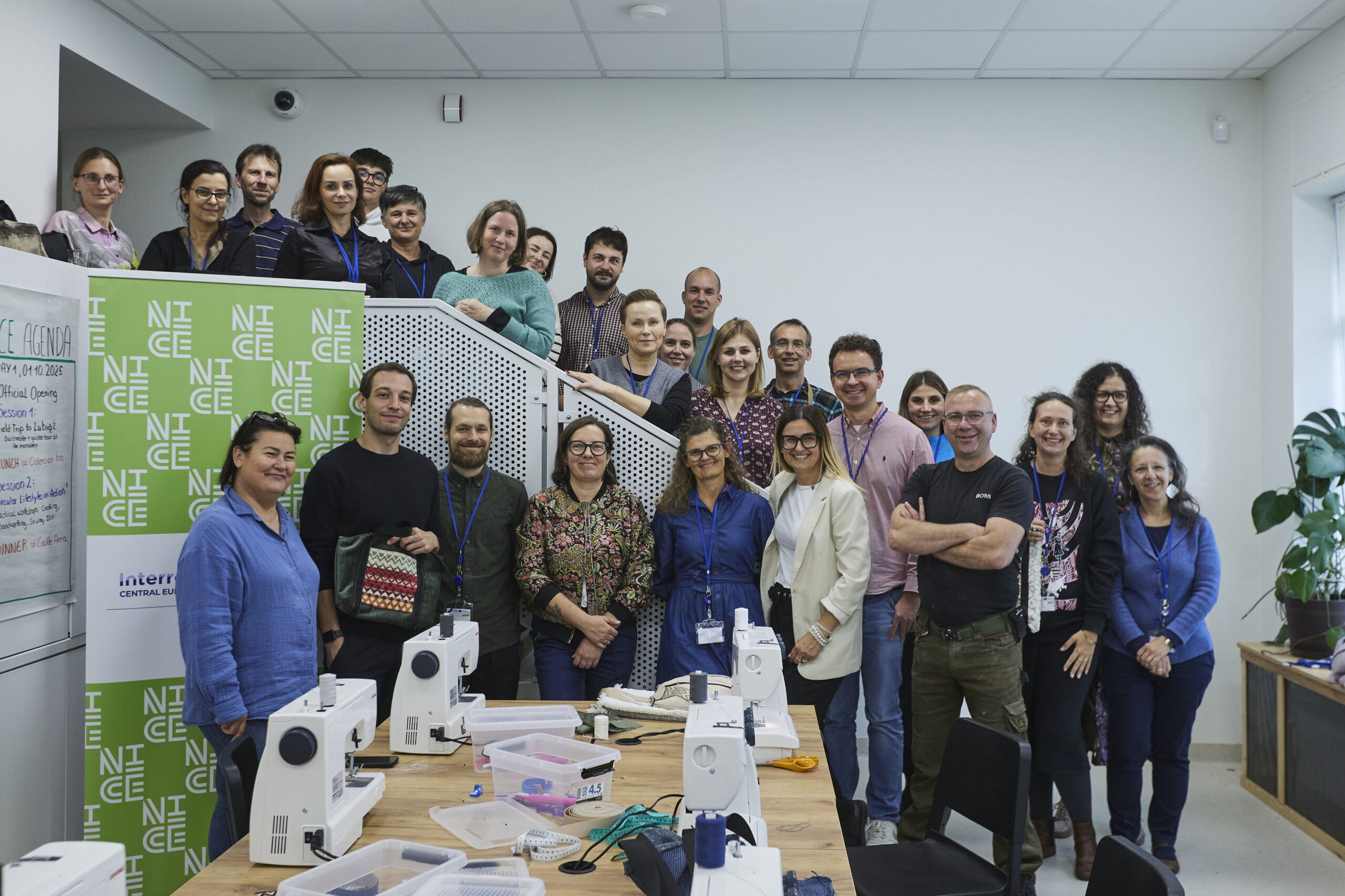
Over the past 3 years, partners from across Central Europe have worked together to tackle key challenges such as declining retail activity, the rise of online consumption and the need for more sustainable everyday practices. Through this collaboration, the project delivered a comprehensive set of practical tools, strategies and pilot actions that help bring circular lifestyles into the heart of city centres.
Among the key results are the Circular Lifestyle Monitor Tool, the Strategy Framework for Circular Lifestyles in Cities and the NiCE Solution Box, all designed to support municipalities, organisations and stakeholders in implementing circular solutions in practice.
These outputs, along with many more resources, are available on the NiCE Knowledge Platform: https://circularlifestyle.eu/
It is important to note that these results stem from the joint activities of all partners. During the first phase, partners assessed political measures, action plans, strategies, and programs supporting circular lifestyles across NiCE partner countries (Austria, Czechia, Germany, Hungary, Italy, Poland, Slovakia, and Slovenia). This research — conducted via stakeholder interviews and desk research — focused on specific pilot areas, including Bologna (Porto-Saragozza), Brzeg Dolny, Budapest (Újbuda), Jihlava, Graz, Košice, Ptuj, and Würzburg.
Additionally, partners evaluated sustainable consumption patterns and business models at the urban level. By analysing the needs and visions of target groups (cities, service providers, and existing networks), the project successfully identified key transnational challenges and opportunities.
The project also demonstrated its impact through pilot actions in partner cities, showing how circular approaches can revitalise urban spaces, strengthen communities and promote sustainable behaviour.
These experiences are complemented by educational materials, a Virtual Exhibition and a wide range of knowledge-sharing activities.
Partners were active in dissemination activities, various workshops have been organized in highly prestigious events, including the European Week of Regions and Cities 2025. As the NiCE project comes to an end, its results remain openly accessible to support further uptake, replication and scaling across Europe.
We invite all stakeholders to explore the Knowledge Platform and discover how circular lifestyles can be successfully implemented in their own contexts.
To learn more about the project and its achievements, watch the NiCE project video.