
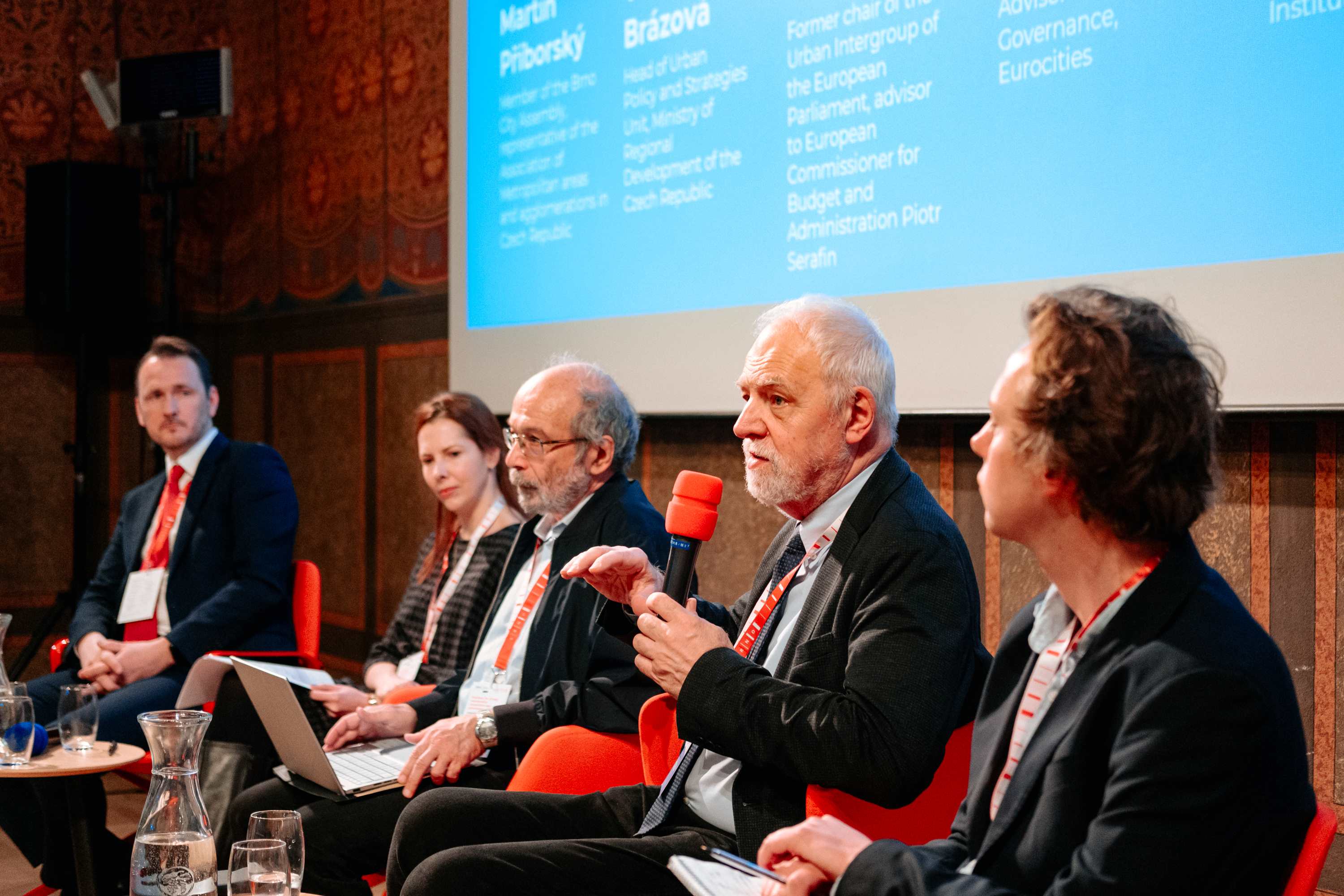
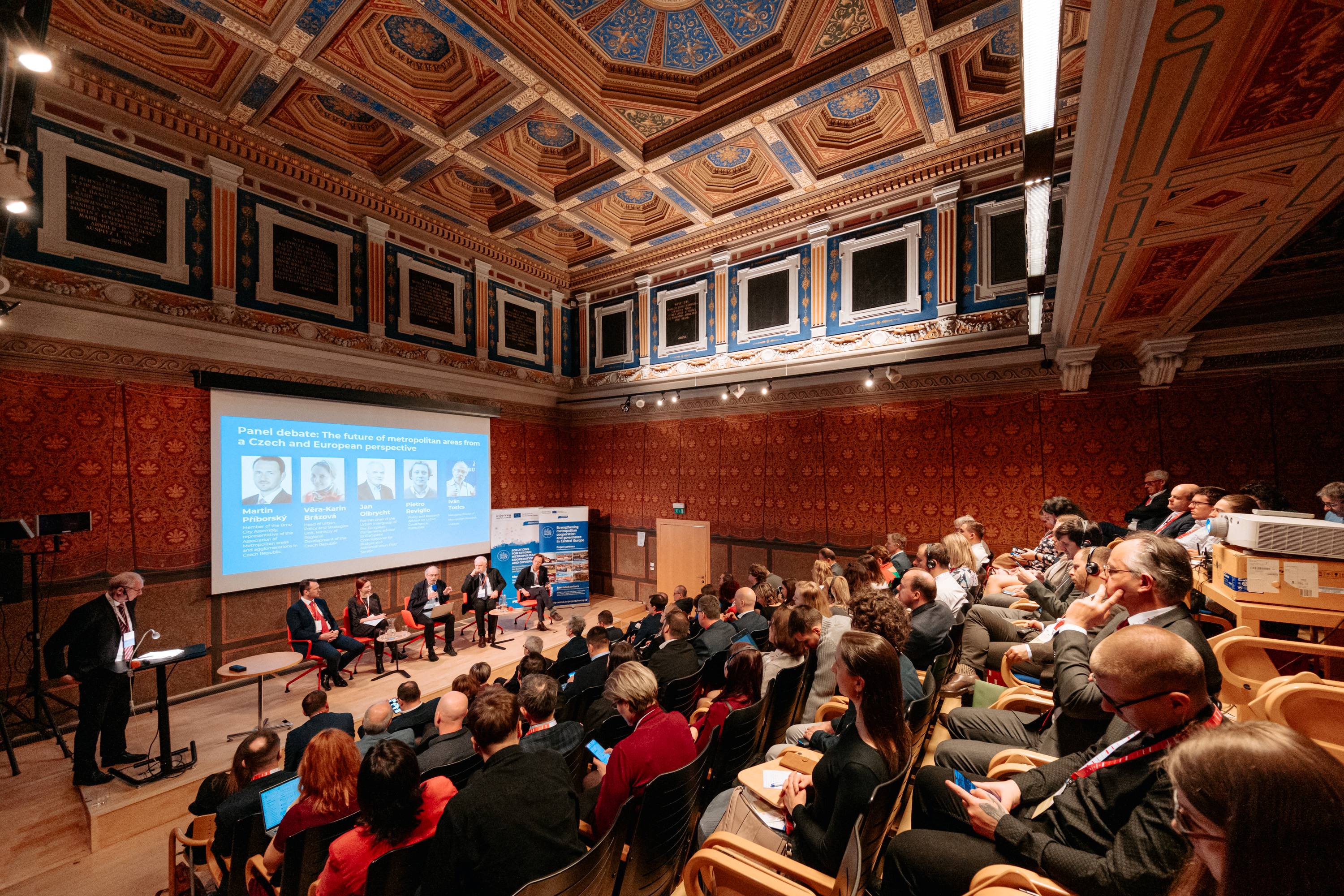
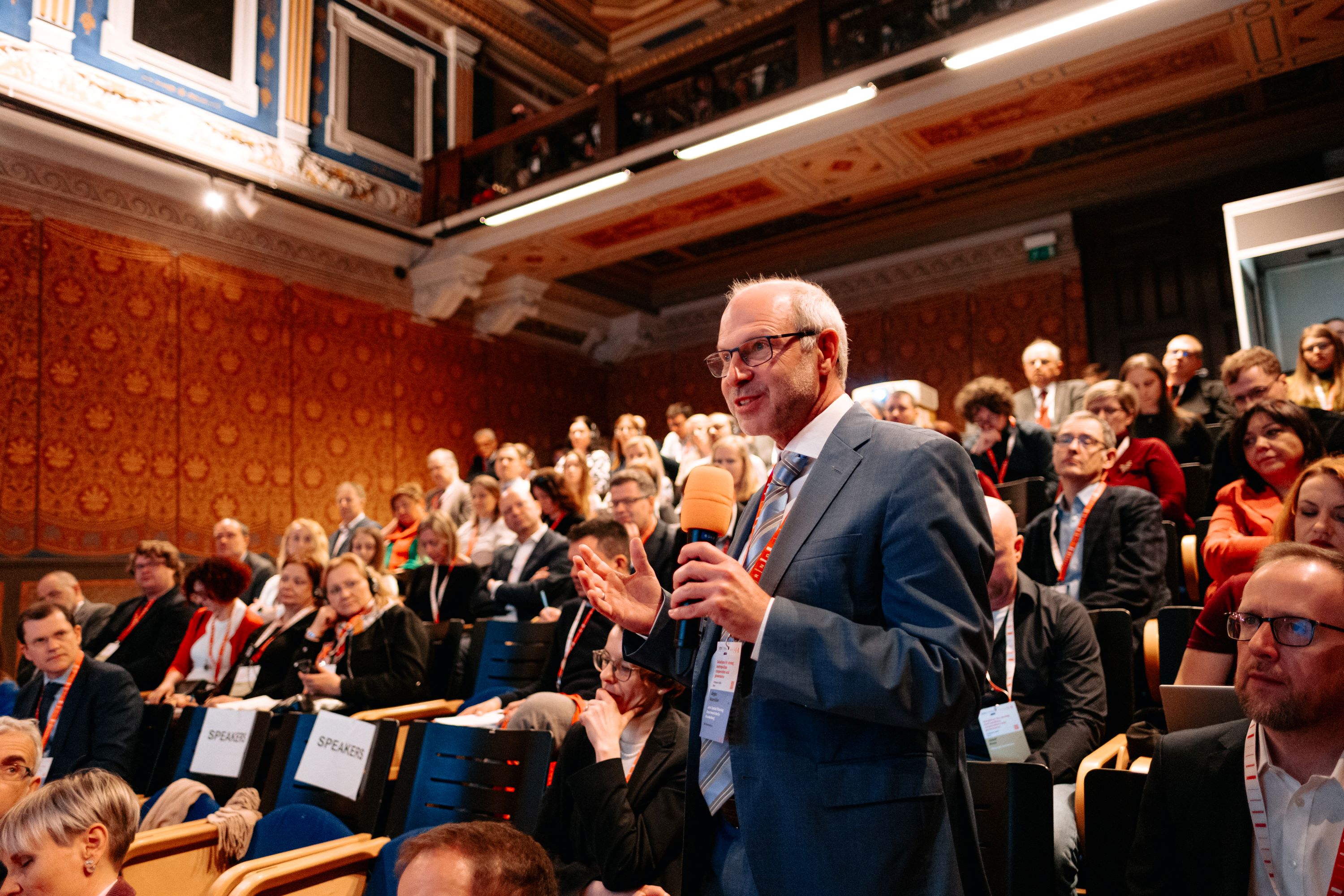
The conference, “Solutions for Strong Metropolitan Cooperation and Governance – Metropolitan Areas for European Cohesion and Growth,” took place at the Museum of Applied Arts, where the main results of the three-year project were presented. The conference focused on delivered solutions for strengthening metropolitan cooperation such as integrated public transport, support for local food production, participatory strategic planning, the development of prototype solutions to metropolitan challenges, and stronger stakeholder engagement. Participants discussed practical tools and approaches to metropolitan cooperation as well as the future of metropolitan areas from both Czech and European perspectives and took part in thematic workshops.
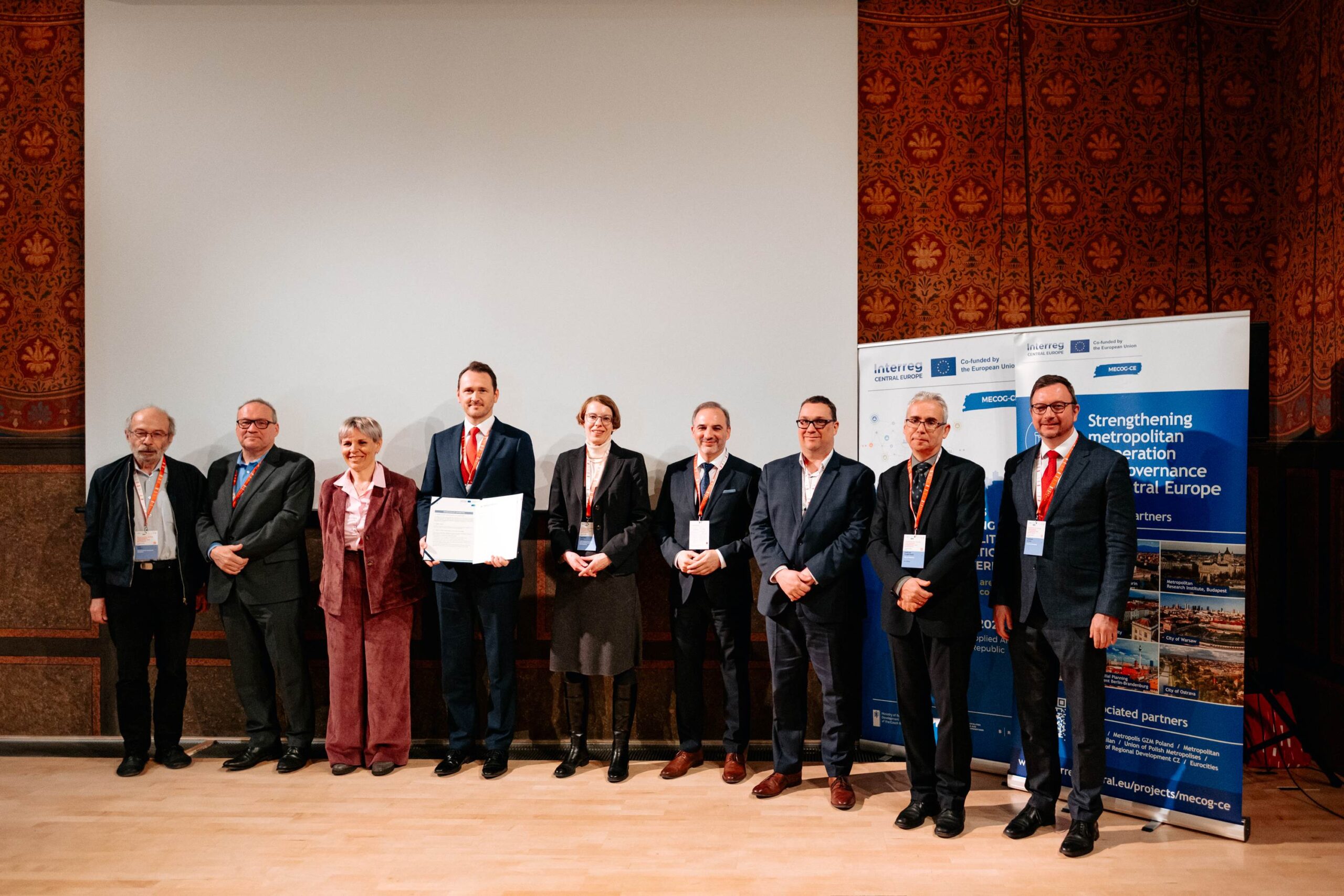
A key moment of the conference was the signing of the Memorandum of Cooperation by representatives of nine partner cities, metropolitan areas, and research institutions involved in the project (see below). By signing it, they confirmed their intention to continue cooperation beyond the project’s duration.
“Metropolitan areas are engines of economic growth, innovation, and quality of life, yet their role is still insufficiently reflected in European and national policies. By signing this Memorandum of Cooperation, we confirm that the collaboration established through the MECOG-CE project will continue beyond its official completion. Our cities will continue to support a stronger role for metropolitan areas, share experience, promote the project’s results, and collaborate on future international projects,” said Martin Příborský, Member of the Brno City Assembly responsible for strategic development and metropolitan cooperation.
More about the outcomes of the conference can be found here.
About the project
The MECOG-CE project (Strengthening Metropolitan Cooperation and Governance in Central Europe) ran from April 2023 to March 2026 and focused on strengthening metropolitan cooperation and governance. These are important dimensions of territorial development in Central Europe, yet they are often overlooked. Due to its focus and broad scope, the project was unique in the Central European context.
Its aim was to identify effective tools and best practices to strengthen metropolitan cooperation and to share experiences among metropolitan areas in Central Europe. Selected approaches were subsequently adapted to individual metropolitan areas, tested through pilot actions, and further developed into new solutions that were then implemented.
The MECOG-CE project brought together six metropolitan areas – Berlin-Brandenburg, Brno, Ostrava, Stuttgart, Turin, and Warsaw – along with academic and research institutions and several associated partners representing ministries and international organisations. Brno served as the lead partner, becoming the first city in the Czech Republic to coordinate a project under the Interreg Central Europe programme.
“Our goal was to raise the voice of metropolitan areas at both national and European levels and to increase awareness of this issue among relevant institutions. We wanted to strengthen the role of metropolitan areas and regions in shaping policies that support sustainable development,” added Mayor of the city of Brno Markéta Vaňková.
Over the three years, the project delivered 17 official outputs, published 32 articles, and engaged more than 300 experts and stakeholders through its online community. The project also included mapping best practices in metropolitan cooperation and governance – 76 in total. Key results include the creation of a Common Metropolitan Vision, the implementation of pilot actions testing selected best practices, the development of six new practical solutions for metropolitan areas in areas such as mobility, participation, and food cooperation, as well as the Strategy for Strengthening Metropolitan Cooperation and Governance in Central Europe and action plans prepared for all partner metropolitan areas.
The project also enabled metropolitan areas to exchange experiences. In addition to seven international meetings, the partners organised for example seminar at the European Parliament.