
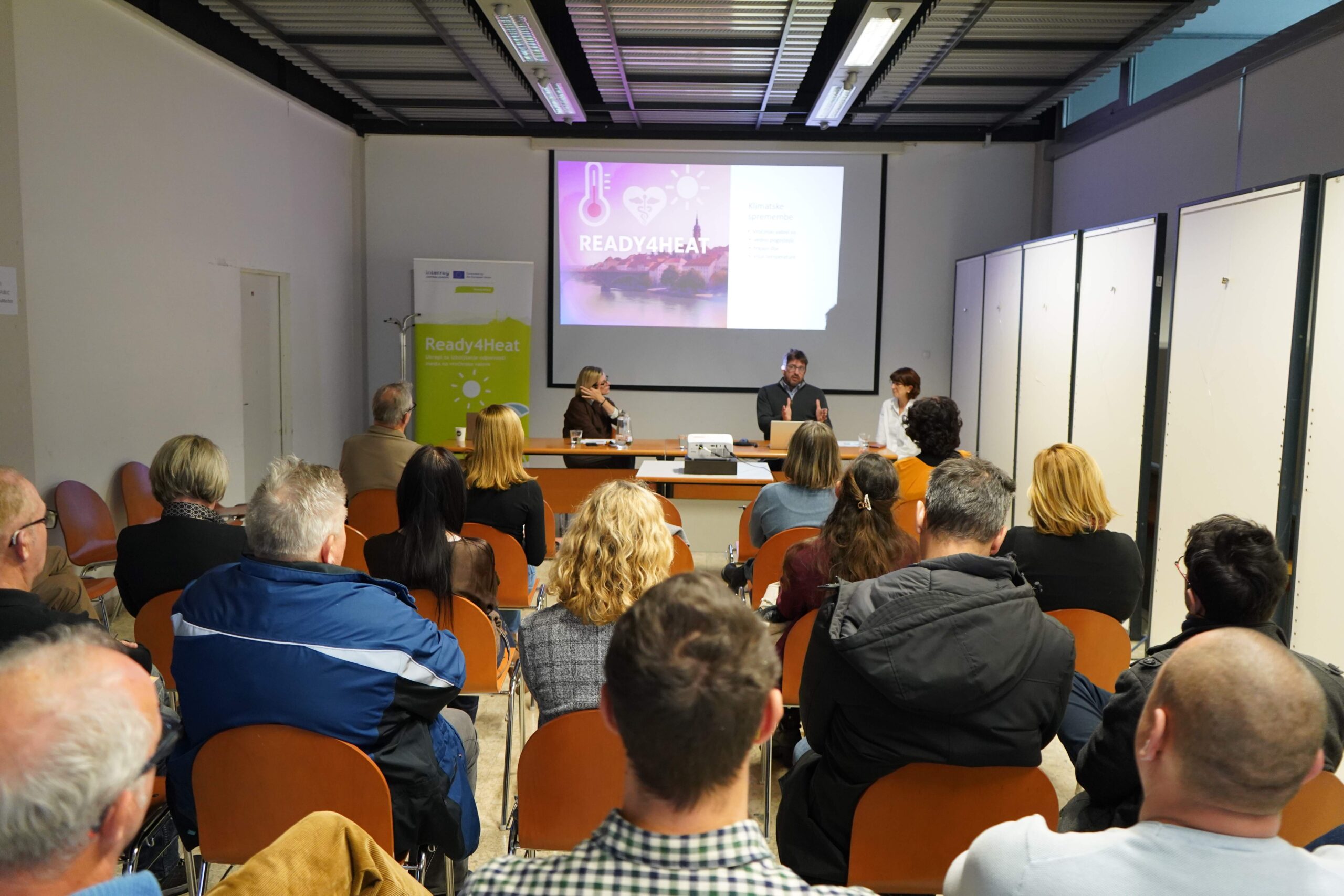
Final Conference of the Ready4Heat Project Held in Maribor
The final conference of the Ready4Heat project took place on 2 December 2025 in Maribor, marking an important milestone in the project’s efforts to improve urban resilience to heat waves and protect vulnerable populations. The event brought together stakeholders, municipal departments, public institutions, non-governmental organizations, and experts, providing a platform to present the project’s key activities, results, and long-term impact.
Key Project Results and Highlights
Among the central outcomes presented was the Maribor Heat Action Plan, a strategic framework designed to guide the city in preventing and mitigating the health and environmental impacts of heat waves. The plan integrates early warning systems, urban planning measures, and targeted actions for vulnerable groups.
Participants were also introduced to a list of recommended tree species suitable for the Maribor area, aimed at supporting urban greening efforts and improving thermal comfort in public spaces. This was complemented by guidelines for architects, urban planners, and construction designers, providing concrete recommendations on how to integrate greenery into urban redevelopment and public space reconstruction.
Another important focus of the project was direct support for citizens. The conference presented training activities for vulnerable groups, as well as health protection guidelines that explain how individuals can reduce heat-related health risks during heat waves. In addition, the project developed and tested a heat warning system to improve preparedness and timely response during extreme temperature events.
Practical, on-the-ground interventions were also highlighted. These included the installation of wooden pergolas with kiwi seedlings and grapevines in kindergartens, creating natural shade for playgrounds and improving outdoor comfort for children during hot summer months. The conference also presented best practices in urban greening and public space design, aiming to inspire continued cooperation between stakeholders and municipal administrations. These examples showed how coordinated planning and cross-sector collaboration can lead to healthier, cooler, and more inclusive urban environments.
Addressing Vulnerability and Health Inequalities
A key part of the conference discussion focused on vulnerable population groups, who are often also socio-economically disadvantaged. These groups tend to live in hotter neighborhoods, in lower-quality housing, work in more heat-exposed occupations, and have more limited access to healthcare services. As emphasized during the event, general or universal heat protection measures are not sufficient to address these unequal conditions.
The Ready4Heat project demonstrated that tailored, targeted approaches are essential. By involving multiple sectors—including city administration, healthcare providers, social services, urban planners, and non-governmental organizations—the project enables the development of measures that are better adapted to real-life needs. This integrated approach not only improves heat resilience but also contributes to reducing unfair health inequalities within urban populations.