
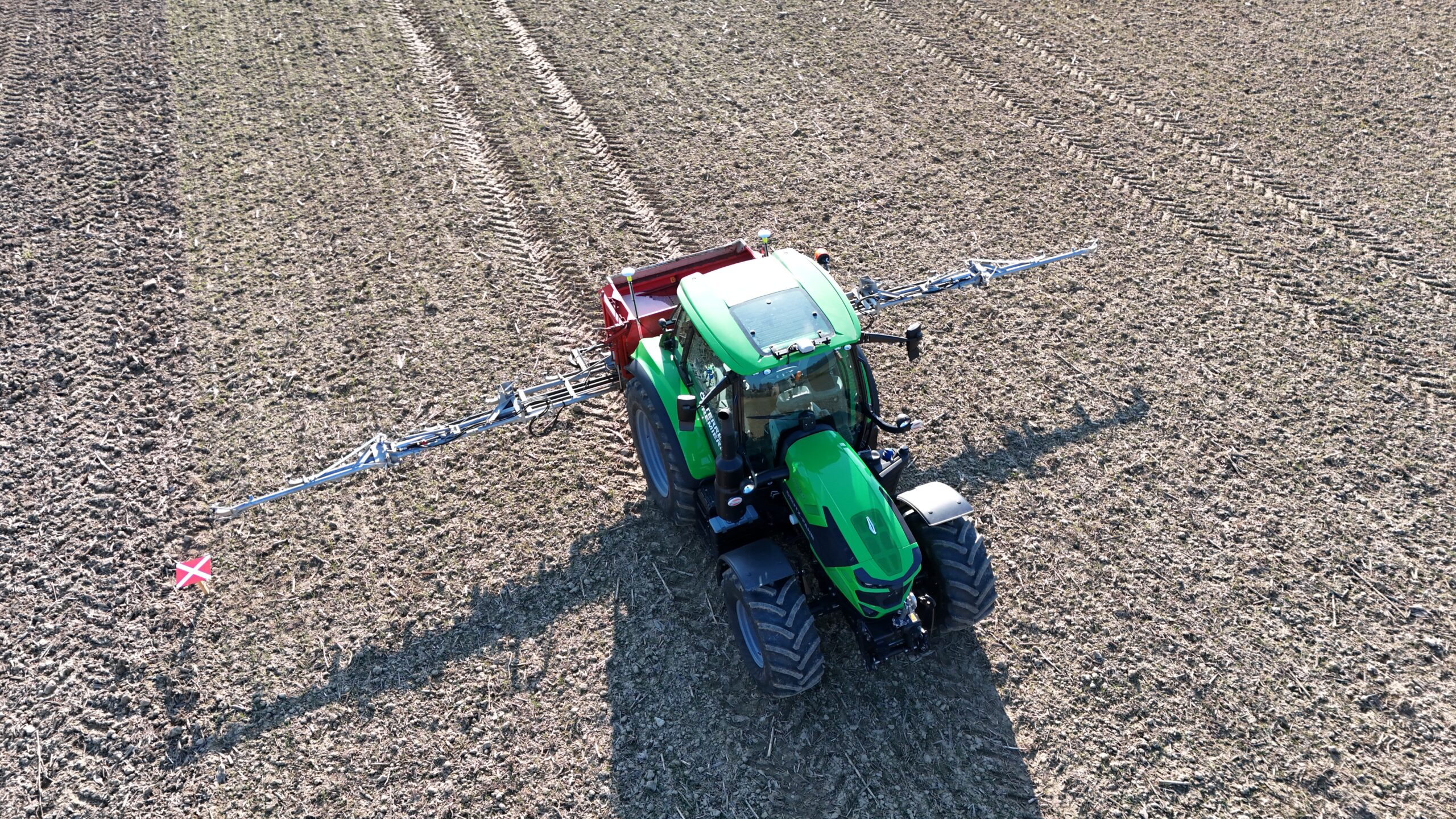
Precision farming relies on agricultural software and machinery being able to exchange data. A prescription map may define fertiliser or seed rates for each area of a field, but preparing the information for use by a machine requires compatible formats and accurate task files. For farmers and advisors, the technical complexity can be a barrier to everyday use.
The Agri-Digital Growth Living Lab led by Josephinum Research in Wieselburg, Austria, examined how agricultural data could become easier to understand and use. The work focused on site-specific farming, with practical demonstrations of data preparation and exchange for variable-rate fertilisation and seeding.
At the centre of the Living Lab was IsoCraft, a software environment for working with ISOXML task files. ISOXML files hold information exchanged by agricultural software and machinery, including field boundaries, prescription maps and instructions for field operations. Their structure can be difficult to interpret without specialist knowledge.
Through IsoCraft, users could view, inspect, edit and validate agricultural data in a visual interface. Maps displayed field boundaries and management zones, helping participants check the spatial information behind a machine task. The platform allowed them to examine the operation parameters needed for variable-rate applications.
Josephinum Research developed a demonstration environment with thematic stations for agricultural data collection, machine communication, map visualisation and task-data management. Interactive displays and digital interfaces helped participants follow the steps needed to connect a field map with an agricultural operation.
The demonstration modules covered fertilisation and seeding at rates adapted to different areas within a field. Participants could explore how prescription maps, field boundaries and machine-operation parameters were prepared and checked through IsoCraft. Additional components linked digital processes with machinery operations to demonstrate data transfer between farm management platforms and field equipment.
Making complex digital processes accessible to people with different levels of experience was a central part of the Living Lab’s work. Visual interfaces, workshops and practical demonstrations helped farmers, advisors, students, software developers and machinery manufacturers understand how agricultural data is prepared, checked and exchanged. Participants worked with the tools and discussed their use in everyday farming.
The Living Lab provided a practical learning environment for agricultural data handling, digital maps and machine communication. Mobile components were presented at the Wieselburg Fair, held from 28 to 31 May 2026. During the school programme on 28 May, students learned about Agri-Digital Growth and explored technologies used in digital agriculture.
The work carried out through Agri-Digital Growth lays the groundwork for further development, including the integration of real-time sensor data and automated decision support. The demonstration methods developed in Wieselburg open opportunities for training and applications in crop protection, irrigation management and autonomous machinery.
At Josephinum Research, the project established a shared space where agricultural data becomes easier to understand and use, supporting the skills and cooperation needed for the next steps in precision farming.