
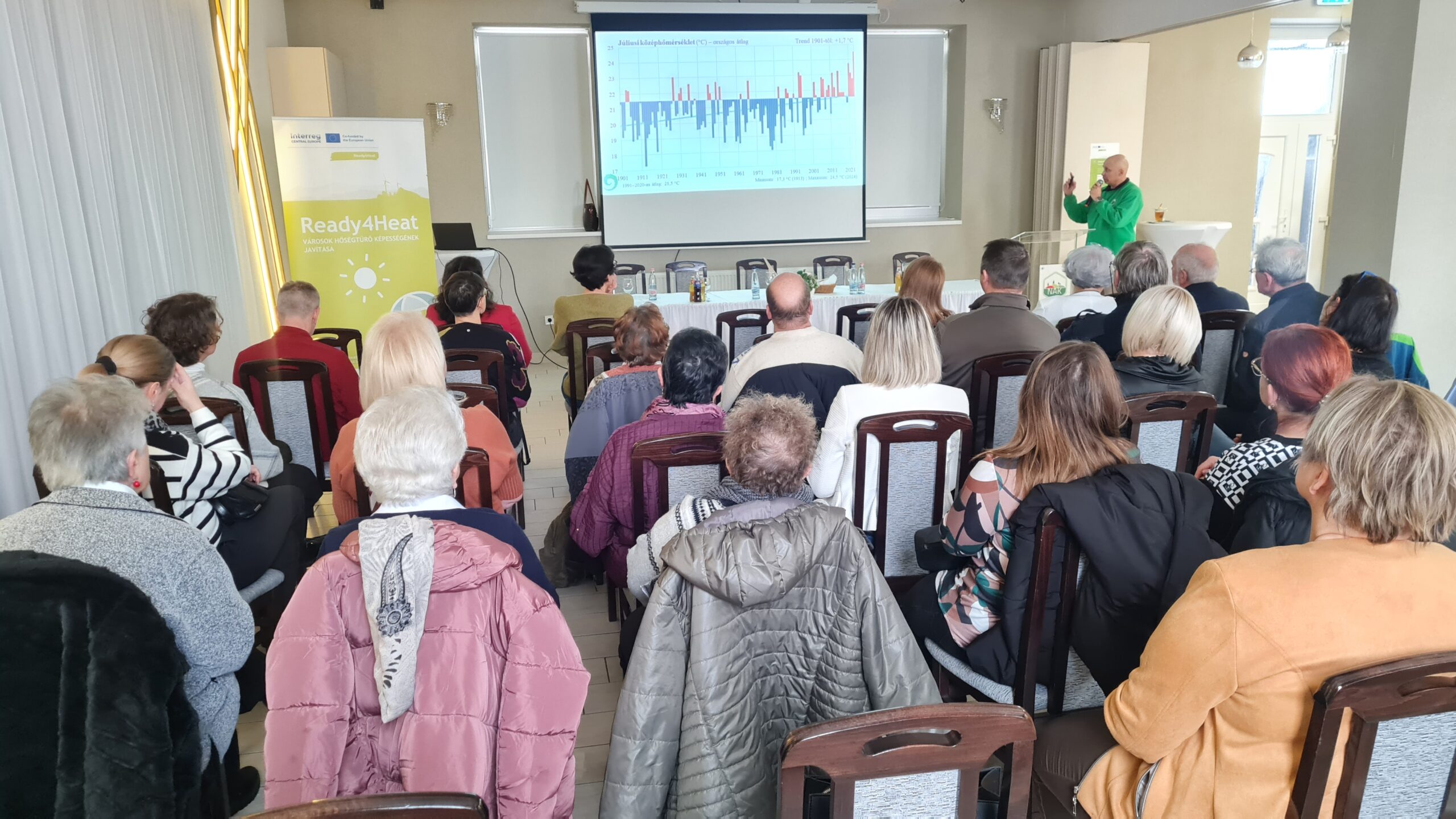
The event was opened by Mayor Göröghné Bocskai Éva, who emphasized in her welcome speech that heatwaves pose serious health risks, particularly for the most vulnerable groups, and stressed the importance of local governments proactively preparing for periods of extreme heat as soon as possible.
During the presentations, the Heat Action Plan was introduced, outlining short-, medium-, and long-term measures developed through collaborative thinking with stakeholders.
Participants also learned about 23 shaded “cooling islands” established across Hajdúböszörmény, designed to reduce the urban heat island effect and provide a more comfortable microclimate for residents. Feedback from citizens and public institutions confirmed that well-designed, plant-based shading provides tangible, everyday benefits to the local community. Particular emphasis was placed on the success of the initiative at the local elderly home, where the shading islands have proven very popular, and residents have actively participated in their maintenance, providing them with opportunities for a more engaged community life.
Special emphasis was also placed on the experiences gained through involving local stakeholders. The presentation underscored that successful adaptation is only possible through the cooperation of the municipality, institutions, civil organizations, and residents. The active participation of stakeholders and their valuable feedback not only supported planning but also ensured that the solutions included in the Heat Action Plan are truly tailored to local needs.
The event also highlighted the role of nature-based solutions, which represent effective and sustainable long-term tools in combating heat. The creation of green spaces, parks, pergolas covered with climbing plants, rain gardens, tree-lined streets, green façades, rooftop gardens, and similar interventions all help reduce perceived heat and the urban heat island effect, improve air quality, enhance biodiversity, and make cities and settlements more livable.
Although the Ready4Heat project officially concludes at the end of February 2026, the experiences gained and the implemented developments will continue to serve the health and well-being of Hajdúböszörmény’s residents. Moreover, the city’s example can serve as a model for other municipalities. The closing event also emphasized that effective adaptation to the impacts of climate change requires collaborative thinking, local cooperation, and the application of nature-based solutions.
Local TV news: https://www.youtube.com/watch?v=gFM8PevfeAI