
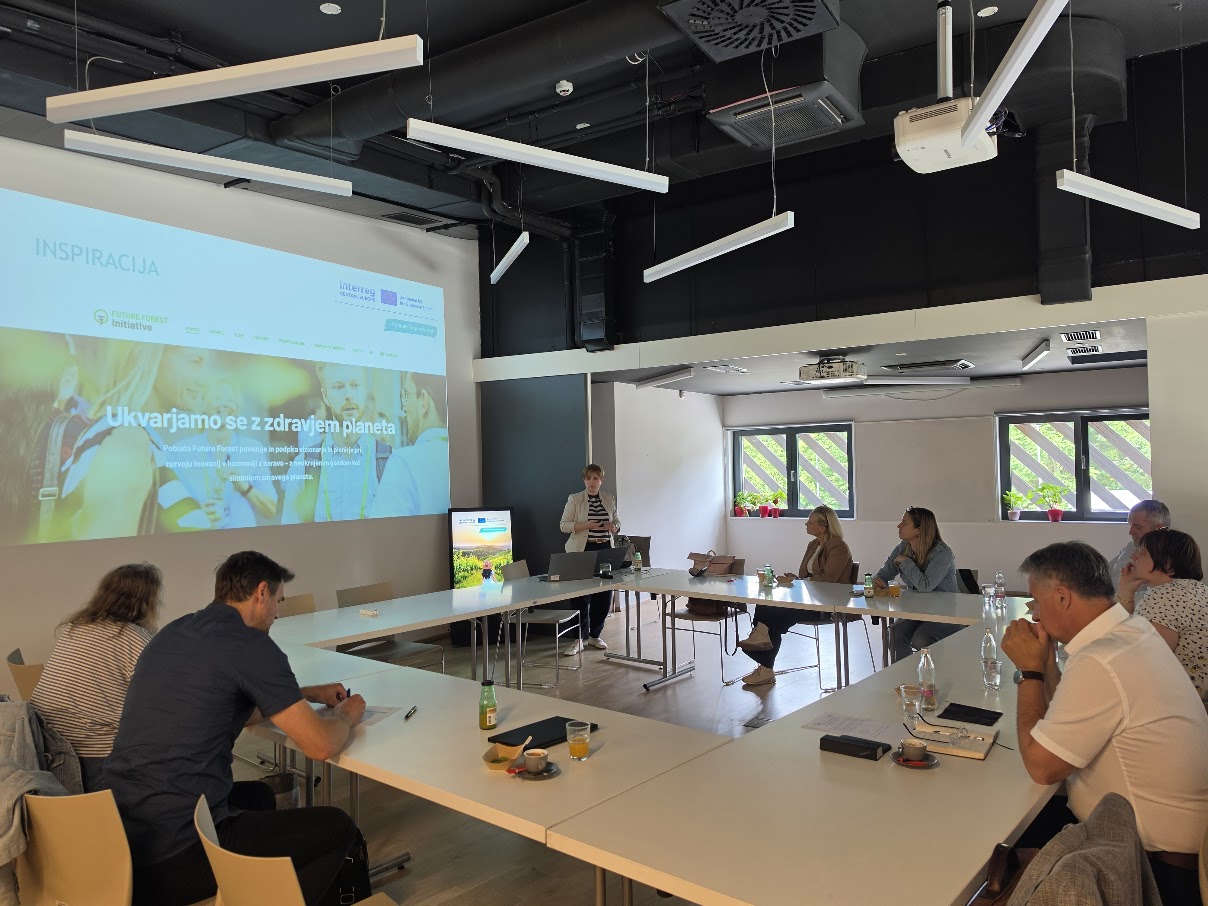
As part of the international Pannon Future Forest project, a meeting with key stakeholders was held on 12 June 2026, focusing on the many untapped potentials in the field of forestry. The main purpose and long-term objective of these efforts is to promote and develop new entrepreneurial initiatives in the forest-based bioeconomy. Participants agreed that modern forests are no longer merely traditional sources of timber raw materials, but are becoming dynamic platforms for the development of entirely new and innovative business models that respond to today’s environmental and economic challenges.
Based on constructive dialogue with stakeholders, key strategic areas were identified where we aim to significantly strengthen entrepreneurial activity and innovation in the region in the future. Priority areas include sustainable forest management supported by innovation and digitalisation, the introduction of agroforestry practices, and modern timber construction combined with wood-based design. Emerging carbon and biodiversity markets and nature-based solutions also offer significant potential for the region, opening the door to new ecological ideas combined with modern entrepreneurial skills.
Taking a comprehensive approach to the forest environment, stakeholders also identified environmental education and wellbeing as important pillars of development, as well as the integration of non-wood forest products into innovation within the food industry and the development of regenerative tourism, which goes beyond conventional tourism concepts.
By connecting these diverse yet interrelated areas, the Pannon Future Forest project is laying a solid foundation for the region’s sustainable transition towards a circular bioeconomy based on respect for natural resources and the stimulation of the local economy.
The project is implemented within the framework of the Interreg Central Europe Programme.