
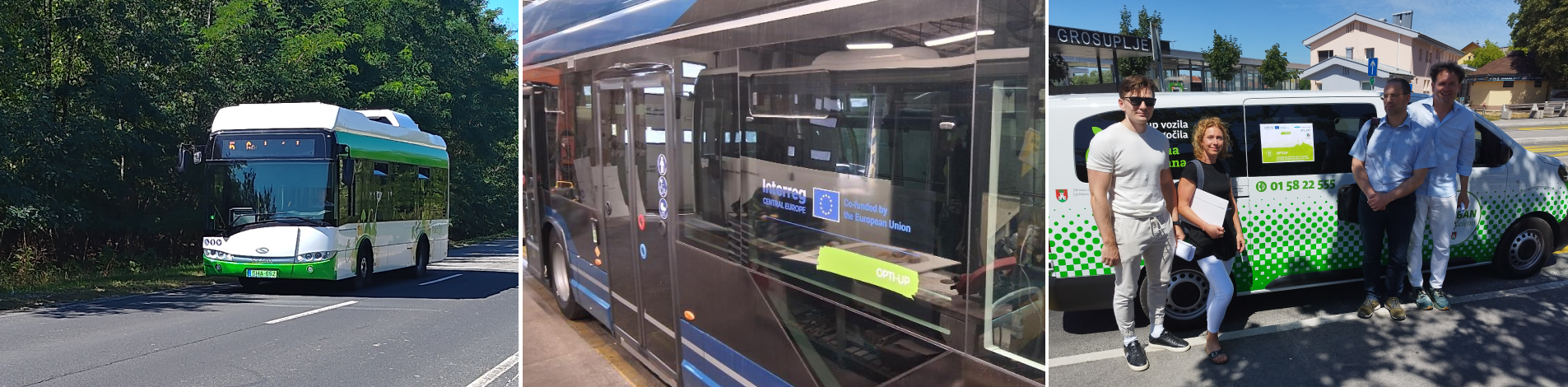
The OPTI-UP project has reached a key milestone with the launch of six pilot actions designed to improve public transport systems and promote sustainable mobility across Central Europe. Implemented in six partner regions, these pilot activities aim to test innovative solutions that respond to local challenges while contributing to shared transnational goals.
Each pilot action addresses one of three thematic fields central to OPTI-UP:
1. Demand Responsive Transport (DRT) Planning
Two pilot regions are testing flexible, on-demand transport services that complement the existing public transport networks. These solutions aim to improve accessibility in areas with lower population density, ensuring better connections for passengers while reducing unnecessary vehicle mileage.
Grosuplje, Slovenia
In Grosuplje, the pilot redefines the existing 72 municipal line from a regular to a combined regular/DRT service. Four low-demand trips per day will operate only upon passenger requests via a call centre, using electric vans to reduce emissions. The pilot also optimizes PT vehicle use, driver assignments, and provides real-time information for users, balancing efficiency with accessibility for rural communities.
Modena, Italy
The Modena pilot introduces a new reservation app for the existing DRT service, enabling users to directly book rides via mobile phone. The pilot will optimize routing, add new stops, and expand permitted roads to better connect passengers to the city’s public transport network. Goals include increasing ridership, reducing no-shows, and improving accessibility and operational efficiency.
2. Alternative Vehicle Energy Efficiency
Two additional pilots focus on transitioning to low-emission vehicles and optimizing fleet energy efficiency. By introducing new technologies and operational models, these pilots support the shift toward greener mobility and reduced environmental impact.
Osijek, Croatia
The Osijek pilot introduces a new bus line connecting densely populated areas with industrial zones, improving previously complicated connections. By linking residential and employment areas more efficiently, the pilot will enhance network connectivity, reduce transfers, and test the correlation between modelled benefits and real-world outcomes.
Paks, Hungary
The Paks pilot focuses on improving accessibility and connectivity within the city by reorganizing local bus services and introducing new routes to previously unserved areas. By expanding coverage and enhancing transfer options, the pilot aims to better meet passenger needs and promote more sustainable and inclusive urban mobility.
3. Conventional Public Transport Network Optimization
The remaining two pilot actions concentrate on improving existing transport networks. Through better planning, digital integration, and service adjustments, these pilots enhance reliability, connectivity, and user experience for daily commuters.
Pécs, Hungary
Pécs introduces new bus lines and stops in previously unserved areas, providing sustainable mobility options for employees. By deploying electric buses, the pilot aims to increase PT ridership, reduce car dependency, and cut emissions, while improving access to jobs and integrating the industrial area into the city’s transport network.
Český Krumlov, Czech Republic
The Český Krumlov pilot deploys electric minibuses connecting residential areas with the city center and regional transport links. The pilot addresses local mobility needs, improves air quality, reduces noise in historic zones, and ensures inclusive transport for seniors and people with reduced mobility, while collecting operational data for future network optimization.
Together, these pilot actions form the backbone of OPTI-UP’s mission: delivering practical, scalable solutions that local authorities and operators can replicate across Central Europe. The insights and data collected during testing will directly inform the development of OPTI-UP’s Transnational Toolkit – a comprehensive digital planning resource to support smarter, greener public transport across the region.
Stay tuned as we share updates and success stories from each pilot area, showcasing how OPTI-UP is driving innovation and shaping the future of mobility in Central Europe.