
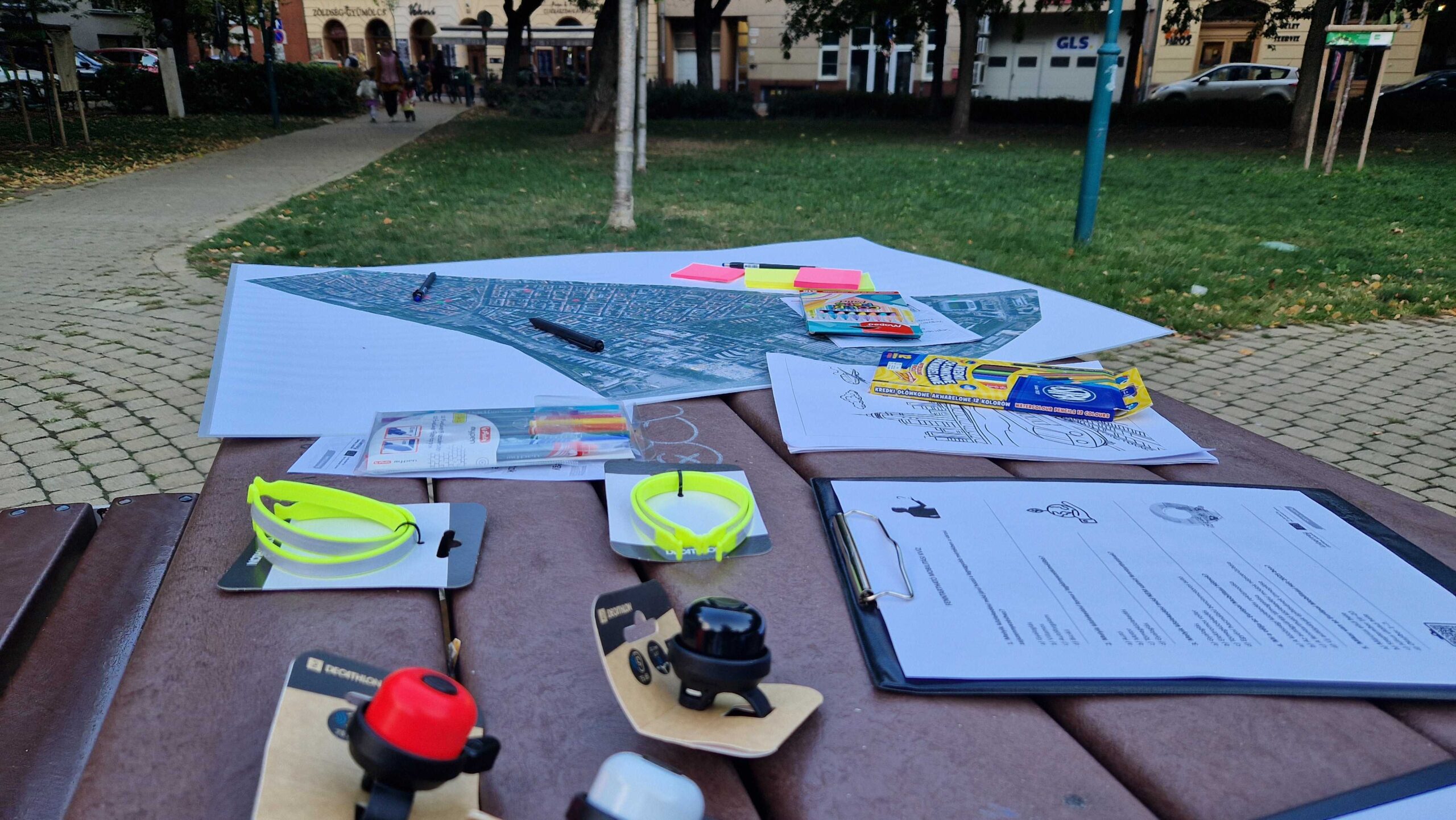
Within the framework of the Interreg CE NXTLVL Parking project, the Municipality of Ferencváros (9th district of Budapest, Hungary), together with Mobilissimus Ltd., implemented a citizen pilot focusing on public engagement. Citizen involvement, awareness-raising and the dissemination of knowledge related to sustainable urban mobility are supported through the “Travel Greener!” subpage of the Green Ferencváros website, which serves as the primary communication platform, along with its dedicated Facebook page. In addition, as part of the citizen pilot, a research project and an associated co-design process were launched. Their main objective was to explore opportunities for developing future public cooling points that could help make summer heatwaves more bearable for both residents and visitors. The research project examining the implementation of public cooling points consisted of three main elements:
- an online, map-based survey aimed at identifying problems and collecting suggestions;
- three co-design events with on-site activities;
- focus group discussions to better understand individual motivations and preferences.
The resulting study, entitled “Proposed solutions for increased (public space) heat perception caused by climate change” goes beyond cooling points and addresses a wide range of measures aimed at mitigating the impacts of heatwaves, including:
- basic measures (greening, shading, improving water availability);
- opportunities for public institutions and residential buildings;
- issues to be represented by the Municipality at national level;
- general measures related to environmental awareness and responsibility;
- strategic directions for transport and public space management.
The main conclusion of the participatory process is that residents clearly express a demand for a greener and more liveable urban environment, while also recognising the challenges and limitations of such transformations. It is the responsibility of the municipality to address these challenges using appropriate tools and approaches. This study aims to provide guidance and support in this process.