
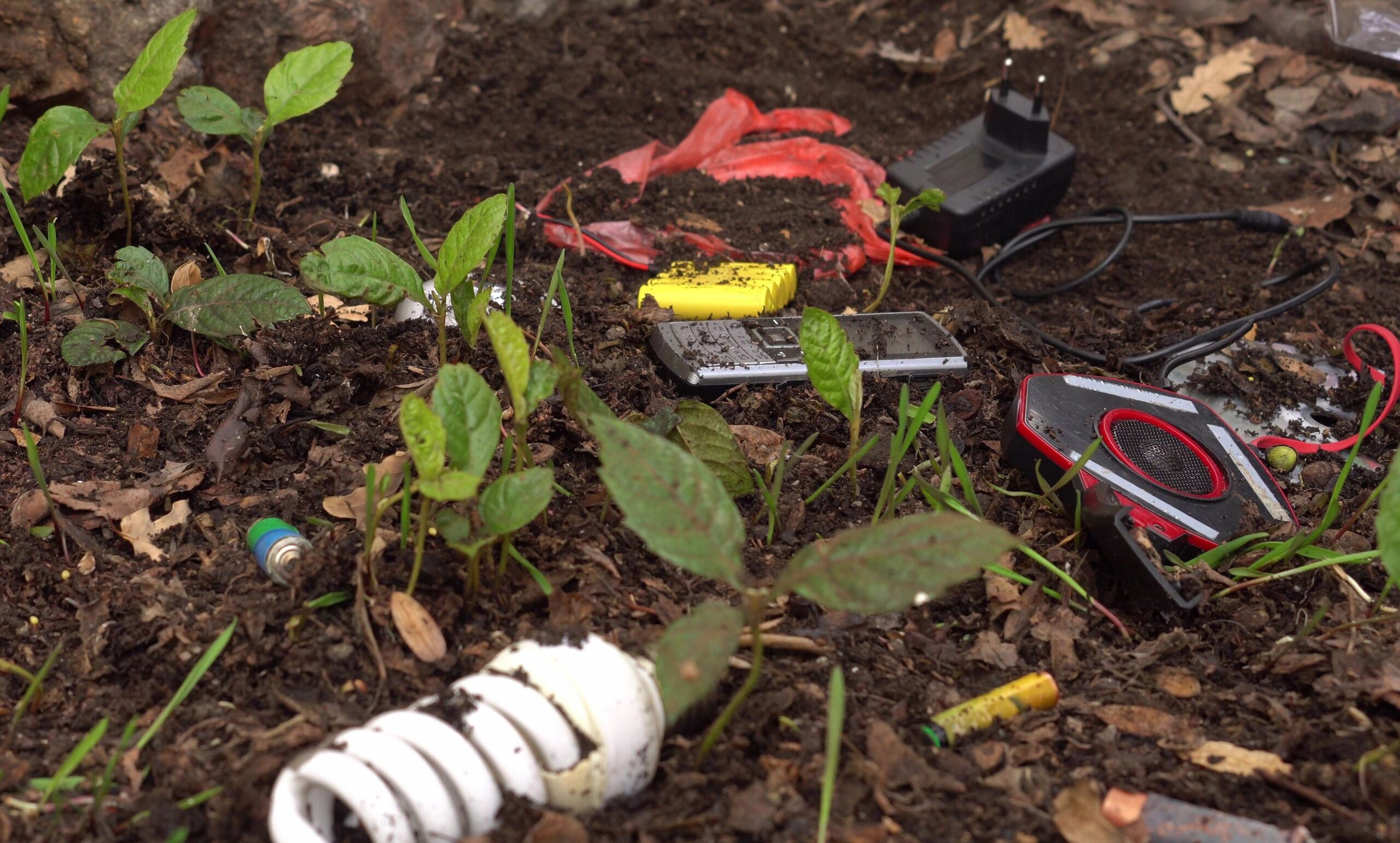
The electrical and electronic equipment (EEE, 2023) sector is one of the fastest-growing and most problematic industries for sustainability. Devices like smartphones, laptops, and home appliances are central to daily life, yet their lifespans are short and the waste they generate is staggering (EEE, 2023). Electronics both enable innovation and connectivity but also consume critical raw materials and produce e-waste that threatens environmental and social stability (Arup, 2019). Addressing these challenges requires not only policy and technology but also a cultural shift, especially from younger generations who will shape and inherit these futures.
States can regulate product lifespans, repairability, and recycling obligations (EEE, 2023). Yet large tech companies often influence consumer behavior more strongly than governments (Bauwens et al., 2020). Apple, Samsung, or Googledecide how long devices receive updates, how easily they can be repaired, and whether spare parts are available. For circularity to succeed, responsibility must be shared: policymakers must create frameworks, companies must redesign business models, and consumers, particularly younger ones, must value quality over quantity. Without this bottom-up change, regulation alone will not be enough.
Scenario frameworks describe futures like “circular modernism,” where centralized, technology-driven systems, digital product passports, modular design, AI-enabled recycling, form the backbone of circularity (Bauwens et al., 2020). These tools increase supply-chain transparency and resource recovery, but their success depends on corporate cooperation. Too often, companies resist repair systems or restrict spare parts. A stronger approach would include in-house repair networks, trade-in schemes that genuinely repurpose devices, and subscription models that extend lifespans rather than accelerate turnover.
Another pathway, “peer-to-peer circularity,” envisions a decentralized system of community repair spaces linked with digital platforms, where spare parts are shared or 3D-printed (Bauwens et al., 2020). For my generation, this idea doesn’t feel abstract at all, we’re already used to swapping things on Vinted, Depop, or Marketplace. When it comes to clothes or furniture, second-hand feels normal, even cool. But with electronics, it’s different. Most of my friends still see buying the newest iPhone or laptop as the safer (and more exciting) option. Even if repairing something is technically cheaper, it’s often seen as not worth it, new products are assumed to work better and last longer. On top of that, big tech companies often discontinue software updates for older devices, making people feel like fixing them is pointless. So even when there’s awareness about sustainability, convenience and perceived value usually win out. That mix is exactly what makes the cultural shift so tricky.
Even with the best technologies, circularity cannot succeed without this generational mindset change. Younger consumers show strong awareness of sustainability, yet the desire for novelty remains (EEE, 2023). Writing this article made me realize how complex the EEE sector really is: it’s not just about policies or technological fixes, but also about everyday decisions, whether I repair my phone, sell it on Vinted, or rush to buy the latest model. For circularity to work, the social meaning of electronics must change: owning fewer devices, choosing durability, and taking pride in repairability should become the norm.
Ultimately, no single actor can solve the EEE challenge. States can set standards, companies can redesign business models, and technology can enable repairability and transparency. But without cultural change, these efforts risk remaining surface-level fixes. The most hopeful vision is one where electronics are durable, repairable companions in a longer cycle of use, supported by fair policies, responsible corporations, and a culture that no longer equates newness with value.
Written by: Maja Arament, Student at the University of Amsterdam
References
Arup. (2019, November). 2050 Scenarios: Four plausible futures. Arup.
https://www.arup.com/insights/2050-scenarios-four-plausible-futures/
Bauwens, T., Hekkert, M., & Kirchherr, J. (2020). Circular futures: What will they look like?
Ecological Economics, 175, 106703. https://doi.org/10.1016/j.ecolecon.2020.106703
EEE. (2023). Zrównoważony rozwój – warsztat. Internal workshop material.