
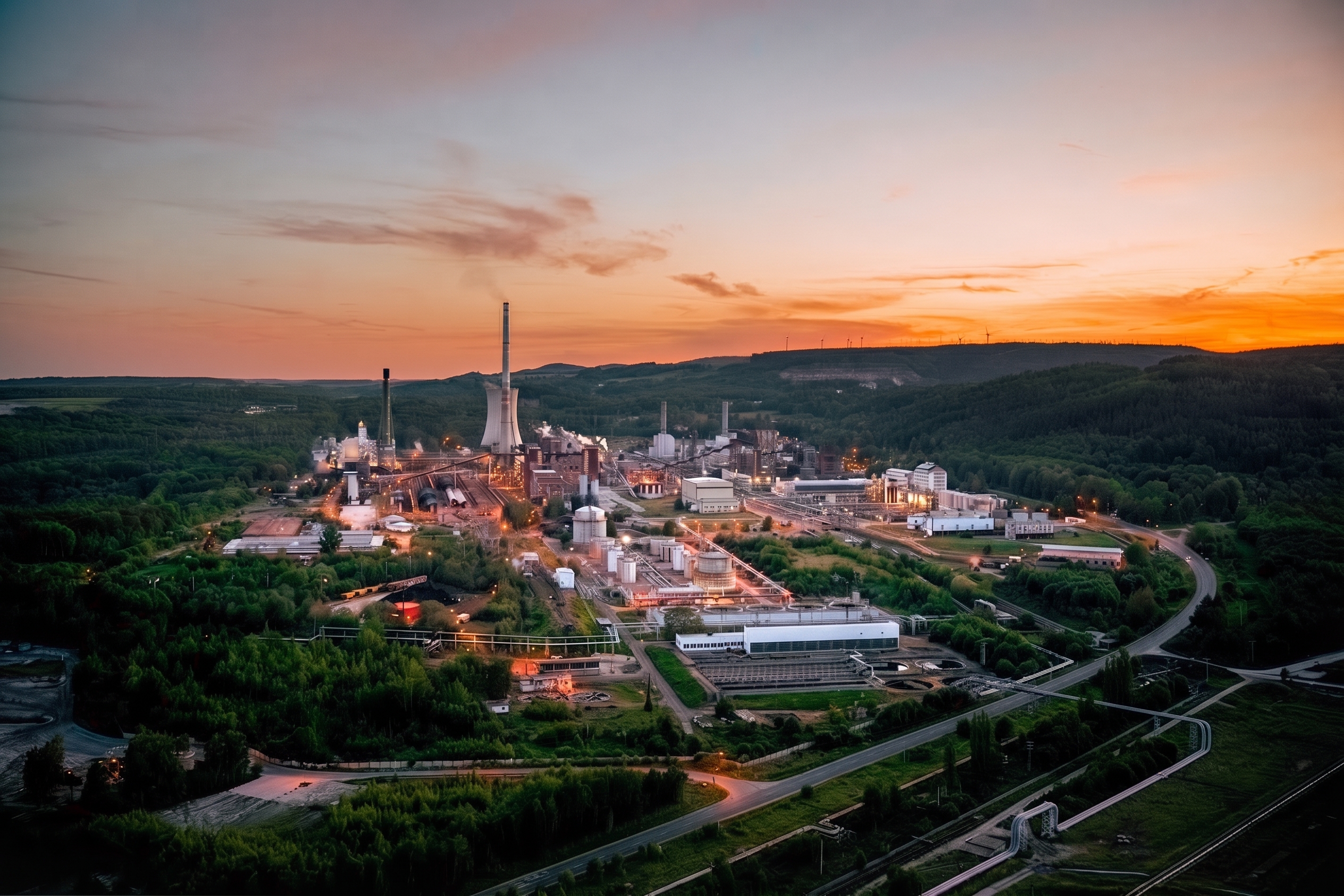
Within the HEAT 35 pilot project and the Feasibility Study, comprehensive resource mapping was conducted to evaluate the potential for local renewable and alternative energy sources. Photovoltaic power plants were evaluated for installation on the flat roofs of the 17 heat exchange stations, providing approximately 1.046 MWp of total capacity. The yield analysis shows an annual production of 1,046.52 MWh, delivering a highly positive Net Present Value (NPV) of +69.0 million CZK over 20 years when the electricity is consumed internally by pumps and heat pumps. Industrial heat pumps, specifically air-to-water units with a maximum output of 51 kW and SCOP of up to 4.26, were assessed for efficient domestic hot water preparation and also demonstrated strong economic viability, with an NPV of +21.1 million CZK.
The analysis also considered deep geothermal energy, which has high theoretical potential, with temperatures of up to 145–147 °C at a depth of 5,000 metres. However, due to geological instability related to the brown coal basin and high drilling costs, this option resulted in a negative NPV of –6.9 million CZK, making it currently unfeasible for municipal investment. Waste heat from wastewater was also assessed. Although localised use showed a positive NPV of +19.3 million CZK, the 0.8 km distance to the nearest district heating substation makes system-wide integration economically unfeasible due to high infrastructure connection costs. Large-scale local biomass use is constrained because the Karlovy Vary Region is classified as a biomass-deficit area with high supply logistics costs. Biomass therefore cannot be deployed as an isolated solution for Chodov, and any transition would require a region-wide strategy and a systemic fuel shift at the central regional source in Vřesová, affecting several municipalities connected to the grid. Wind power was excluded due to low local wind speeds of 3.5–4.0 m/s compared with the 6.0 m/s threshold, resulting in an NPV of –8.2 million CZK.
Based on these findings, Chodov’s 2035 action plan pursues a dual-track strategy to achieve a minimum 50% renewable energy and waste heat share by 2035. The first part focuses on improving grid and substation efficiency by upgrading the 17 heat exchange stations, replacing outdated circulation pumps with variable-speed, energy-efficient units and installing modern automated control systems for load-based regulation. The second part focuses on decentralized renewable energy integration and the future source mix. Rooftop PV systems would be combined with industrial heat pumps and domestic hot water accumulation tanks to cover internal electricity demand and summer base loads. At the regional level, the plan relies on ongoing strategic negotiations with SUAS Teplárenská s.r.o. to transition the primary regional heat source at Vřesová towards a biomass and waste-derived fuel (TAP) base load. This transition would need to be implemented as a region-wide transformation affecting the entire supply area rather than as an isolated local change for the City of Chodov.
In the medium term, up to 2035, the next steps include finalising detailed technical designs for substation modernisation, securing grant financing through national and EU support schemes such as the Modernization Fund and RES+ programme, implementing decentralized PV and heat pump pilots, and formalising regional agreements on primary source decarbonisation. In the long-term perspective towards 2050, Chodov aims to fully decarbonise its municipal heating sector in alignment with European climate-neutrality goals.