
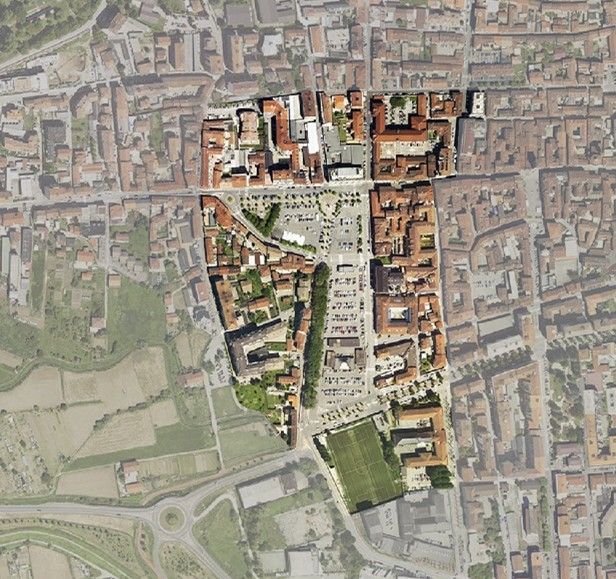
At neighbourhood level, the Piazza d’Armi area achieved an overall Rather Positive resilience score of 0.383. Among the assessed climate hazards, extreme heat was identified as the main risk, receiving a risk score of 0.48 (Neutral).
The assessment of Istituto Comprensivo Marconi showed an overall Rather Negative risk level, with a score of 0.702. The main vulnerabilities identified relate to the drainage system, indoor comfort, façade openings, external paints, coatings and renders, cooling systems, ductwork and ventilation distribution, cold water distribution, water treatment and greenery. These results highlight specific areas where targeted interventions could significantly improve the school’s resilience to climate-related hazards.
Based on the assessment, a range of nature-based and building-level adaptation measures has been recommended. At neighbourhood level, the proposed measures aim to increase surface albedo, green spaces and shading, and surface infiltration. Recommended solutions include green corridors, green roofs, permeable pavements, rain gardens and drought-resistant vegetation. At building level, the recommendations include improving passive cooling, retrofitting the building envelope and installing solar shading devices on windows.
Together, these measures can contribute to reducing the impacts of extreme heat, heavy precipitation and drought, while improving the overall climate resilience and comfort of the pilot area.
The next phase of the Chivasso Pilot will focus on developing and implementing adaptation packages based on the assessment results. The project partners will also collaborate with the Municipality of Chivasso to support the integration of the findings and proposed measures into the municipality’s broader climate adaptation strategy.