
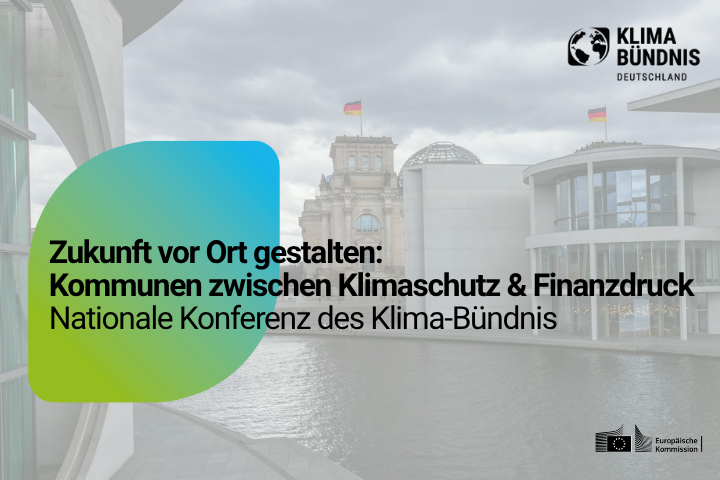
At the Climate Alliance National Conference 2026 in Berlin, the Ready4Heat partnership joined municipalities and decision-makers to discuss one of the most urgent local challenges: how cities and towns could continue climate protection and adaptation when budgets were under pressure.
The conference created a timely space for exchange. Municipal representatives shared practical experience, compared solutions, and discussed what support they needed to keep climate adaptation moving at the local level. For Ready4Heat, it was another opportunity to show that even under financial strain, municipalities had already been developing creative, practical responses to climate risks.
Worms shared practice from the ground
In the afternoon workshop on adaptation, the City of Worms presented its challenges, lessons learned, and solutions developed through Ready4Heat. Together with the City of Maintal, Worms helped show how adaptation could move forward through cooperation, local commitment, and realistic planning.
The discussion focused on two central questions: how municipalities could finance adaptation measures, and how they could work with local actors to turn plans into action. Participants exchanged ideas on what had helped so far, where barriers remained, and which kinds of support were needed from federal, state, and local partners.
Practical exchange, clear next steps
The workshop brought together municipal realities and practical implementation. A presentation by the German Federal Environment Agency opened the session, followed by examples from Worms, Ready4Heat, and Maintal. The exchange highlighted that climate adaptation was not a one-size-fits-all task. It required flexible approaches, strong cooperation, and solutions that fit local conditions.
By the end of the session, participants had shared experiences, identified common challenges, and reflected on ways to strengthen adaptation efforts despite financial constraints. The workshop underlined a key lesson from Ready4Heat: local climate action worked best when municipalities could learn from one another and build on tested practice.