
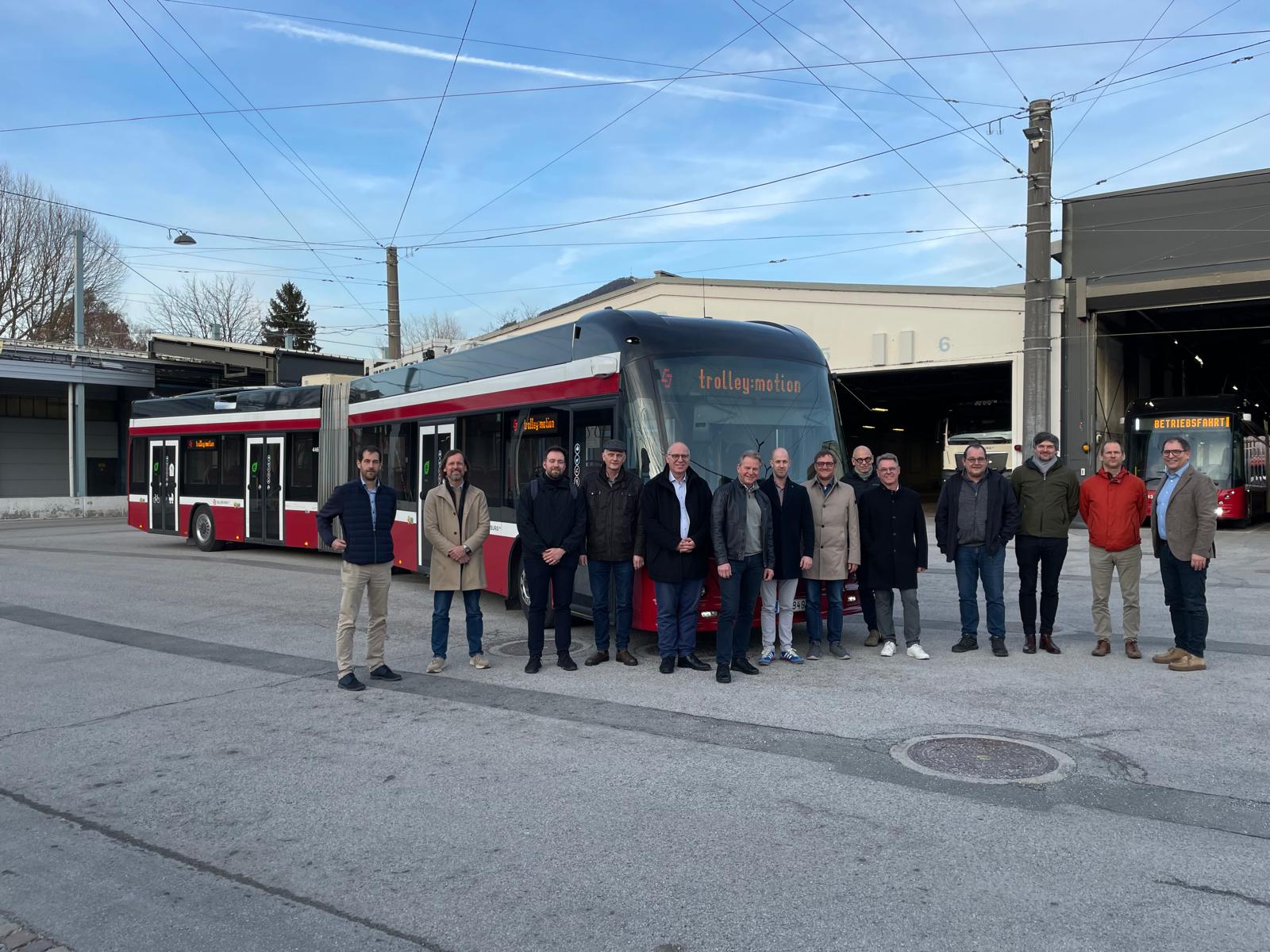
To address these challenges, the association trolley:motion, together with the CE4CE project, organised a two-day executive and technical workshop in German on 26–27 February 2026, entitled “Procurement strategy for IMC trolleybuses from a circular economy perspective (CE4CE)”. The event provided participants with an overview of modern procurement strategies, insights into implemented procurement models, and comparisons of technical performance specifications. It also offered tools, modular tender templates, and networking opportunities for experts from public transport companies, industry stakeholders, and consultants.
On the second day, a dedicated CE4CE workshop focused on how circular economy principles can be practically integrated into public fleet procurement and operations. A key best-practice example was presented from Bergamo, where ATB Mobility, together with KRUCH Railway Innovations, implemented sensor-based monitoring, predictive maintenance, and a digital twin to optimize energy flows and infrastructure performance. This approach is complemented by a 1,000 kWp photovoltaic system, battery storage, and second-life strategies for traction batteries.
The strategy was presented within the CE4CE project by Redmint Impresa Sociale. The core message emphasized that circular procurement starts with operational profiles, technical specifications, and lifecycle thinking, rather than at the recycling stage.
Key outcomes of the event highlighted that digitalization enables predictive maintenance and extends asset lifetime, circularity criteria can be embedded in public tender procedures, and continuous cooperation between operators, technology providers, and EU projects remains essential.