
In the afternoon, there were sessions outside. Participants took short city walk alongside the Zagyva river with short introduction of the river management and then visited local pilot sites, Fehértói-street lake and Réhely street. There was also an optional program during the evening in Budapest – thematic walk in the city center by a private expert with topic „Sponge city concept and NbS good practices in Budapest.“
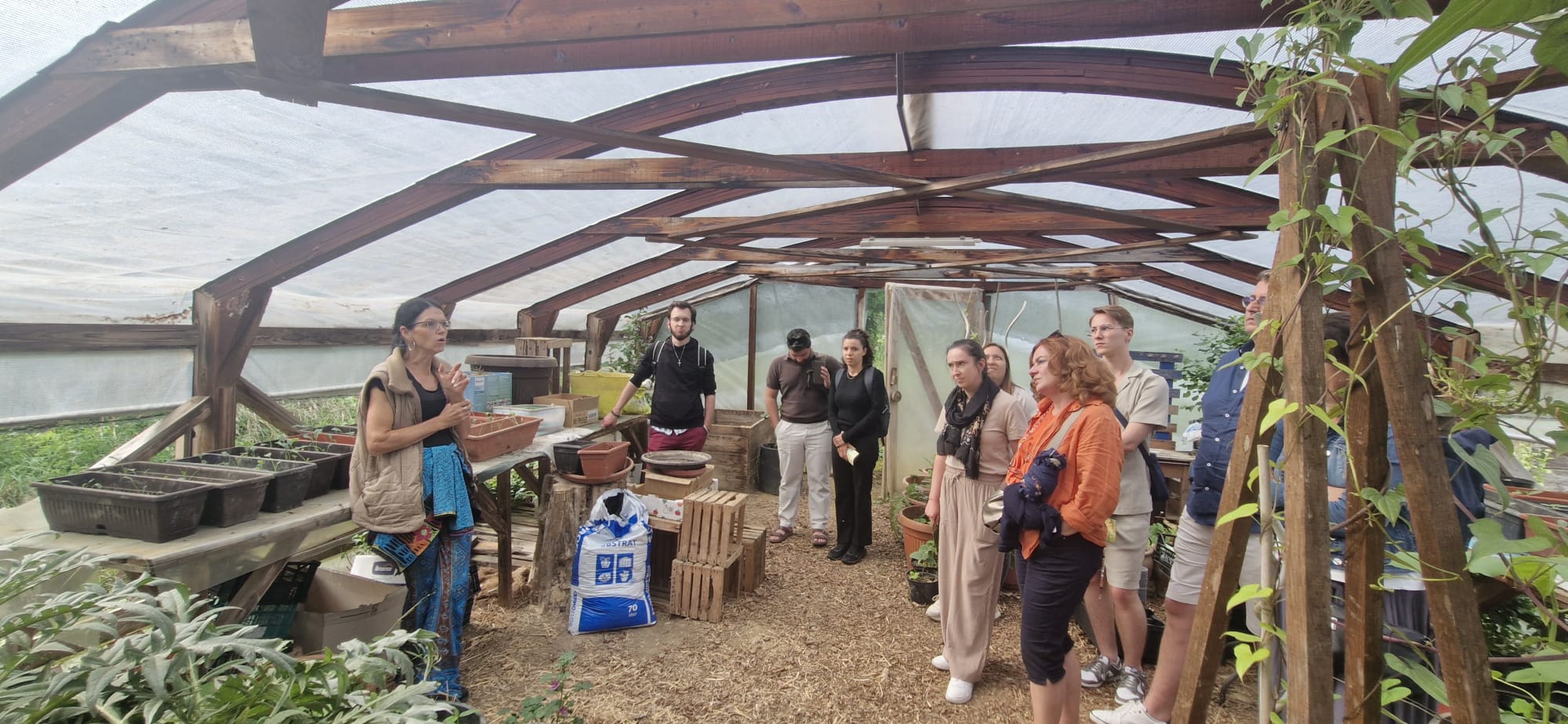
On June 11th, participants traveled to Poljčane, Slovenia. Welcome and introductory presentation was followed by a visit of the pilot action site. Participants also visited teaching area of permaculture and ecoremediation center with special emphasis on Heat management, Rainwater management and Bioembankment in Self-sufficiency Center Dole. On June 12th, the project partners were returning home.
This meeting was a project progress update for the CONE project, focusing on Work Package 2 implementation and deliverable status across partner municipalities. The team reviewed pilot implementation progress in pilot action sites. Key discussions included the development of a joint Living Lab guideline as a major deliverable, with plans for iterative workshops in August/September and November to incorporate partner inputs.
The team also addressed the creation of a joint strategic approach document for urban greening across Central Europe, facing challenges with stakeholder engagement and obtaining commitments from participating municipalities. Communication strategy updates were shared, including progress on social media presence, YouTube videos about pilot actions, and plans for additional promotional content.