
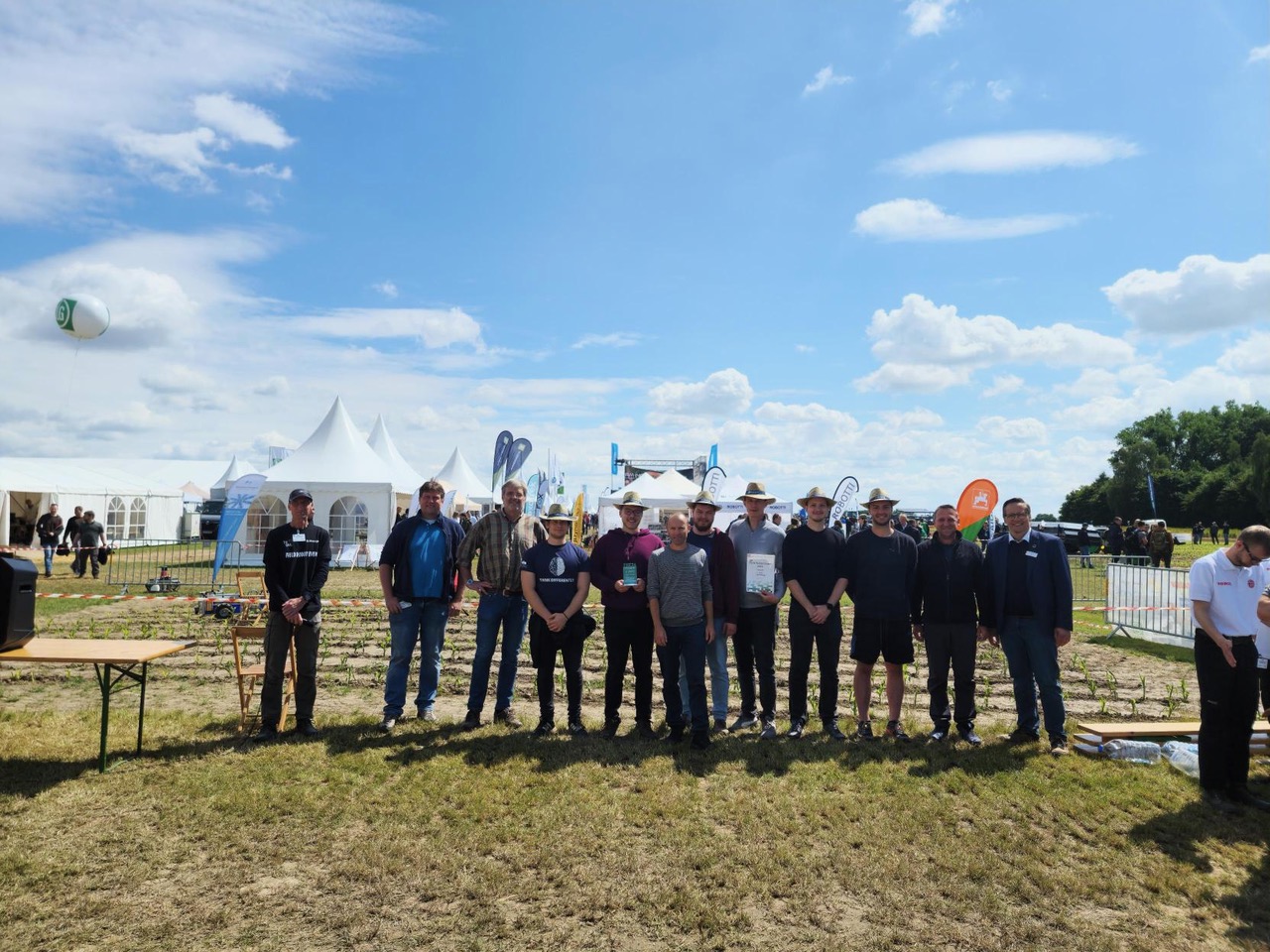
The experience gained through cooperation with schools, universities, research institutions and companies provides a basis for recommendations addressed to education providers and authorities across Central Europe.
Connecting young talents with industry challenges
Launched at EIMA International 2024, the Agri-Digital Growth Call for Talent was designed to identify young professionals with digital expertise and connect them with concrete technological challenges in precision farming.
The initiative took the form of an international online hackathon, organised by CREA and 28Digital in cooperation with the project partners and with the support of Ultrahack.
Participants were invited to develop solutions in five areas: precision viticulture, artificial intelligence for agriculture, climate-smart agricultural technologies, intelligent irrigation and proximity sensors, and augmented reality for site-specific crop management.
With the support of specialist mentors, participants developed proposals assessed according to their technological quality, feasibility, innovation potential and relevance to agricultural practice.
Internship and thesis opportunities offered through the initiative created a link between the hackathon and the experimental activities of the project. Young talents had the opportunity to apply their academic knowledge in professional research environments and contribute to the development of precision farming solutions.
The experience demonstrated the educational potential of challenge-based learning, particularly as a means of bringing together students and graduates with different disciplinary backgrounds around concrete agricultural problems.
Introducing precision farming into secondary education
Alongside the involvement of university students and graduates, Agri-Digital Growth organised a series of Open Days and educational outreach activities across seven European countries.
School visits, workshops, field demonstrations and participation in agricultural and technology exhibitions provided younger students with opportunities to explore digital technologies and discover emerging professional pathways in agriculture.
At Fieragricola 2026 in Verona, students from agricultural technical and vocational schools discussed the applications of drones, robotics and artificial intelligence with industry representatives. In Poland, the project’s participation in BBDays4IT introduced digital agriculture to an audience with a strong interest in information technology and software development. In Slovenia, the Employment and Career Opportunities Fair in Ljubljana provided an opportunity to discuss professional pathways in agricultural robotics and precision farming.
A significant lesson from the educational activities concerns the different backgrounds of learners. Students enrolled in agricultural programmes need greater exposure to electronics, data analysis and digital tools. Students with a technical background benefit from a deeper understanding of biological processes, crop requirements and agricultural production systems.
The integration of precision farming into secondary education therefore requires teaching approaches adapted to existing curricula, learners’ competences and the professional orientation of individual schools.
Recommendations for educational institutions and authorities
The educational and experimental activities carried out within Agri-Digital Growth have informed a set of recommendations for four groups of educational stakeholders.
Secondary schools are encouraged to introduce precision farming concepts into existing subjects according to their educational orientation. Practical demonstrations, access to equipment and cooperation with universities and agricultural machinery manufacturers can help students understand the relationship between digital technologies and agricultural production.
Vocational education and training providers are encouraged to adopt flexible, modular programmes focused on operational competences. Sensor operation, geospatial data interpretation, machinery data systems and digital decision support are examples of areas that can be integrated into vocational training and professional development pathways.
Universities are encouraged to strengthen the practical and interdisciplinary components of their programmes. Agricultural degrees should incorporate programming, data management and systems integration, and engineering programmes should provide opportunities to acquire agronomic knowledge. Technical internships, collaborative research and challenge-based learning can reinforce the relationship between academic education and industry requirements.
Educational authorities have an important role in supporting the recognition of emerging professional profiles, the development of flexible qualification pathways and sustained cooperation between education providers, research institutions and industry. Long-term access to experimental infrastructures and training resources is particularly important for institutions with limited technical and financial capacity.
The recommendations also identify the Living Lab approach as a transferable educational model. Its integration into regular teaching programmes, internships and applied student projects can provide learners with direct experience of technology development, testing and validation.
Opportunities for continued professional development
The educational models developed within Agri-Digital Growth can support curriculum development and lifelong learning beyond the formal duration of the project.
The five online courses in precision farming remain a resource for educational institutions, students and professionals interested in developing specialist digital and technical competences.
The training programme is available free of charge on the 28DIGITAL platform.
Explore the courses and enrol: