
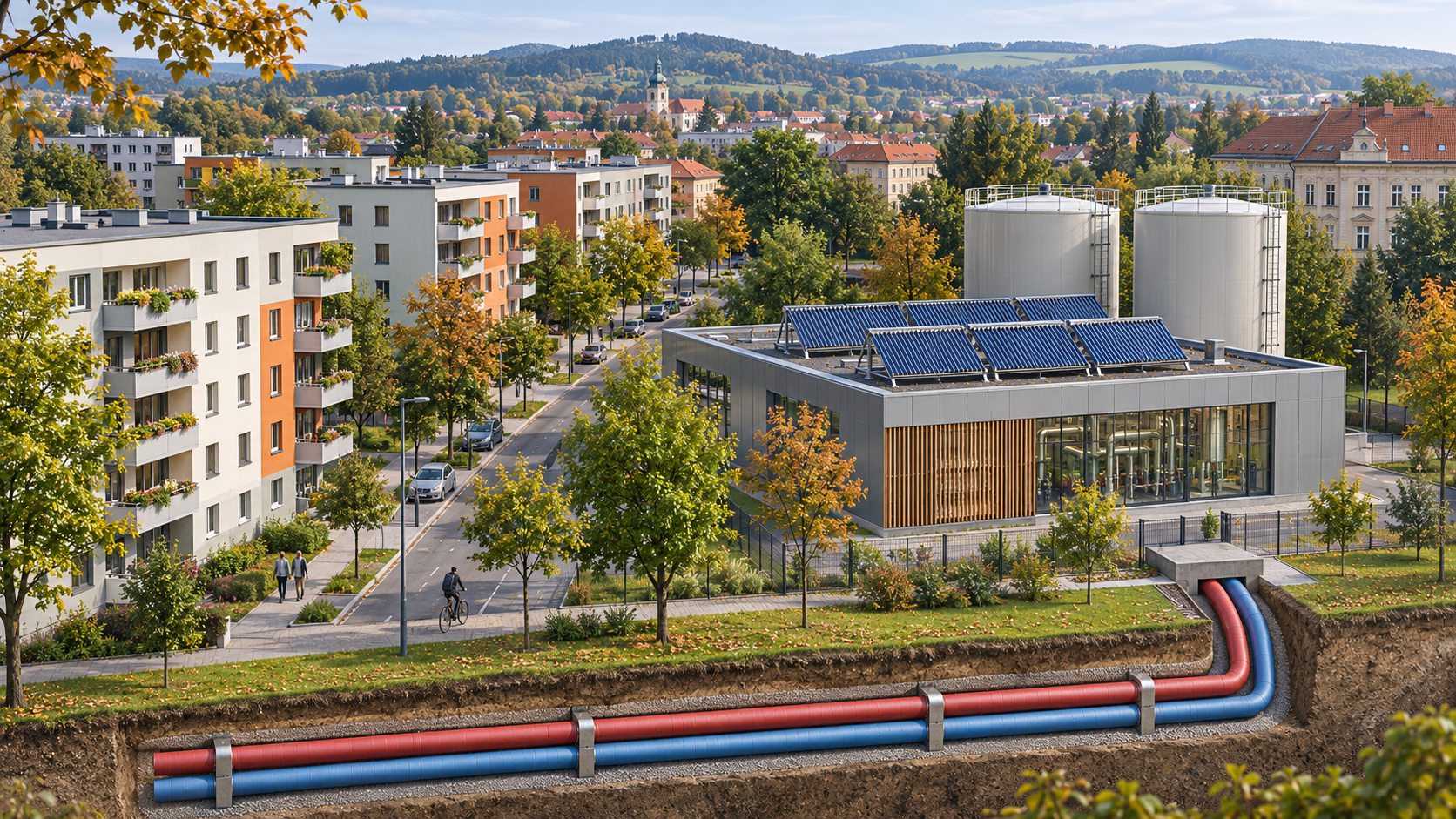
The HEAT 35 project has published its Transnational Strategy for Transformation of Central European District Heating Systems. It sets a shared goal for district heating systems to source at least 50% of their heat from renewable energy and recovered waste heat by 2035, with a longer-term outlook towards full decarbonisation by 2050.
The strategy gives municipalities and district heating operators a starting point for planning the transition. It recommends mapping local heat demand and available sources, such as geothermal energy and industrial waste heat, while identifying where existing networks can operate more efficiently. Reducing heat losses and lowering network temperatures can make it easier to use local heat sources and help operators size new equipment to match demand.
The strategy also addresses the decisions that determine whether projects can go ahead. It recommends phasing investments, assessing their impact on customer bills and involving residents early. The HEAT 35 Kit complements the strategy with practical tools for assessing heat sources, planning investments and engaging stakeholders.
Developed jointly by the HEAT 35 partners, the strategy provides a common framework that cities and operators can adapt to their own networks, resources and investment priorities.