
Key findings of the climate resilience assessment
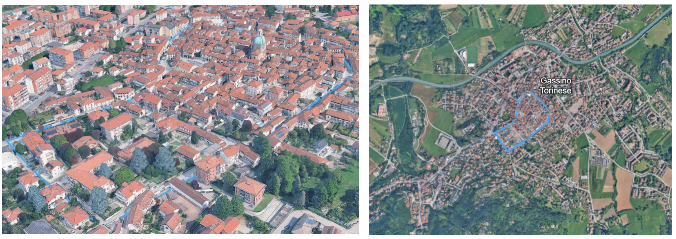
At the neighbourhood level, the assessment revealed an overall Rather Negative resilience score (0.631), highlighting vulnerabilities to both heavy precipitation (0.640) and extreme heat (0.623).
At the building level, the assessment of the Istituto Borione school using the RBTool also revealed an overall Rather Negative risk level (0.693). The main vulnerabilities were identified in the building’s drainage system, external walls, façade openings, shading devices, roof structure and cooling systems. Some indicators could not be assessed due to limited data availability.
Towards a more climate-resilient Gassino
Based on the assessment results, several climate adaptation measures have been recommended to strengthen resilience at both the neighbourhood and building levels. These include:
- Increasing green spaces and shaded areas through tree planting;
- Introducing green roofs, permeable pavements and rain gardens;
- Increasing surface albedo and improving rainwater infiltration;
- Improving passive cooling and retrofitting building envelopes;
- Installing solar shading devices for windows.
These measures aim to reduce the impacts of both heavy precipitation and extreme heat while improving the quality of the urban environment.
Next steps
The next phase of the SuPeRBE project will focus on developing and implementing tailored climate adaptation packages based on the assessment findings. In collaboration with the municipality, the results will also support the integration of climate resilience measures into Gassino’s climate adaptation strategy, contributing to a more sustainable and resilient urban environment.