
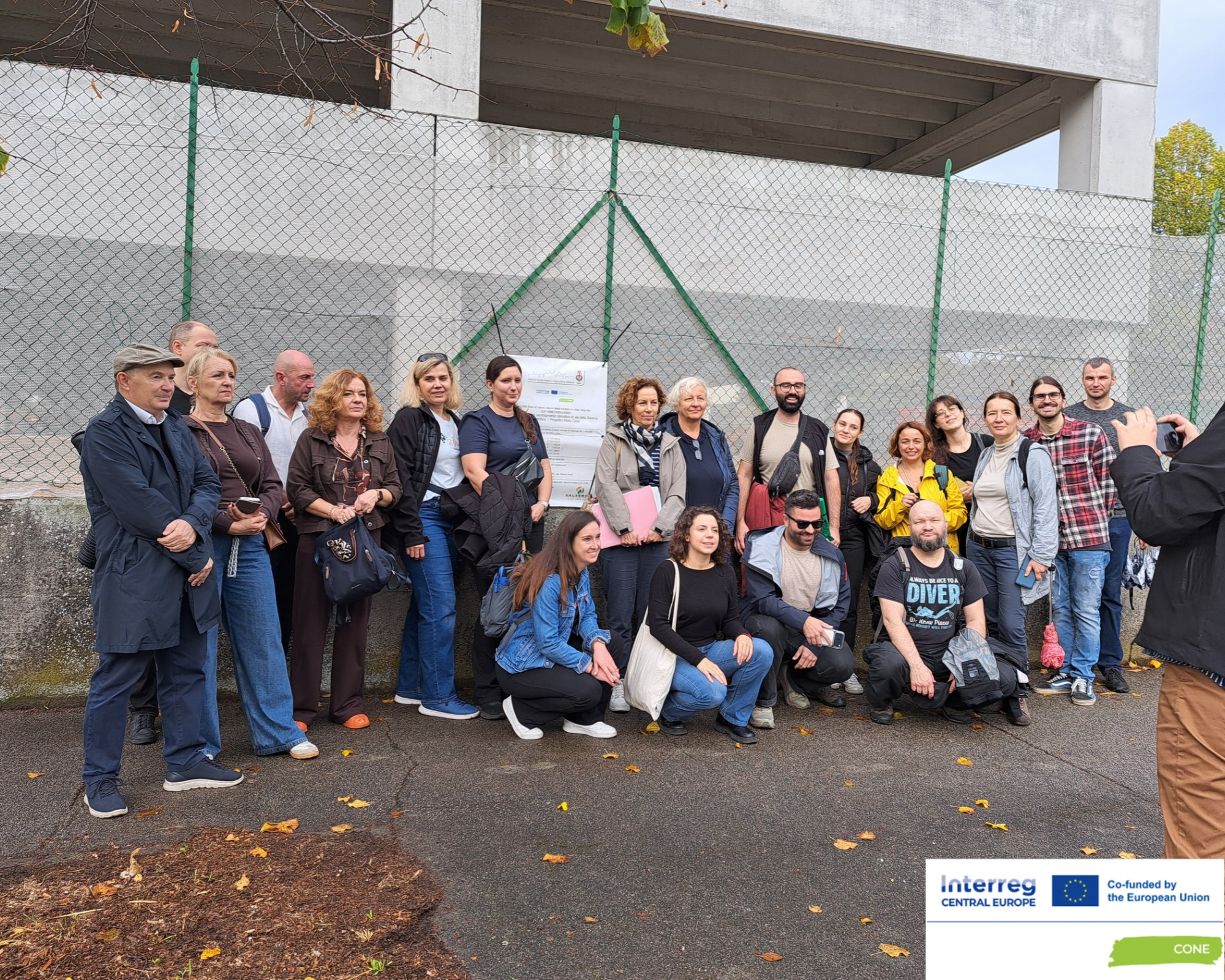
A two-day study visit in Padua, Italy, on 20–21 October 2026, brought CONE project partners together to exchange experiences, review project progress and explore practical examples of nature-based solutions supporting climate-resilient urban development.
Hosted by the Municipality of Padua, the meeting combined a consortium session focused on project coordination and preparations for the final project event with a field visit to three locations demonstrating different approaches to urban climate adaptation.
Discovering nature-based solutions in practice
An important part of the programme was the visit to the CONE Pilot Action in Via della Ricerca Scientifica, located in a highly sealed industrial area. The intervention demonstrates how nature-based solutions can be introduced even in urban environments with limited space and a high proportion of impermeable surfaces.
As part of the Pilot Action, traditional paved surfaces were partially removed and replaced with 16 rain gardens. These green infrastructure elements are designed to increase rainwater infiltration, reduce surface runoff and help mitigate urban heat stress.
The site has also recently been equipped with monitoring sensors that will collect environmental and hydrological data over the coming months. The monitoring system will provide valuable evidence for assessing the intervention’s effectiveness and supporting the potential replication of similar solutions elsewhere.
The study visit continued at Piazza Savelli, where participants explored an extensive de-paving intervention transforming impermeable surfaces into permeable green areas. More than 160 plants and a linear rain garden contribute to improved stormwater management, enhanced biodiversity and a better-quality public space. The project illustrates how climate adaptation measures can be integrated into urban regeneration.
The final stop was Parco Guizza, a large-scale urban greening project demonstrating the importance of interconnected green infrastructure. By expanding ecological corridors and strengthening connections between existing green areas, the project supports biodiversity, recreational opportunities, climate resilience and citizens’ well-being.
Sharing experiences and lessons for future action
Beyond the technical aspects of the interventions, the study visit provided an opportunity for partners to exchange knowledge and discuss the transferability of nature-based solutions across different territories.
The discussions highlighted several important lessons. De-paving strategies and rain gardens offer practical approaches to reducing soil sealing and improving urban water management. Monitoring systems play an important role in evaluating the long-term performance of interventions, while the integration of climate adaptation into broader urban planning and public space regeneration can generate multiple environmental and social benefits.
Partners also emphasised that successful transferability does not necessarily mean reproducing identical solutions in different cities. Instead, the principles and methodologies need to be adapted to local environmental, regulatory, climatic and socio-economic conditions.
Looking towards the final project event
The first day of the meeting was dedicated to reviewing the overall progress of CONE, discussing project management and coordination, and identifying the remaining activities and deliverables to be completed before project closure. Particular attention was given to the organisational arrangements and communication activities for the upcoming final project event.
The meeting and study visit in Padua once again demonstrated the value of transnational cooperation and peer learning. By exploring practical interventions and sharing experiences from different urban contexts, CONE partners continue to strengthen their knowledge and capacity to develop locally adapted nature-based solutions.
The experience gained in Padua will contribute to the wider dissemination of project results and inspire further efforts towards greener, more resilient and climate-adapted cities.