
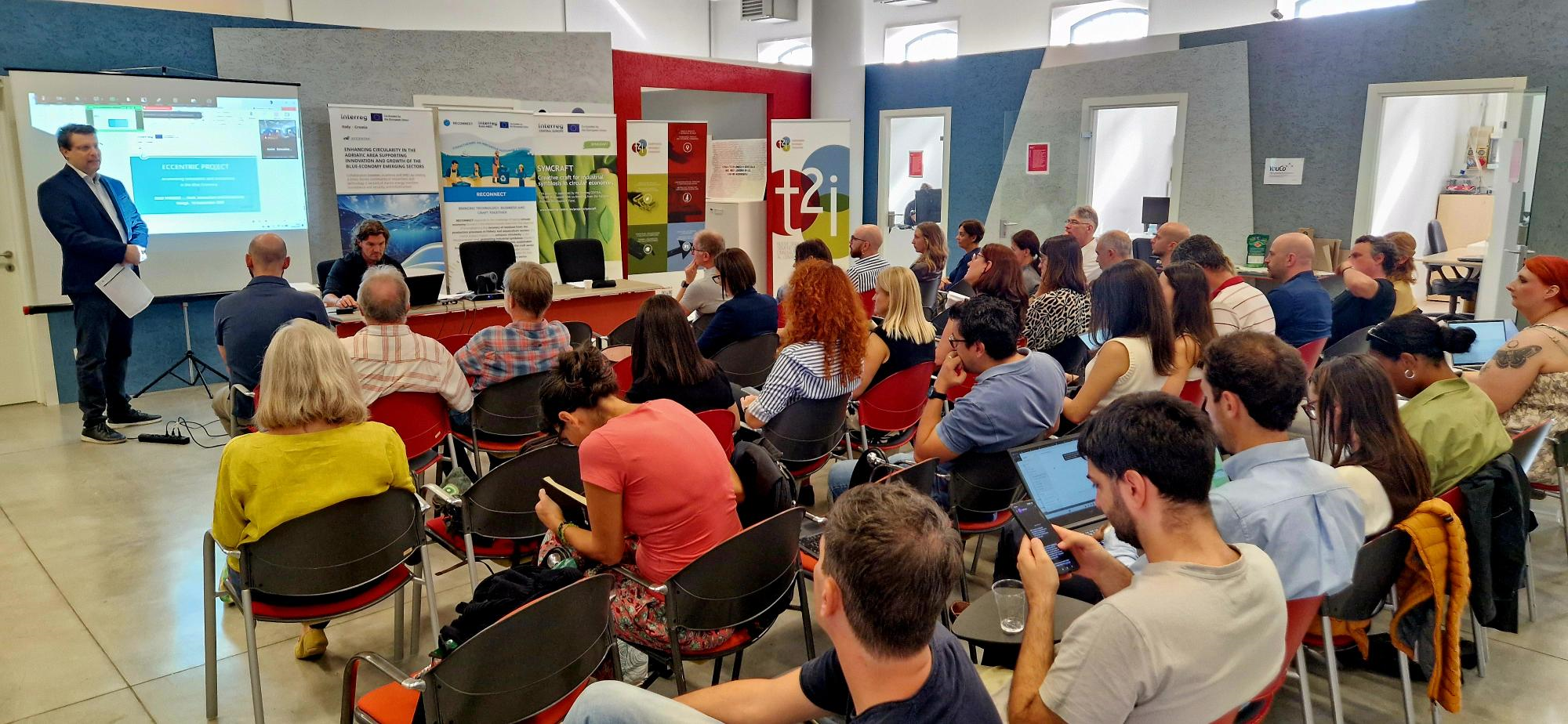
Key Discussion Topics & Perspectives
1. Reimagining Traditional Craft & Material Innovation
-
Evolving the Craftsperson: Craft should not be framed as mass-producing uniform items via steam techniques, but as a practice of ongoing innovation in materials, techniques, and applications.
-
Living Applications vs. Mere Preservation: Opposing the view of craft solely as a historical artifact to preserve, speakers emphasized applying traditional skills to modern, functional products—using a ceramic sex toy produced by a traditional Italian artisan as an example of keeping local knowledge pools, supply chains, and labor markets alive.
-
Prototyping with Mature Technologies: Instead of chasing hype (e.g., metaverse, early AI), the focus should be on mature, accessible technologies like biomaterials (e.g., agar-based bioplastics) that enable fast-paced kitchen prototyping.
-
Integrating Craft into Industry: Overcoming the historical divide between industrial scale and traditional craft remains a major opportunity to create economic value.
Interconnected Projects & Platform Solutions
1. Symcraft Project
-
Core Focus: Connecting large industrial companies with craft artisans to repurpose industrial waste into high-value products.
-
Results: 46 business models validated and 12 collaboration agreements initiated.
-
Key Insight: Circularity accelerates when someone acts as a matchmaker. The primary bottleneck is not technology or knowledge, but connecting disparate sectors.
-
3-Step AI Toolkit:
-
Waste Re-use / Idea Generator: A custom GPT tool operating in structured or inspirational modes to brainstorm product concepts from specific waste streams.
-
Circular Eco-Business Model Tool: An online platform where industries and artisans co-develop target procurement, market positioning, and financial plans.
-
Cooperation Framework Generator: Formulates draft legal and operational agreements (defining responsibilities, material flows, and economic terms).
-
2. Eccentric Project
-
Core Focus: Co-financed by the European Regional Development Fund under the Blue Economy priority to increase research, innovation, and uptake of advanced technologies among SMEs.
-
Key Challenge: Overcoming weak collaboration between SMEs and research institutions, limited access to funding, and regulatory barriers.
-
Eccentric Financial & Investment Readiness Tool:
-
Guides users through building a comprehensive financial plan by collecting data on company profiles, innovation scope, budget breakdowns, cash flow, and funding preferences (grants, loans, equity).
-
Generates an Investment Readiness Assessment highlighting funding strategies, critical risk factors, alternative financing options (e.g., venture capital, business angels), and strategic scenarios.
-
3. Reconnect Project
-
Core Focus: Based out of the Malaga Innovation Center (South Spain) across 9 partners in 5 countries, working to bridge the gap between Mediterranean environmental challenges (pollution, overstimulation, waste) and commercial opportunities.
-
Reconnect Tool:
-
Uses AI-guided dialogue to assess company circularity, map waste streams (e.g., fishing nets, marine waste), suggest high-value bio-based applications, and match businesses with regional research centers, artisans, and industrial actors.
-
Exports tailored circular economy roadmaps in Markdown report formats.
-
Real-World Case Study: Tecnica Group
-
Company Profile: Tecnica Group is a major global manufacturer of winter sports equipment, producing roughly 1 million of the world’s 3 million annual ski boot pairs (under brands like Tecnica and Nordica).
-
The Challenge: While the outer shell of a ski boot is pure, easily recyclable plastic, the inner liner is a complex, multi-material composite of textiles, polymers, and foams that is extremely difficult to recycle.
-
Drivers for Change:
-
Looming textile and consumer waste regulations (Extended Producer Responsibility).
-
Market demand from key distributors and retailers for low-carbon products.
-
Corporate commitments to reduce plastic footprint and carbon intensity.
-
-
Symcraft Pilot Solution: Utilizing the Symcraft matchmaker tools, Tecnica partnered with two artisan startups to identify commercial, second-life applications for discarded boot liners, generating a structured eco-business model and draft legal agreement to process the waste stream.
Primary Key Takeaways
-
Fragmentation is the Main Obstacle: Sectoral silos prevent companies from recognizing the full economic value of circularity, often misinterpreting sustainability as a pure cost rather than a resource efficiency gain.
-
AI as an Adaptive Facilitator: Rather than replacing human creativity or forcing rigid workflows, conversational AI tools serve as flexible guides to help non-technical users navigate complex business modeling, waste mapping, and legal setup.