
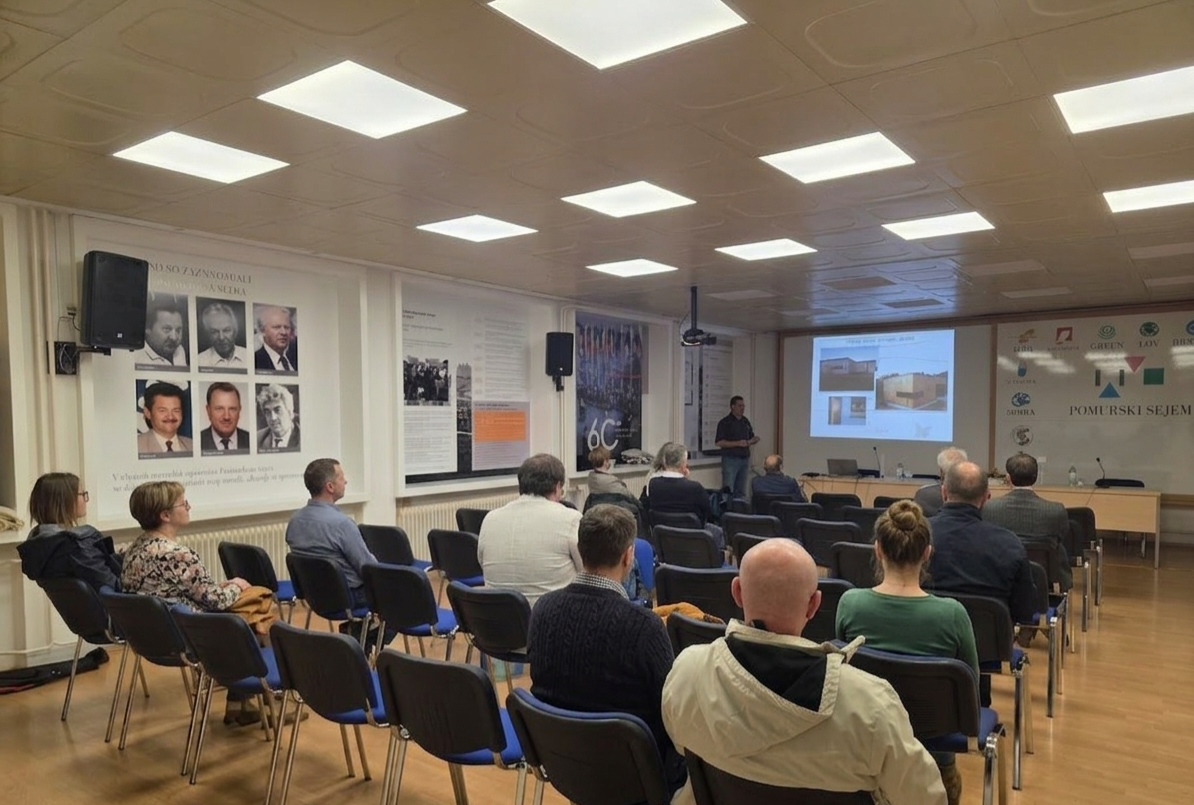
To help participants better understand the untapped opportunities in the field and the project’s vision, the content of the first workshop was deliberately structured around two concrete examples of good practice from Slovenia. Tomaž Činč (Snopje d.o.o.) presented modern construction using timber and straw, while Darko Ipša (IKONS d.o.o.) presented sustainable renovation of built heritage. These practical examples served as a key tool for helping the catalysts identify, through real-life cases, where there is potential for new business models in the region and what types of innovative solutions the project aims to stimulate and support.
Through this practical illustration of the project’s objectives, participants were able to define more clearly their role in connecting the research, public and business sectors. The examples of good practice encouraged discussion on how support institutions can act as a bridge between raw materials (timber, straw) and high-value-added end products. By focusing on tangible solutions, the catalysts thus recognised their responsibility in mentoring and guiding future entrepreneurial initiatives in the field of sustainable construction.