
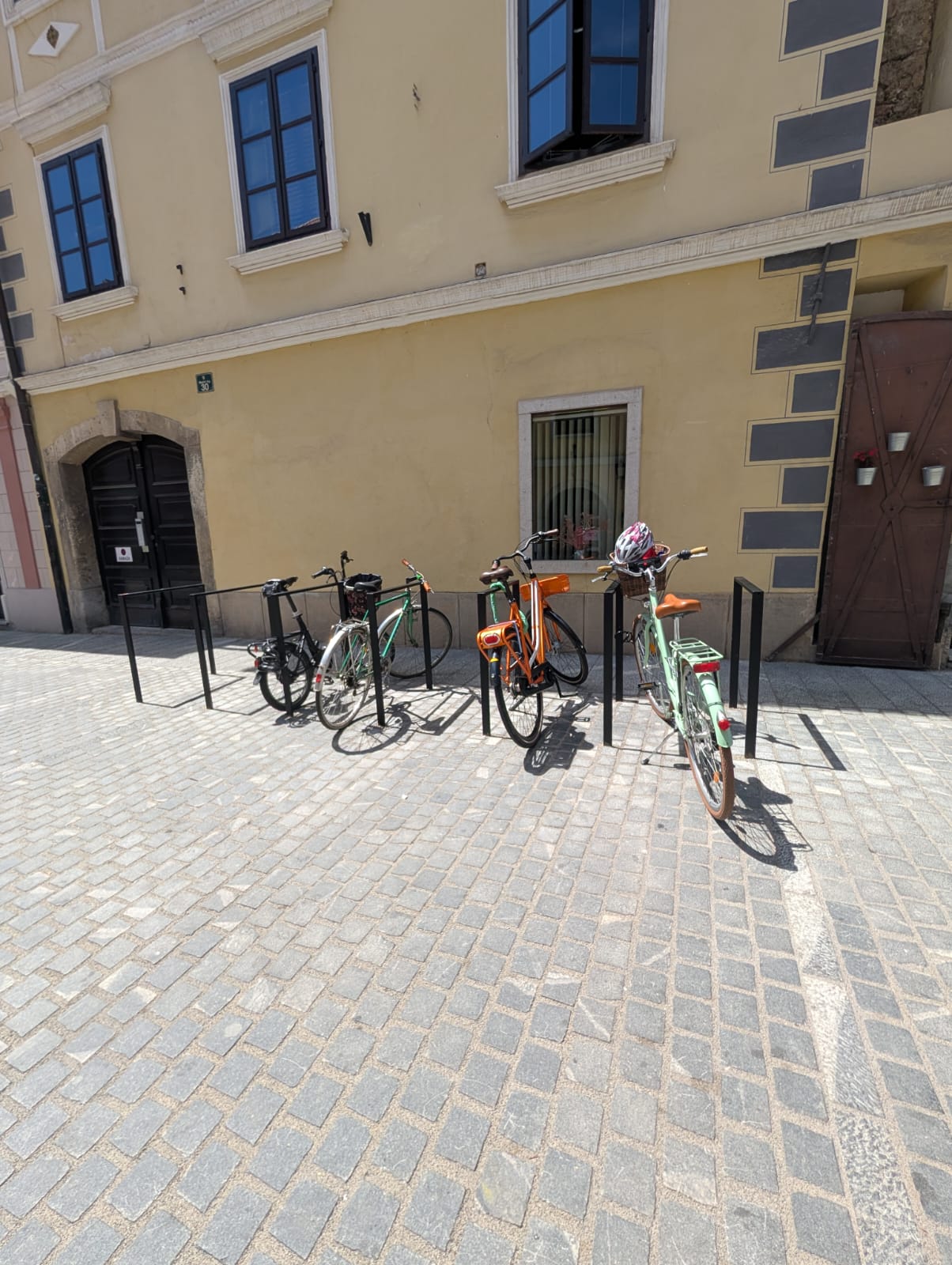
The BIZ Mobility partnership has completed its first key project result – the Mobility Management Concept for Business and Industrial Zones in Rural and Lagging Areas.
Business and industrial zones often face similar mobility challenges: high dependence on private cars, limited public transport options, parking pressure and gaps in walking and cycling infrastructure. At the same time, improving commuting requires cooperation between companies, municipalities, transport providers and other local stakeholders.
The new concept provides a practical framework for organising this cooperation. It outlines how stakeholders can work together, collect and use mobility data, identify priorities, develop measures, monitor progress and communicate with employees. It also addresses funding options and long-term cooperation.
The document includes practical tools and examples that can support implementation, from stakeholder engagement and action planning to monitoring and communication.
In the coming months, the approach will be used and further developed in the three BIZ Mobility pilot areas in Škofja Loka (Slovenia), Čakovec (Croatia) and Nagykanizsa (Hungary). The experience from the pilots will help us see how the approach works in different local contexts and how it can be adapted for other business and industrial zones.
The Mobility Management Concept was prepared jointly by the project partnership, with Institute for Spatial Policies (IPoP) leading its development.
You can read the full D.1.1.1 Mobility Management Concept for Business and Industrial Zones in Rural and Lagging Areas here.