
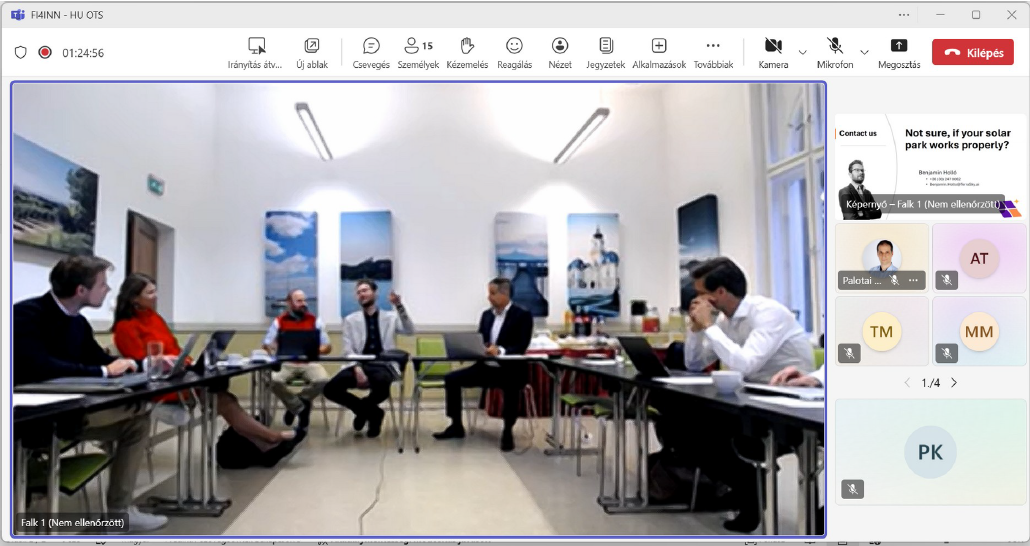
Knowledge sharing and collaboration were at the heart of FI4INN’s seven Online Technical Sessions, organised between September 2025 and April 2026 to support the co-design and transfer of innovative financial instruments across participating regions.
Each session focused on one of the project’s pilot actions, providing partners with an opportunity to present regional experiences, discuss implementation challenges and collect feedback from policymakers, financial institutions, innovation agencies, incubators and entrepreneurs.
The sessions addressed a broad range of innovation finance topics, including startup incubation, venture capital, guarantee schemes, blended finance, technology transfer, investment readiness and support mechanisms tailored to SMEs engaged in research and innovation.
Rather than simply presenting project activities, the Online Technical Sessions encouraged active discussion and peer learning. Participants exchanged practical experiences on designing financial instruments that better respond to the needs of businesses while remaining sustainable for public authorities responsible for implementing them.
Across all seven sessions, common barriers emerged. Administrative complexity, fragmented institutional frameworks, limited coordination among support organisations and insufficient access to private investment continue to hinder innovation financing in many regions. Participants also identified the need to improve financial literacy and simplify funding procedures for entrepreneurs.
The discussions reinforced the importance of combining financial support with complementary services such as mentoring, advisory programmes and ecosystem coordination. Successful innovation financing depends not only on access to capital but also on the availability of expertise, partnerships and long-term strategic support.
By connecting regional experiences through a structured programme of technical exchanges, the Online Technical Sessions strengthened cooperation among FI4INN partners and generated valuable knowledge that can inform future policy development across Central Europe.
The sessions represent an important element of the project’s legacy, demonstrating how collaborative learning and stakeholder engagement can contribute to designing financial instruments that are more effective, accessible and responsive to the evolving needs of Europe’s innovation ecosystems.