
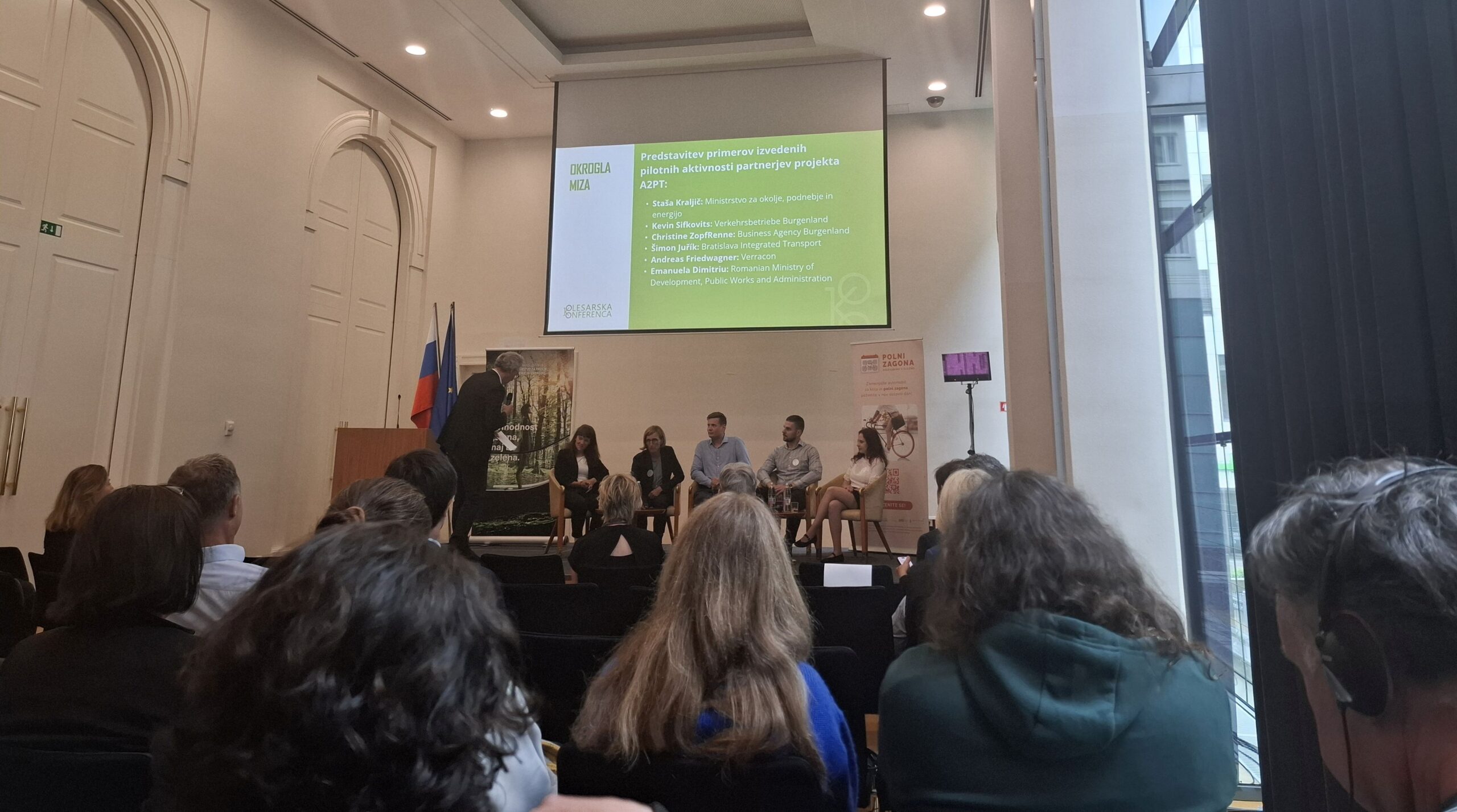
On 3 June 2026, representatives of the BIZ Mobility project attended the 5th National Cycling Conference in Ljubljana, Slovenia. The conference brought together mobility experts, public authorities, planners, businesses and project partners to discuss the future of cycling and sustainable mobility.
A central theme of this year’s conference was active accessibility and the challenge of the “last mile” – the crucial connection between public transport services and final destinations such as workplaces, business parks and industrial zones. Discussions focused on practical solutions that combine cycling, walking and public transport into seamless mobility chains, helping to reduce car dependency and improve access to employment areas.
For BIZ Mobility, these topics are particularly relevant. Industrial and business zones generate a large number of daily commuter trips and therefore offer significant potential for promoting sustainable mobility through improved cycling infrastructure, better public transport connections and effective last-mile solutions.
One especially inspiring example came from the Austrian region of Burgenland. In locations where pedestrian crossings are spaced far apart, yellow road markings were added at points where people most frequently cross the street. These visual markings alert drivers to increased pedestrian activity, improving traffic safety and the readability of the public space without requiring major infrastructure investments. The example demonstrated how simple, low-cost interventions can have a significant impact on mobility and road safety.
The conference provided valuable insights into how municipalities, employers and mobility planners can work together to make commuting more sustainable, accessible and attractive. The knowledge and examples presented will support the further development of BIZ Mobility activities aimed at improving access to workplaces and encouraging sustainable commuting across the project area.