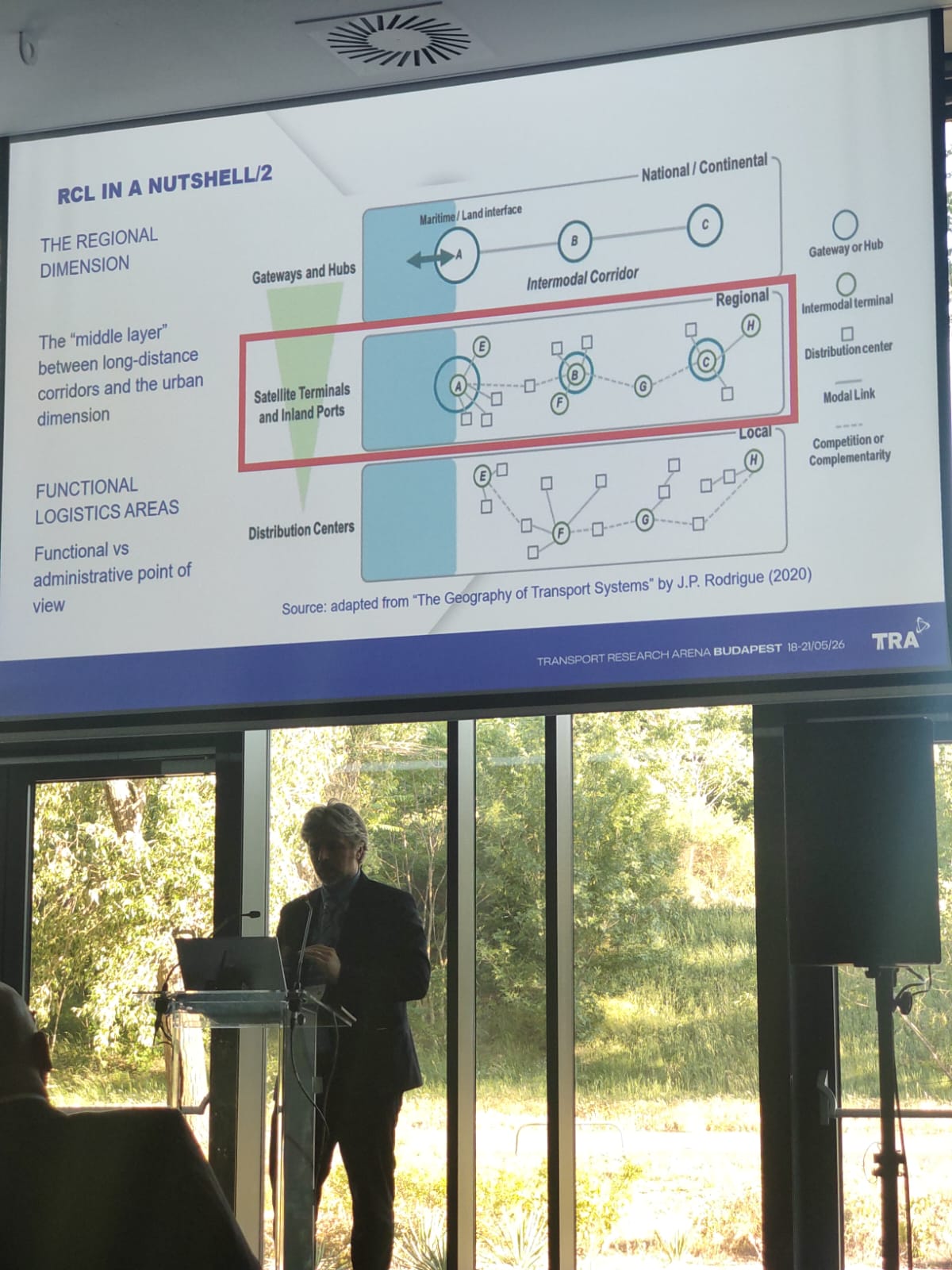
From 18 to 21 May 2026, the GRETA project community was represented at the Transport Research Arena (TRA) 2026 in Budapest, one of Europe’s largest conferences on transport and mobility innovation. Bringing together policymakers, researchers, industry leaders and EU-funded projects, TRA provided a unique platform to discuss the future of sustainable and efficient logistics systems across Europe. During the event, OPEN ENLoCC (European Network of Logistics Competence Centres) contributed actively to the debate by presenting a paper on Regional Collaborative Logistics (RCL), highlighting its potential to improve the efficiency, resilience and sustainability of freight transport systems. The discussions closely align with GRETA’s mission to decarbonise last-mile freight transport in Functional Urban Areas (FUAs). Both approaches emphasise collaboration, integrated planning and stakeholder engagement as key drivers for more sustainable logistics. GRETA’s pilot actions—testing solutions such as zero-emission vehicles, cargo bikes and improved urban logistics management—demonstrate how local innovations can contribute to broader regional frameworks. A key takeaway from TRA 2026 is that scaling up logistics innovation requires not only technology, but also strong governance, policy support and cross-sector collaboration. Regional Collaborative Logistics offers a pathway to connect local initiatives like GRETA with wider regional and European strategies. By engaging in events such as TRA, GRETA strengthens its role in the European logistics ecosystem and supports the transfer and replication of sustainable freight solutions across regions.