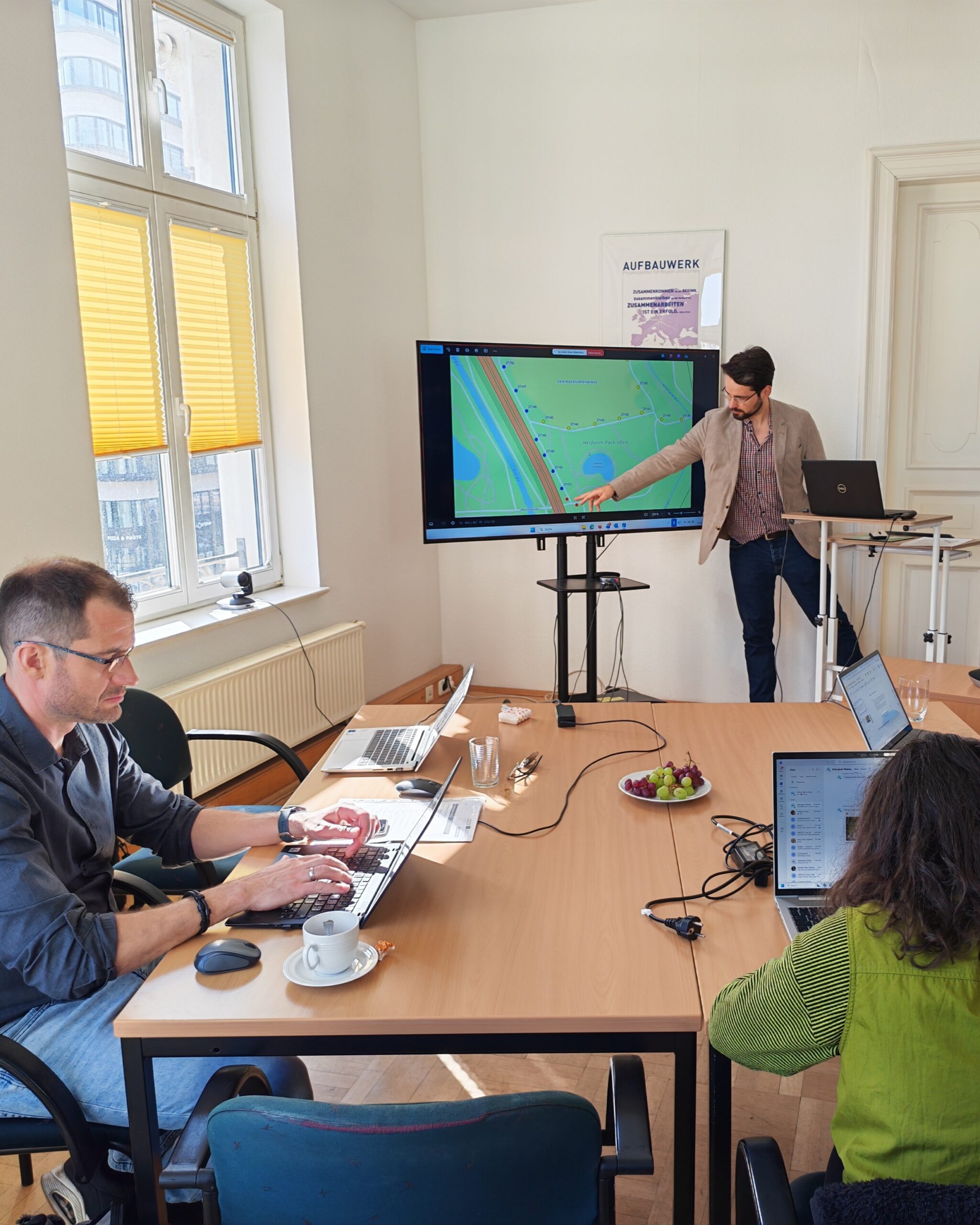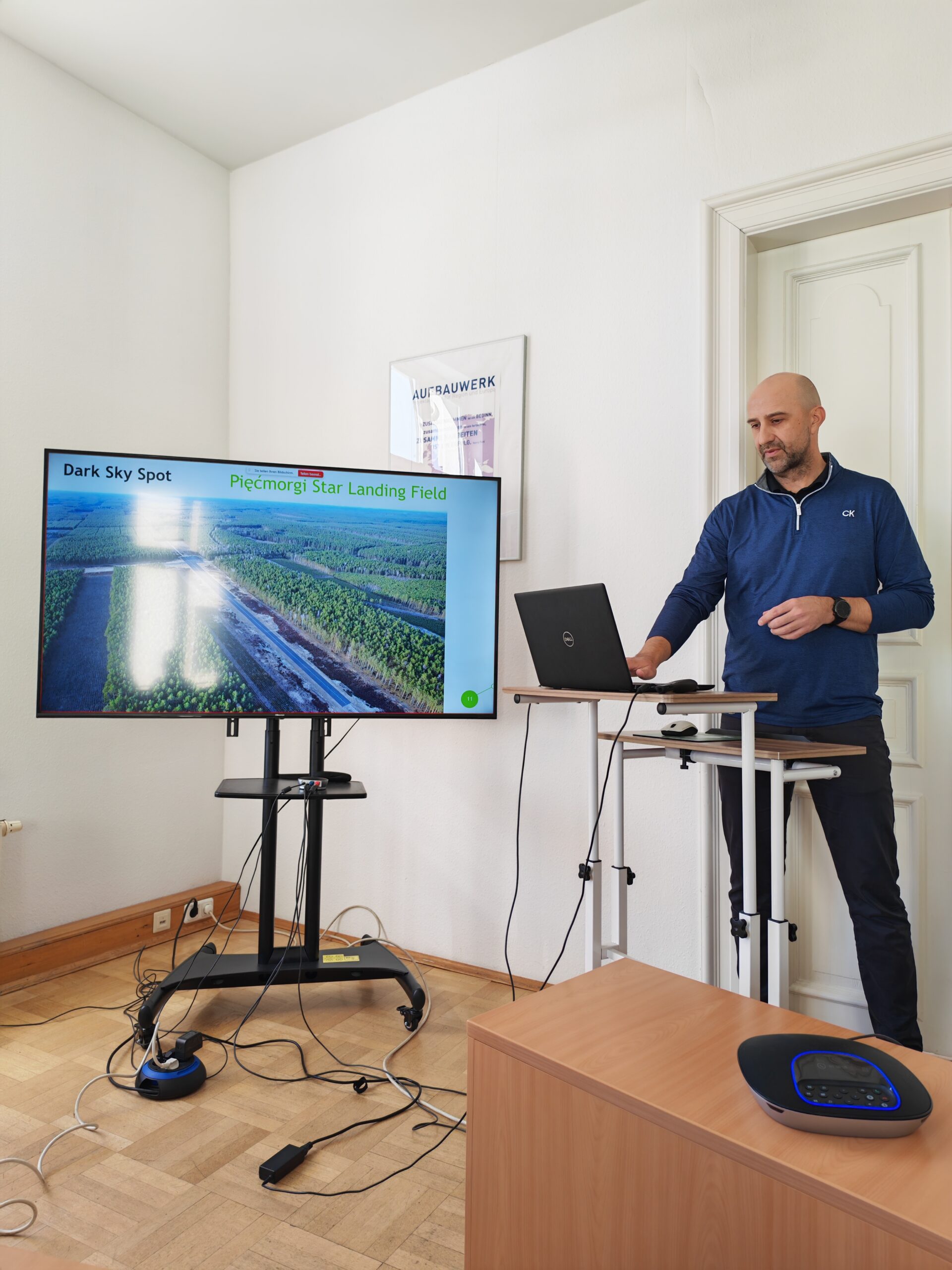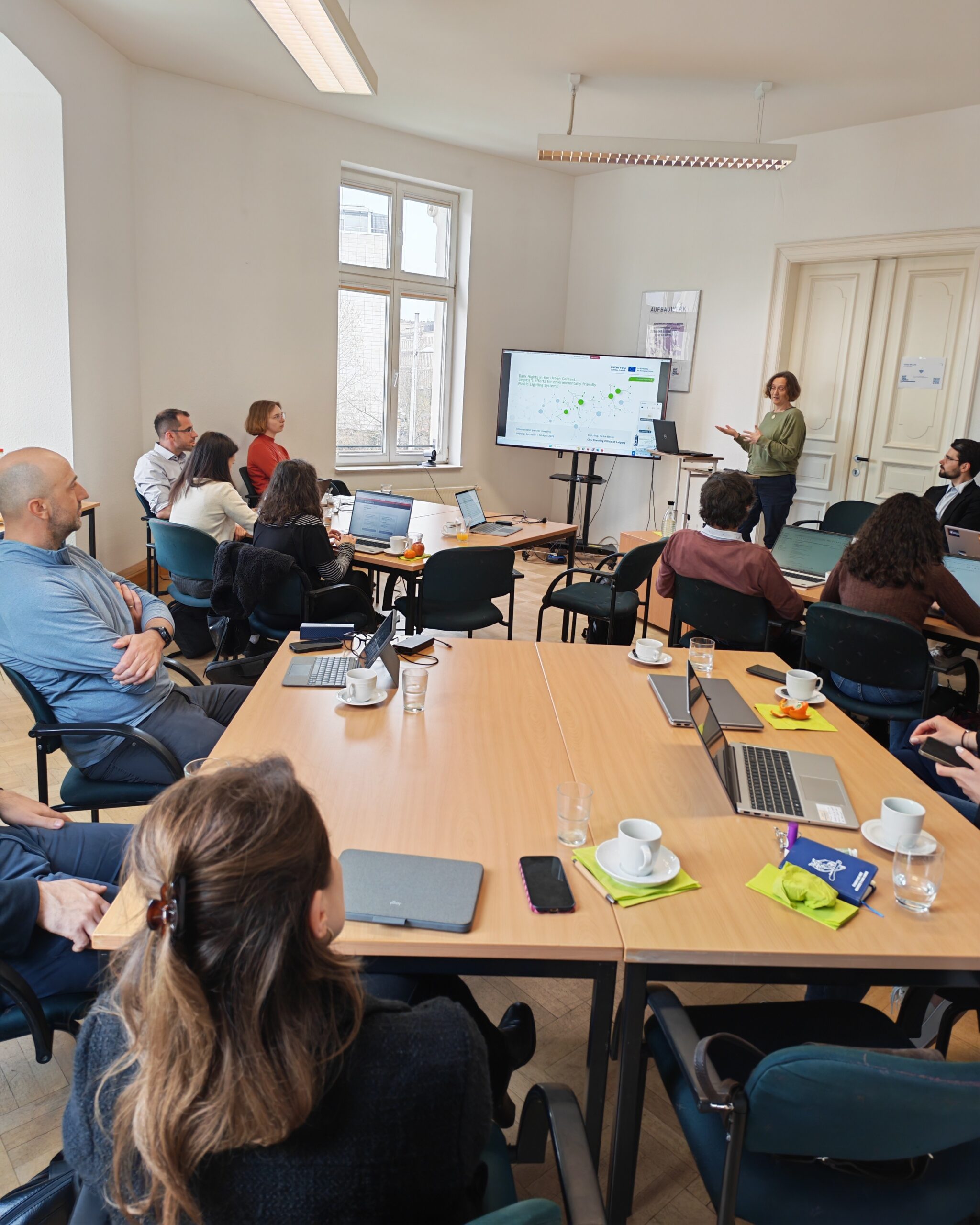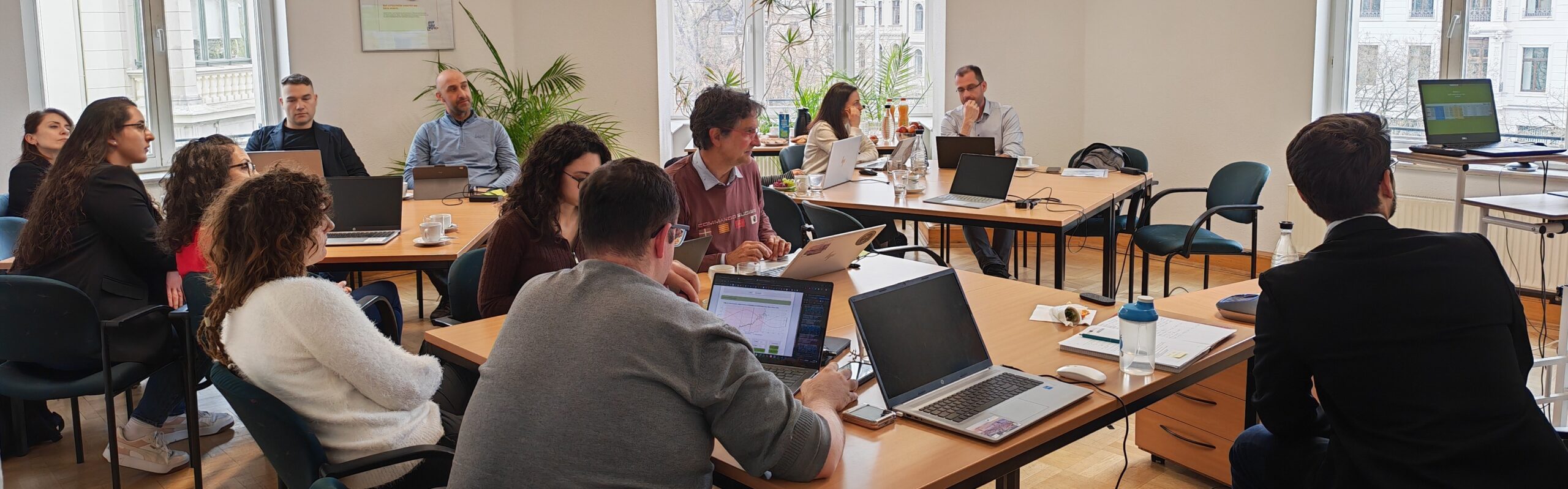
On 14–15 April 2026, project partners of the Interreg Central Europe project DARKERSKY4CE gathered in Leipzig, Germany, for the fifth in-person partner meeting. Hosted by the German partner, Aufbauwerk Region Leipzig Gmbh, the meeting brought together representatives from across Europe to review progress, strengthen cooperation, and plan the next phases of the project.
The meeting opened with a warm welcome and quickly moved into a comprehensive review of ongoing activities. Over two days of discussions, partners exchanged updates on key work packages, shared insights, and aligned on upcoming milestones.
Strengthening Tools and Strategies
A significant part of the meeting focused on the development and refinement of project tools. Partners reviewed progress on the GIS-based map of dark sky areas and the Dynamic Monitoring Tool, which collects data and engages citizens in the project’s mission. Discussions highlighted the importance of increasing participation in surveys and improving data collection to support future analysis.
Another key topic was the Transnational Strategy, a central output of the project aimed at guiding policies and practices to reduce light pollution across Central Europe. Partners agreed on further improvements to make the document more accessible and practical, including the addition of visual elements and translated summaries in all partner languages.
The Sentinel Alliance—an emerging network of stakeholders committed to tackling light pollution—was another focal point. Partners discussed ways to expand the network, engage new actors, and strengthen its operational role in supporting project outcomes.
Pilot Actions implementation
A major step forward discussed during the meeting was the implementation of pilot actions across partner regions. These include initiatives on sustainable public lighting systems, the development of astrotourism offers, stakeholder engagement processes, and innovative monitoring methods.
Each partner presented their plans, highlighting how these pilot actions will test practical solutions on the ground while contributing to a shared transnational learning process. The importance of demonstrating cooperation between regions was emphasized as a key element of the project’s added value.
Exploring Light Pollution in an Urban Context
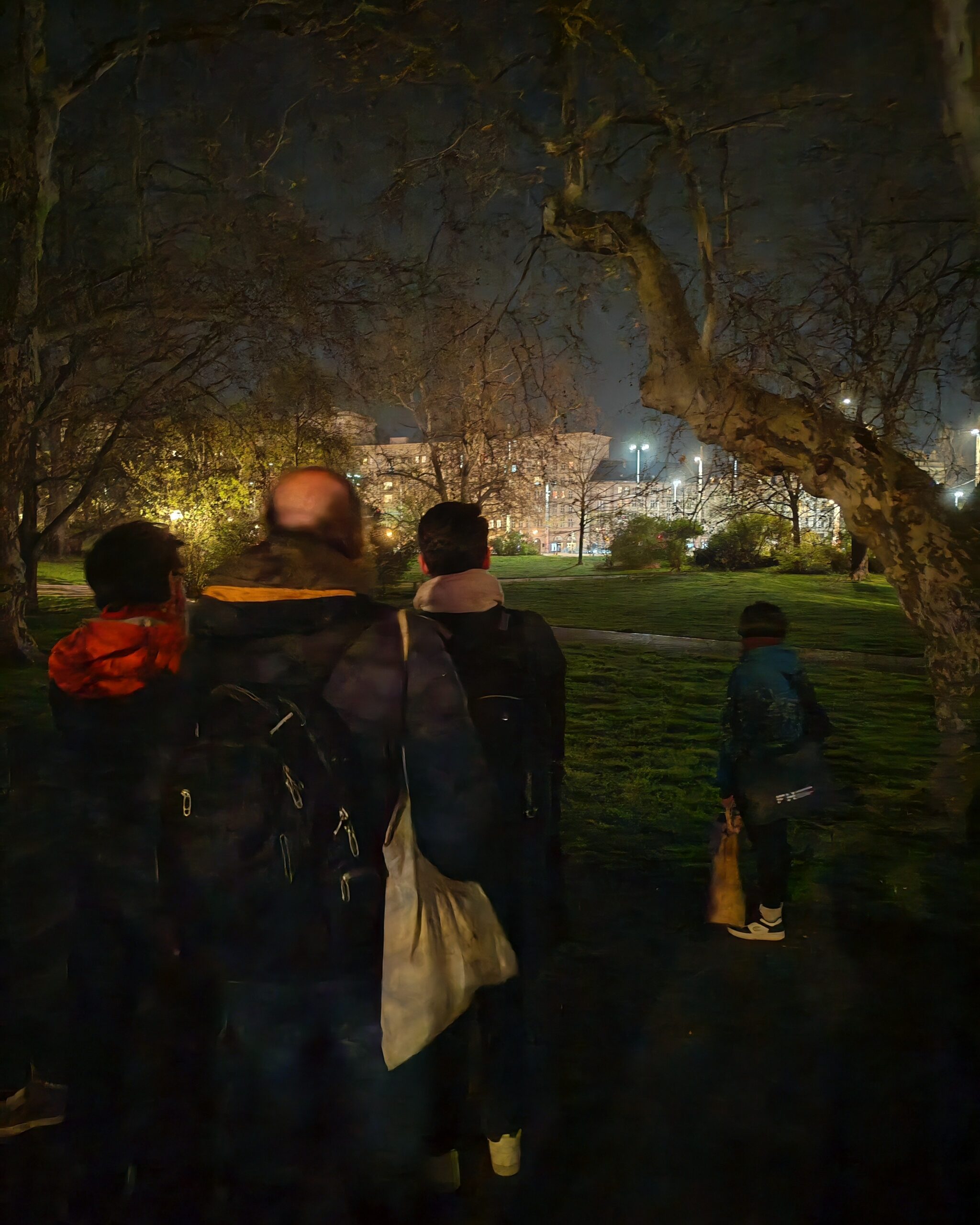
The Leipzig meeting also included a dedicated session on environmentally friendly public lighting in urban areas, featuring insights from the City of Leipzig. This was complemented by a presentation by Heike Besier from the City of Leipzig explained their work on public lighting management from the ’90s to today, and Frank Vohla from Paten der Nacht and the Altenburg Astronomy Club took us on a night-time tour of the city to observe city lighting management to celebrate the International Dark Sky Week.
Looking Ahead
The meeting concluded with a clear set of next steps, including upcoming deadlines for data collection, further development of project outputs, and the continued rollout of pilot actions. Partners reaffirmed their commitment to collaboration and to delivering concrete solutions for reducing light pollution and promoting dark skies across Central Europe.
As the project moves into its implementation phase, the Leipzig meeting marked an important moment to consolidate progress and reinforce the shared vision of protecting the night environment while unlocking new opportunities, including sustainable tourism and community engagement.