
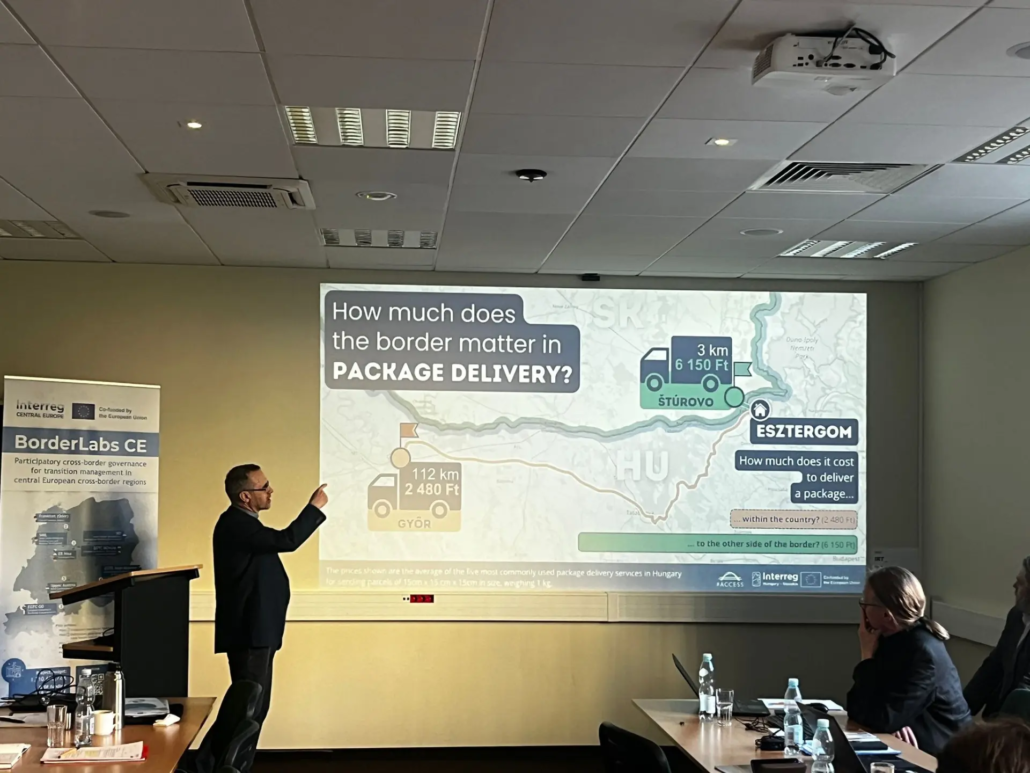
On 4 March 2026, an international conference titled “Cross-border cooperation in the era of challenges and transformation – space, energy, climate, culture” took place at the Wrocław University of Environmental and Life Sciences in Wrocław, Poland. The event was organized within the framework of the BorderLabsCE project implemented under the Interreg Central Europe programme and brought together researchers, experts, representatives of public administration, and practitioners engaged in cross-border cooperation and regional development.
Hosted at the Educational and Development Center Wrocław–Pawłowice of the Wrocław University of Environmental and Life Sciences, the conference provided a platform for dialogue and knowledge exchange on the future of cooperation in European border regions. During the opening session, Prof. Szymon Szewrański, Vice-Rector for Socio-Economic Relations at the university, highlighted that border regions, once perceived mainly as areas of division, are increasingly becoming spaces of cooperation, innovation, and development. According to Prof. Szewrański, cross-border areas and European Union funding instruments can act as important drivers of regional development, while universities should play an active role in supporting evidence-based policymaking through research and scientific data.
The conference addressed various dimensions of cross-border cooperation in Europe, including economic, social, cultural, and spatial aspects. Particular attention was given to the challenges faced by border regions in the context of the European Union’s cohesion policy, energy transition, climate protection, and sustainable regional development. Participants discussed topics such as climate change adaptation, environmental protection, spatial planning, integrated territorial management, and the concept of a just energy transition in border regions. The discussions also highlighted the importance of culture, landscape, and local identity in strengthening cooperation between communities on both sides of national borders.
Another important topic was the role of innovation, new technologies, and smart specializations in supporting the development of border regions. A significant part of the discussions focused on identifying and overcoming barriers that still hinder cooperation between neighboring countries, including legal, administrative, and technical obstacles resulting from differences in national regulations and procedures.
The conference programme included keynote lectures, thematic sessions, and poster presentations. The event enabled participants to exchange knowledge, present research results, and discuss practical approaches to strengthening cooperation between neighboring regions and countries.
The conference was organized by the Institute for Territorial Development – a unit of the Lower Silesian Voivodeship Self-Government, the Institute of Spatial Economy at the Wrocław University of Environmental and Life Sciences, and the European Grouping of Territorial Cooperation NOVUM. It was held under the honorary patronage of the Ministry of Development Funds and Regional Policy, the National Institute of Local Government, the Marshal of the Lower Silesian Province Paweł Gancarz, the Rector of the Wrocław University of Environmental and Life Sciences Prof. Krzysztof Kubiak, and the Dean of the Faculty of Spatial Management and Landscape Architecture Prof. Beata Raszka.
By bringing together researchers, policymakers, and practitioners, the conference contributed to strengthening dialogue and cooperation among stakeholders involved in cross-border initiatives and highlighted the importance of joint solutions for the sustainable development of European border regions.