
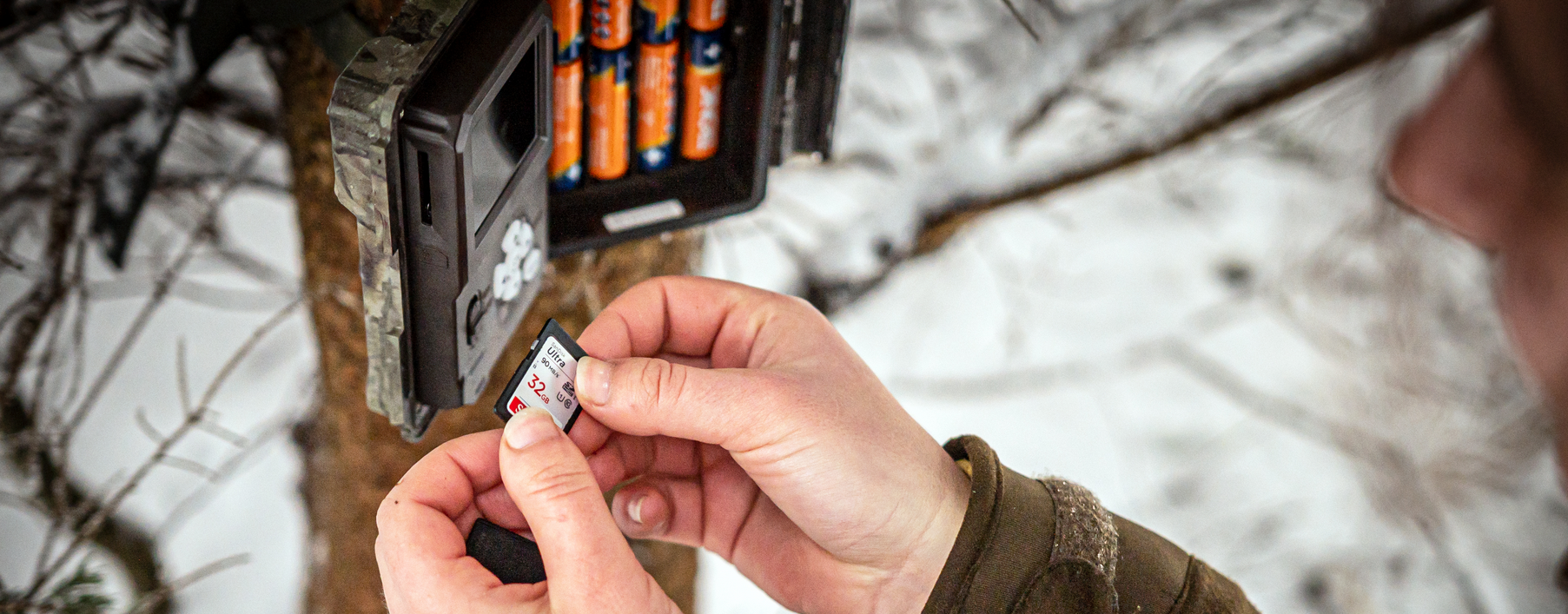
Camera trapping is a key tool for monitoring, studying, and protecting large carnivores. It enables the collection of valuable information about their occurrence, movement, and behaviour in the wild. Using camera traps, carnivores can be monitored non-invasively without disturbing them in their natural environment. This article offers a set of practical tips, real-world experiences, and recommendations that can help with selecting suitable equipment.
The Most Important Criteria When Choosing a Camera Trap
Before diving into specific brands and models, it is important to clarify which factors are crucial when selecting a camera trap for monitoring large carnivores:
- Reliability and durability – the camera trap must withstand not only harsh weather conditions but also rougher handling (camera traps are often inspected by wildlife, including wild boar or woodpeckers. Boars can even open camera traps.)
- Image quality – clear and sharp photographs are essential for proper identification of individual animals, particularly in the case of felids.
- Battery life – long battery endurance is necessary for continuous monitoring.
- Ease of use and maintenance – simplifying the work of coordinators is crucial for effective monitoring.
Innovative Practical Tips
Field monitoring coordinators have developed many practical and creative ideas for improving camera trap performance. These simple tricks can save considerable time and reduce technical problems:
- Tip 1: Regularly check the condition of metal contacts in the battery compartment. Oxidation can cause device malfunctions—batteries may short-circuit or fail to deliver power to the camera trap.
- Tip 2: Before inserting an SD card, clean its metal contacts with a dry cloth. Dirt on the contacts can cause reading errors. After insertion, always verify that the camera trap has recognised the card correctly.
- Tip 3: When servicing the camera trap, format the SD card—preferably first on a computer and then directly in the device. This reduces the risk of data writing errors and improves reliability.
- Tip 4: You can further camouflage the camera trap at the site—using markers (black permanent marker works well in shaded areas) or natural materials such as bark, leaves, grass, or forest litter fixed with a small amount of adhesive.
Monitoring large carnivores is often a demanding activity that requires not only professional knowledge and physical fitness but also patience and creativity. In the field, we face various challenges—from difficult environmental conditions to technical problems associated with using camera traps. Even though a wide range of brands and models is available on the market, each coordinator develops their own proven methods and tricks to simplify the work and achieve the best possible results. Some rely on simple improvisation, while others focus on optimising camera trap settings to capture the most relevant data.
Thanks to these extensive and long-term experiences, we can continually improve our monitoring methods and more effectively focus on the protection of large carnivores. This work enables us to better understand their behaviour and distribution, which is crucial for their conservation. It is therefore important that we also minimise disturbance to large carnivores and other species during our activities. For this reason, we do not install camera traps in sensitive locations near dens, where our presence or the device itself could cause disturbance.
Although we sometimes encounter problems such as camera trap theft or technical complications, we know that our efforts are not in vain. Every new experience—whether positive or instructive—moves us closer to our shared goal: protecting these fascinating species that are an irreplaceable part of our landscape.
You can read more about different brands of camera traps in the original version of this article here.
You can watch funny moments captured by camera traps.