
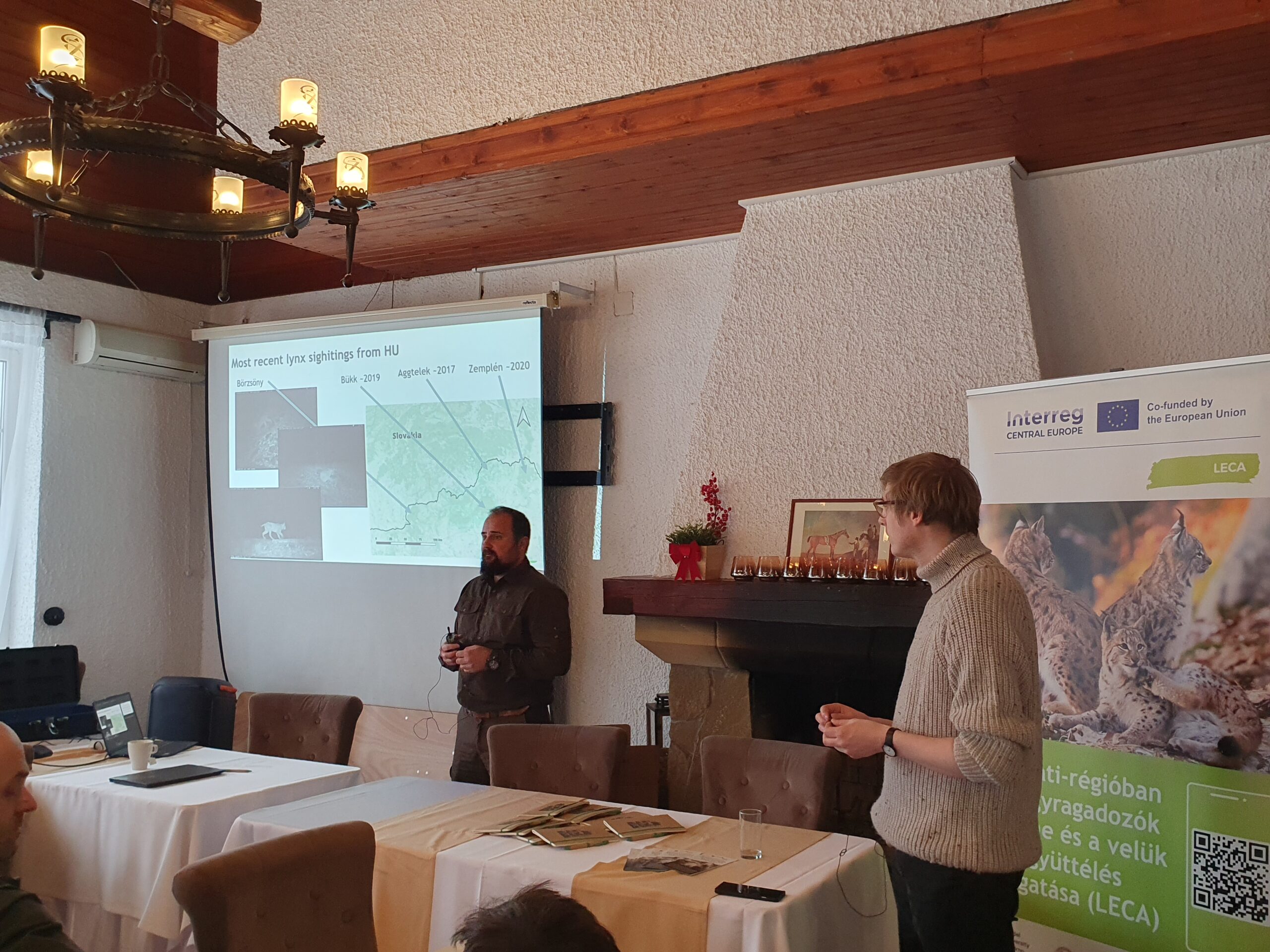
Stakeholders gathered on 22 and 23 January 2026 in Szilvásvárad, Hungary to discuss experience and challenges of the lynx monitoring activities in the Slovak Karst pilot area. Within the LECA project Slovak and Hungarian experts – hunters, foresters, national park rangers and conservationists – have monitored the Slovak and the Hungarian side of the Karst and the surrounding area of the Bükk and the Mátra mountains, the Borsod-Heves and Karancs-Medves hills, looking for the traces of lynxes. Experts applied camera traps and field research to gather evidence of the presence of lynx in the area.
The overall conclusion of the two-year-long research project is that the number of lynxes has decreased on both sides of the Karst area, a previous stronghold for the species, while in Hungary experts haven’t found any traces of the feline during this period. At the stakeholder meeting, participants of the research activity discussed potential threats lynxes are facing, including poaching, road network development and urbanisation. They agreed that the monitoring activities should be continued with the involvement of hunters, foresters and conservationists which can potentially contribute to an earlier and better detection of such an elusive species and can facilitate further cooperation and building trust between these groups to mitigate conflicts.
On the second day of the meeting, the rangers and wildlife experts of the Bükk National Park Directorate invited the participants to a field trip to introduce potential lynx and wolf habitats in the highland area of the Bükk Mountains.