
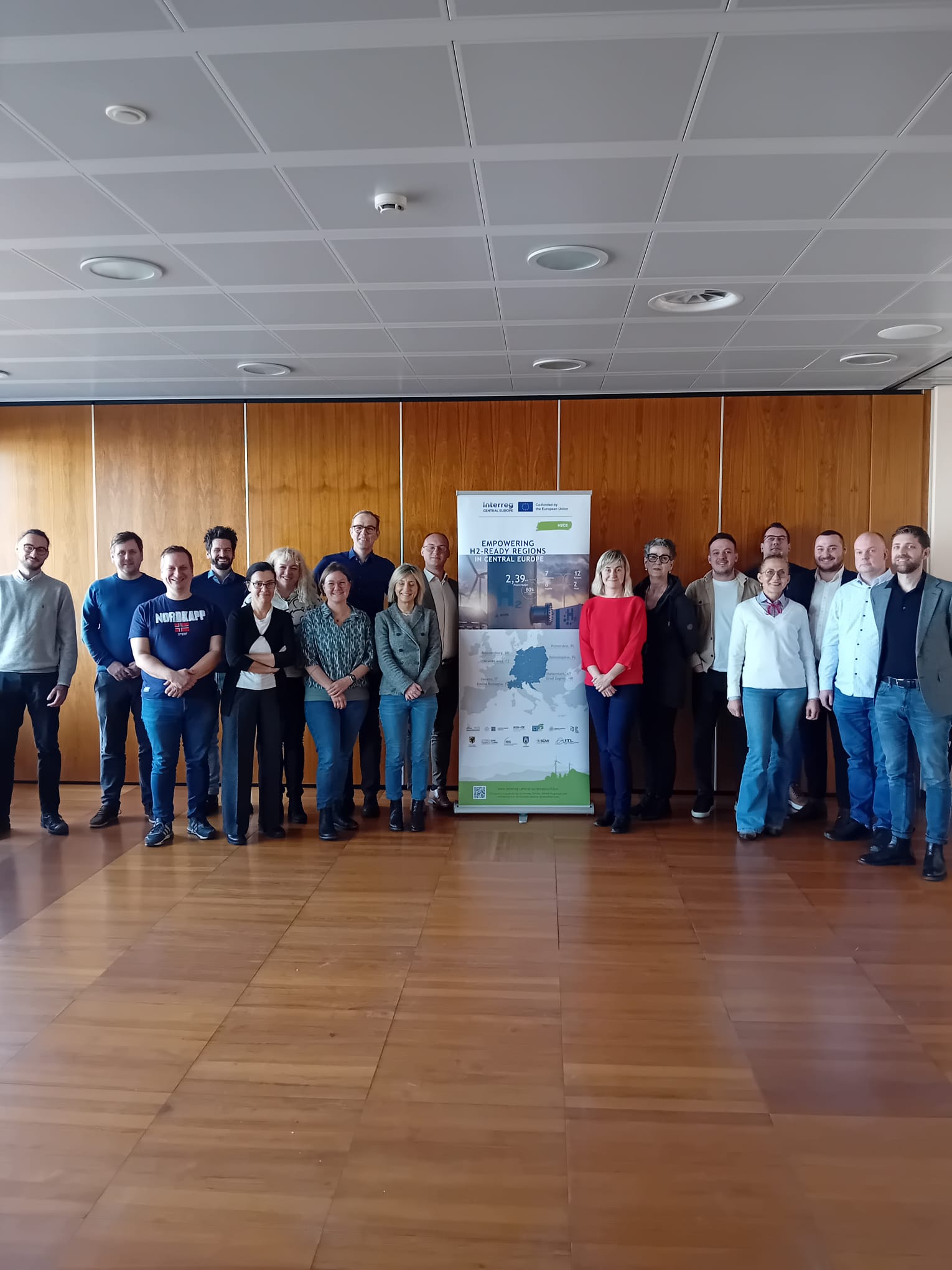
During its first two years, H2CE helped public authorities address the integration of hydrogen and renewable energy into regional development and energy planning.
The project responded to a gap in existing support. Hydrogen planning had often focused primarily on project developers and industry, while regional and local authorities were treated mainly as regulators or providers of framework conditions.
H2CE instead recognised public authorities as active coordinators of the energy transition.
Work completed
The partnership:
- analysed hydrogen opportunities and challenges in participating regions;
- involved regional stakeholders in planning and consultation;
- developed guidance for regional strategies and action plans;
- advanced GIS-based decision-support tools;
- tested energy-system modelling through the Lübben energy-cell approach;
- developed a hydrogen-voucher mechanism;
- designed approaches for Regional H2 Competence Centres; and
- built the foundations of the H2CE Collaboration Platform and regional network.
How the work was organised
The project combined three areas of activity:
- Strategic planning: incorporating hydrogen into regional strategies and action plans.
- Energy-system integration: examining production, infrastructure, distribution and demand through regional tools and pilots.
- Knowledge and cooperation: connecting stakeholders and sharing methods, experience and outputs.
Lessons from transnational cooperation
Cooperation between regions helped partners compare different planning environments and identify which methods could be transferred.
It also demonstrated the importance of coordinating hydrogen production, infrastructure and demand across borders. Without such coordination, regions risked fragmented investments, missing connections or unnecessary overcapacity.
Practical value
By connecting governance with technical analysis, H2CE gave regional decision-makers a more complete basis for evaluating hydrogen opportunities.
The work completed during the first two years prepared the partnership for final testing, refinement and consolidation of its outputs before the project ended in March 2026.