

Project overview
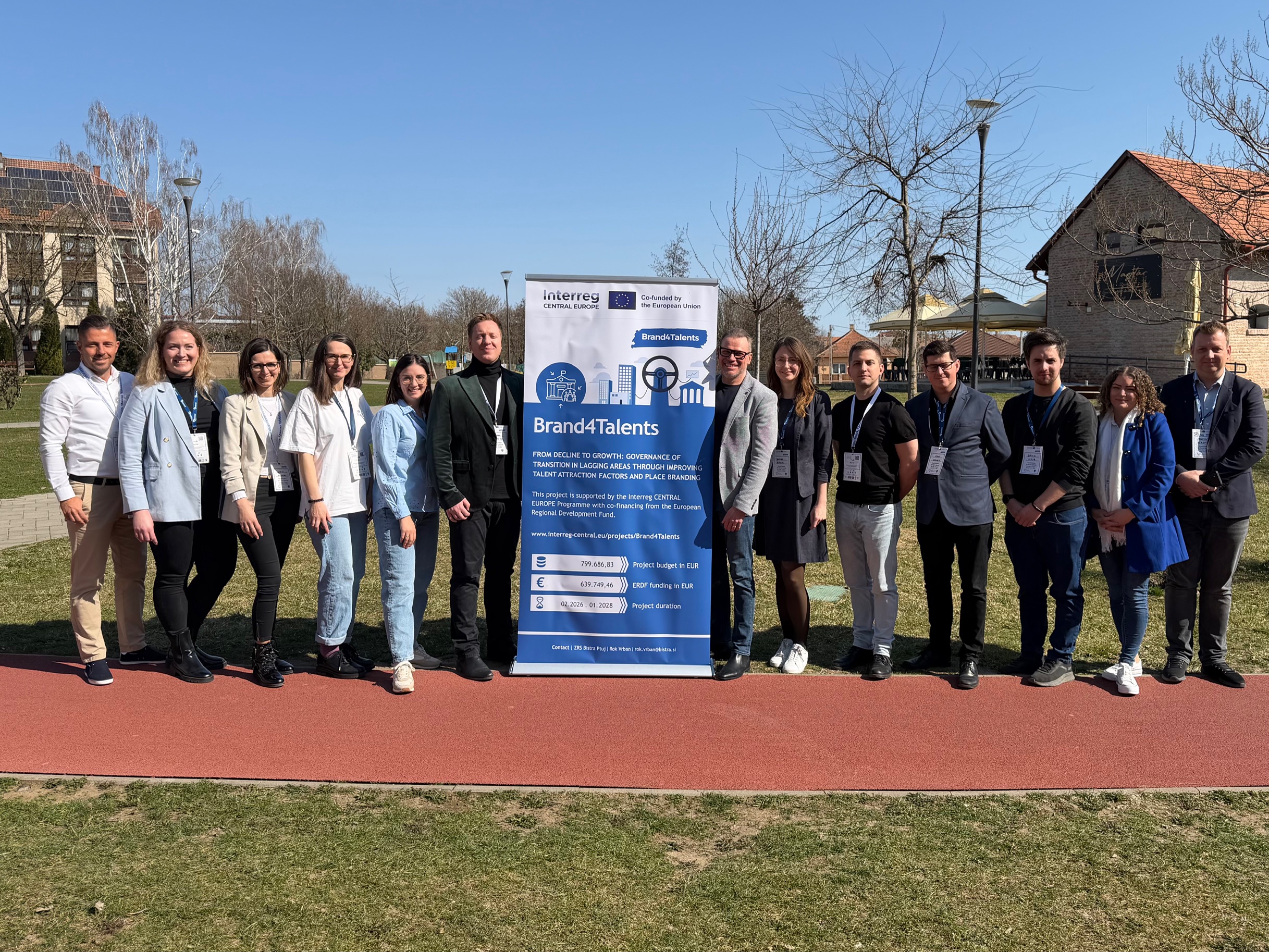
From Decline to Growth: Governance of Transition in Lagging Areas through Improving Talent Attraction Factors and Place Branding
Outmigration of young talents drains many lagging regions where jobs, services and image fall behind big cities. Brand4Talents aims to turn these into places where young people choose to stay or return to. Partners from four countries strengthen local governance for talent management, design and test action plans with better services, infrastructure and community engagement and launch place-branding campaigns. Together they co-develop a governance model and territorial strategies that other regions can adapt.
-
0,80m €
-
Project Budget
-
80%
-
of the Budget is funded by ERDF
-
4
-
Countries
-
6
-
Regions
-
6
-
Partners
-
1
-
Pilots
Duration
Start date
End date
Project progress
Project partnership
Project partners

Lead partner
Scientific research centre Bistra Ptuj
Project partner
Regional development department
/
Roadmap
Specific problem

Lagging areas in Central Europe face significant demographic challenges, characterized by outward migration and negative population growth. The root causes include limited job opportunities, less developed public services, and restricted cultural offerings, which lead young talents to relocate to developed centres.Danzer-Diets 2013 claim: that lagging areas in the CE region lose highly-educated young people - they move to the capital or abroad to study and they do not return. According to OECDUNDESA “World migration in Figures”, the biggest increase in emigration rates were recorded in lagging areas, having demographic and labour market implications. It leads to a shortage of highly educated workforce in businesses/institutions, reducing their competitiveness and innovation capacity. The employers then cannot create high quality jobs, attractive work environments, and career opportunities, further driving away talent.The process has dramatic consequences.
Main objective

Brand4Talents aims to empower communities in lagging areas by strengthening governance structures that improve talent-attraction factors and place branding, in order to reposition these regions as attractive and sustainable destinations for talents. Talents play a crucial role in unlocking the development potential of these lagging areas, driving innovation, economic resilience, and social vitality. This approach contributes to balanced territorial development in line with the Territorial Agenda 2030.
Our approach

Our project will develop and implement a multi-sectoral governance model to address demographic change through capacity development, enhancing talent attraction factors, place branding, and policy advocacy. The project will use a two-pronged approach: place branding combined with on-the-ground improvements that enhance the attractiveness of the lagging areas. The project will enhance the abilities of local authorities and stakeholders to not create and communicate an authentic community brand, but also to improve the conditions that make them genuinely desirable for talents. Our multi sectoral governance model provide helps the municipalites and stakeholders in lagging areas to apply different practices aimed at enhancing the place brand and attracting talents. Our model will include tools and practices cover the roles and responsibilities required for technical, decision-making and internal processes, policies and procedures to successfully manage the transformation. Our integrated governance model will help local authorities to develop their integrated action plans, incorporating talent attraction and place branding practices, tools to combat demographic change (by shifting the trend of young people leaving the lagging territories).
Impact, solution

To meet its objectives, the capacity of project partners will be increased, and Brand4Talents governance model (O1.2) will be co-developed, which will serve as the foundation for the local action plans (O1.3). Partners will pilot test and evaluate specific actions from these plans (O2.1). Then, using lessons learned from the pilots, the partnership will co-develop and disseminate a solution (O2.2) tailored to the target group. For the uptake of project results, partners will also co-develop territorial plan that recommends specific interventions as well as policy proposals (O3.2).
News



Pilot actions
Outputs
O.1.2 Strategy paper for multi-sectoral governance of talent factors and place branding in lagging areas
O.1.3 Jointly developed local action plans
O.2.2 Brand4Talents jointly developed solutions
O.2.3 Transnational action plan for upscaling the multisectoral governance model of developing talent attraction factors and place branding
Project images
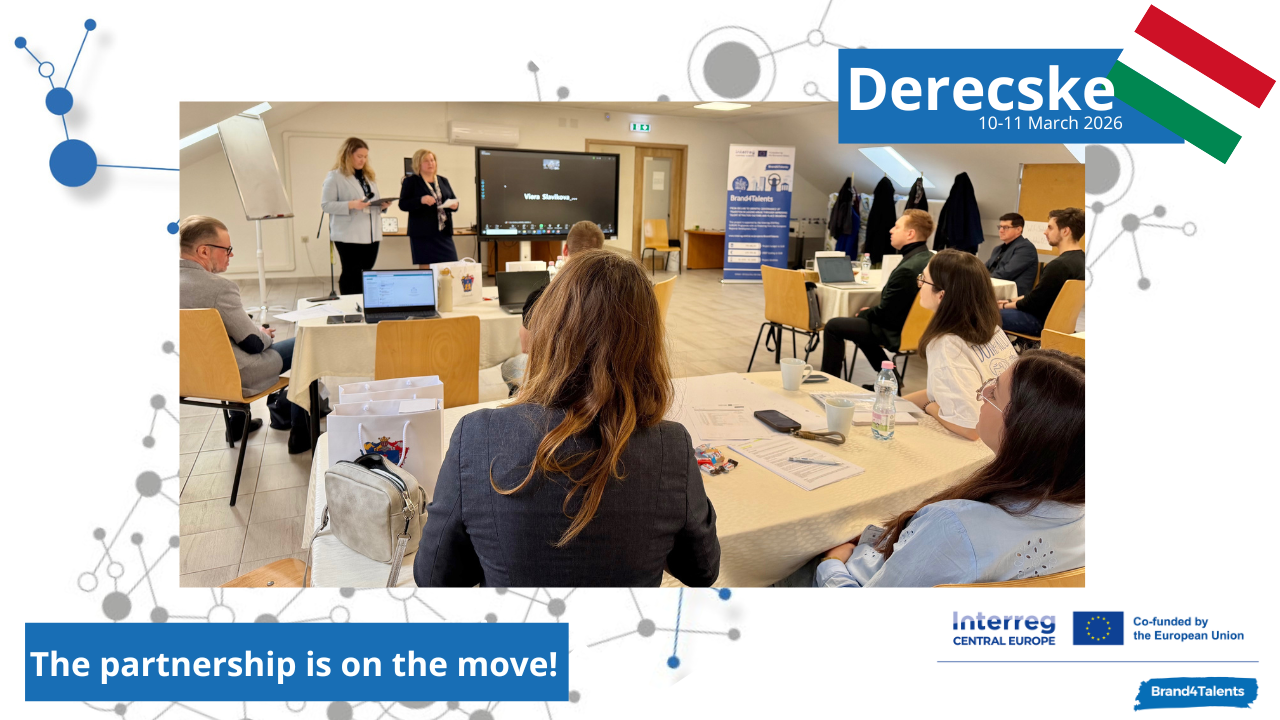
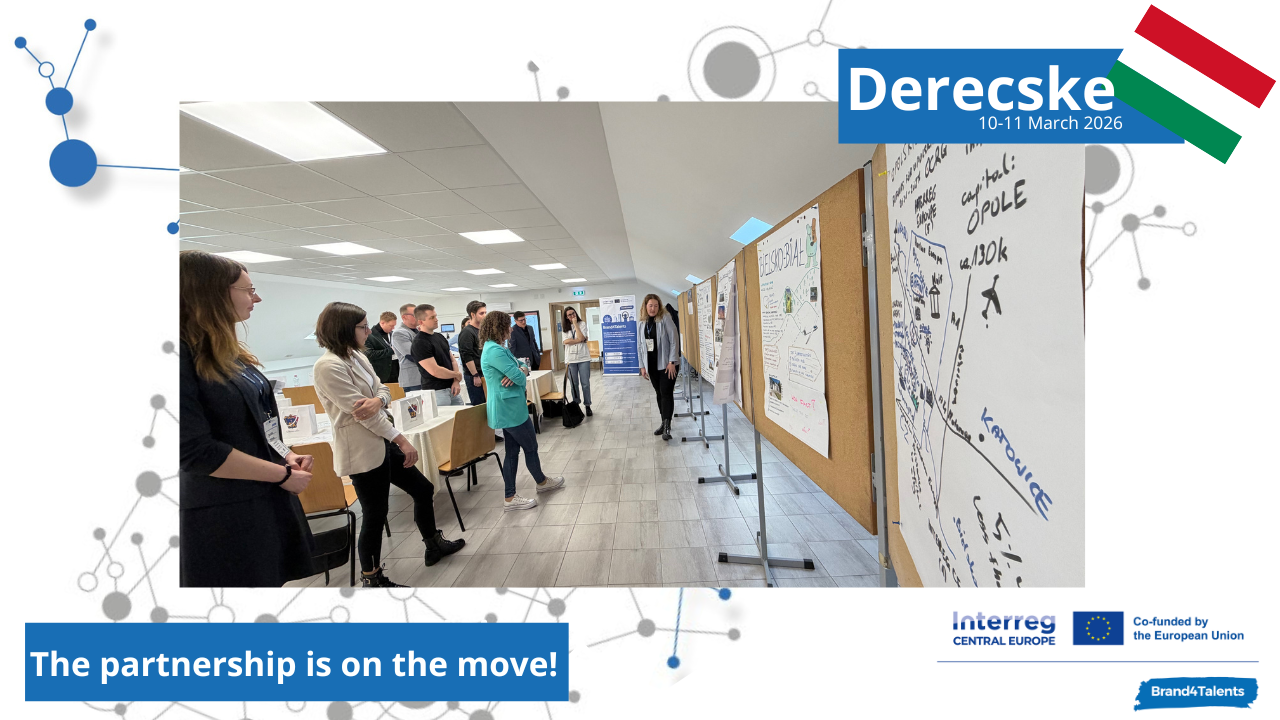
Brand4Talents
The project lead partner is responsible for the content of this project website.