
At the heart of the BlueTwin-CE project lies a powerful concept: the Blue Zone approach.
But what does it actually mean?
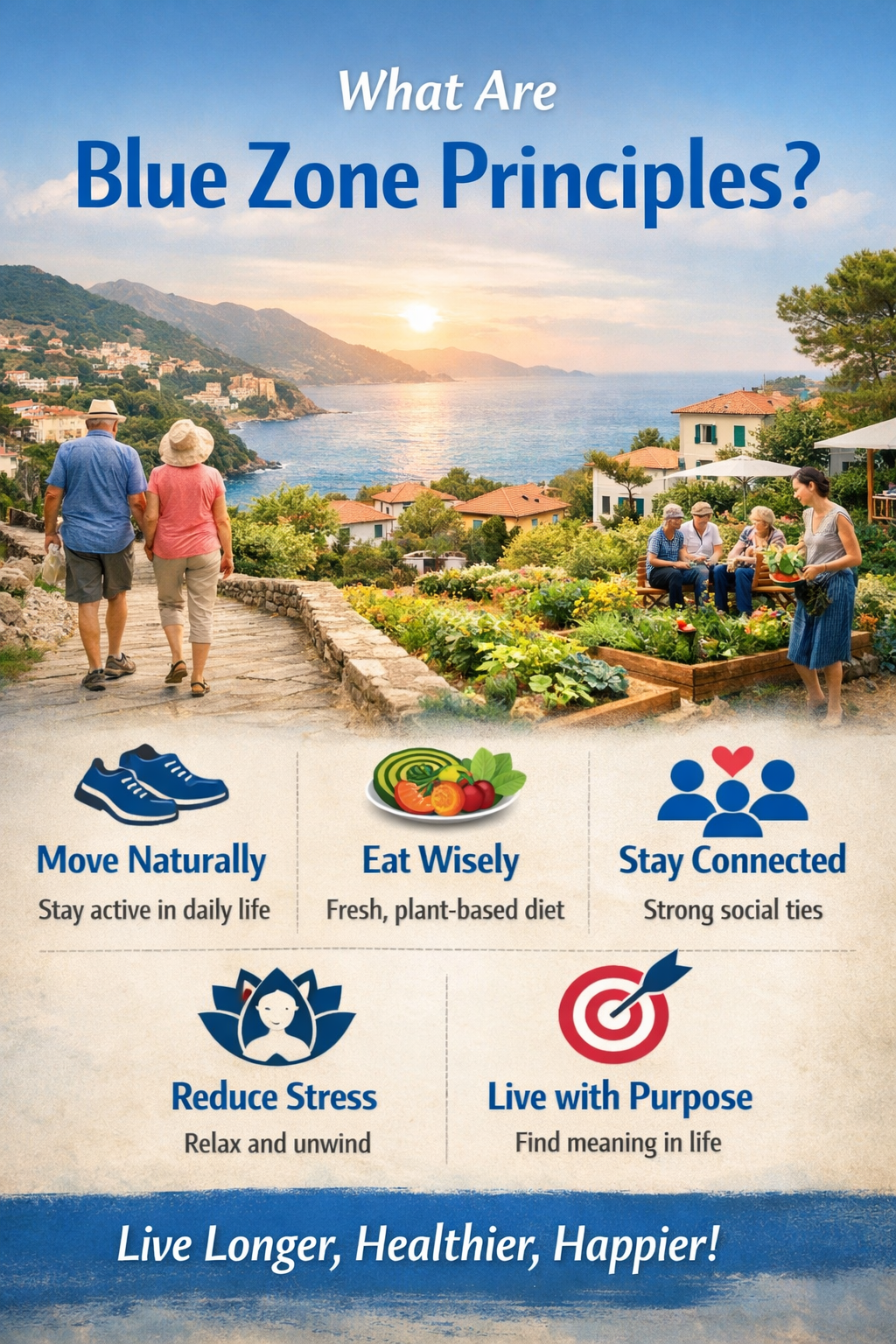
The term “Blue Zones” refers to regions around the world where people live significantly longer, healthier lives than average. Researchers studying these areas identified a set of shared lifestyle patterns that contribute to longevity and well-being. These patterns are now known as the Blue Zone principles.
Rather than focusing on medical interventions, Blue Zone principles emphasize everyday habits and environments that support a healthy and fulfilling life.
The Key Blue Zone Principles
- Move Naturally
Daily physical activity is integrated into everyday life — walking, gardening, and active routines rather than structured exercise. - Eat Wisely
Diets are based on fresh, local, and mostly plant-based foods, with limited processed products. - Stay Socially Connected
Strong family ties and active community life play a key role in well-being and mental health. - Reduce Stress
Regular moments of rest and relaxation are part of daily routines. - Live with Purpose
Having a sense of meaning and belonging contributes significantly to a longer and healthier life.
Why Are Blue Zone Principles Important for Rural Areas?
In many rural regions across Central Europe, communities are facing serious challenges such as aging populations, depopulation, and declining public services. The Blue Zone approach offers a new perspective: instead of focusing only on infrastructure or economic development, it looks at how to create environments where people can thrive at every stage of life.
By applying Blue Zone principles, municipalities can design spaces, services, and policies that promote healthier lifestyles, stronger communities, and higher quality of life.
From Principles to Action
In the BlueTwin-CE project, these principles are not just theoretical ideas. They are being translated into real-life interventions in pilot areas — from improving walkability and creating community spaces to promoting healthier habits and social interaction.
Ultimately, the goal is to develop governance models that help rural communities become places where people not only live, but truly flourish.