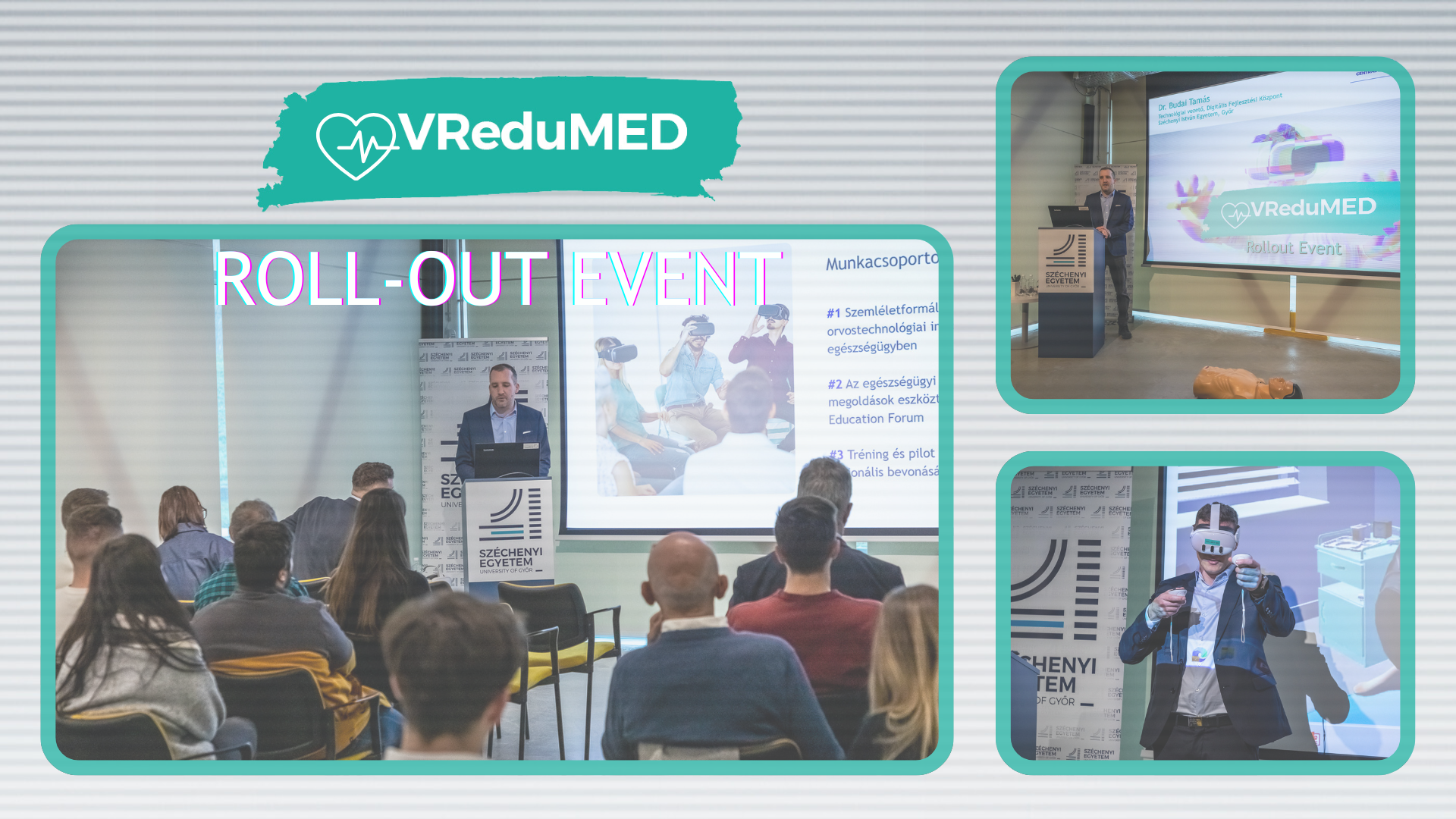
On November 25, 2025, the VReduMED project roll-out event in Hungary – organized by Innoskart Digital Cluster and Széchenyi István University – brought together a diverse group of stakeholders from the education, healthcare, and innovation sectors to explore the transformative power of virtual reality in medical education. Held at the university’s Science and Technology Park in Győr, the event offered a dynamic platform to present the key outcomes of the VReduMED project and promote its practical implementations. The program featured insightful presentations from the Széchenyi István University, a lively discussion with experts in digital healthcare education, and hands-on VR pilot demonstrations that captivated the audience. Immersive Experiences Sparked Strong Interest A major highlight of the event was the opportunity for attendees to directly experience two of the project’s most popular and impactful pilots: the Room of Horror and the VR CPR. Both simulations attracted significant attention and sparked vibrant discussions among participants. The Room of Horror pilot – designed to identify and correct patient safety risks in a virtual hospital room – impressed visitors with its realism and educational value. Meanwhile, the VR CPR simulation allowed participants to test their life-saving skills in an immersive and stress-responsive environment, making the experience both engaging and educational. Attendees not only actively tested the tools on-site, but also provided enthusiastic feedback and constructive suggestions for future improvements. Their input reinforced the project’s relevance and showed clear demand for continued development and integration of VR solutions in medical training curricula. A Step Forward for Digital Healthcare Education The roll-out event highlighted how VReduMED is paving the way for innovative, technology-driven healthcare education across Europe. The high level of engagement and positive feedback from the Hungarian audience reflected the growing recognition of VR as a powerful educational tool. The organizers expressed their gratitude to all participants, partners, and stakeholders, and emphasized their commitment to further disseminating the project results and fostering cross-sector collaboration in the digital health ecosystem.