
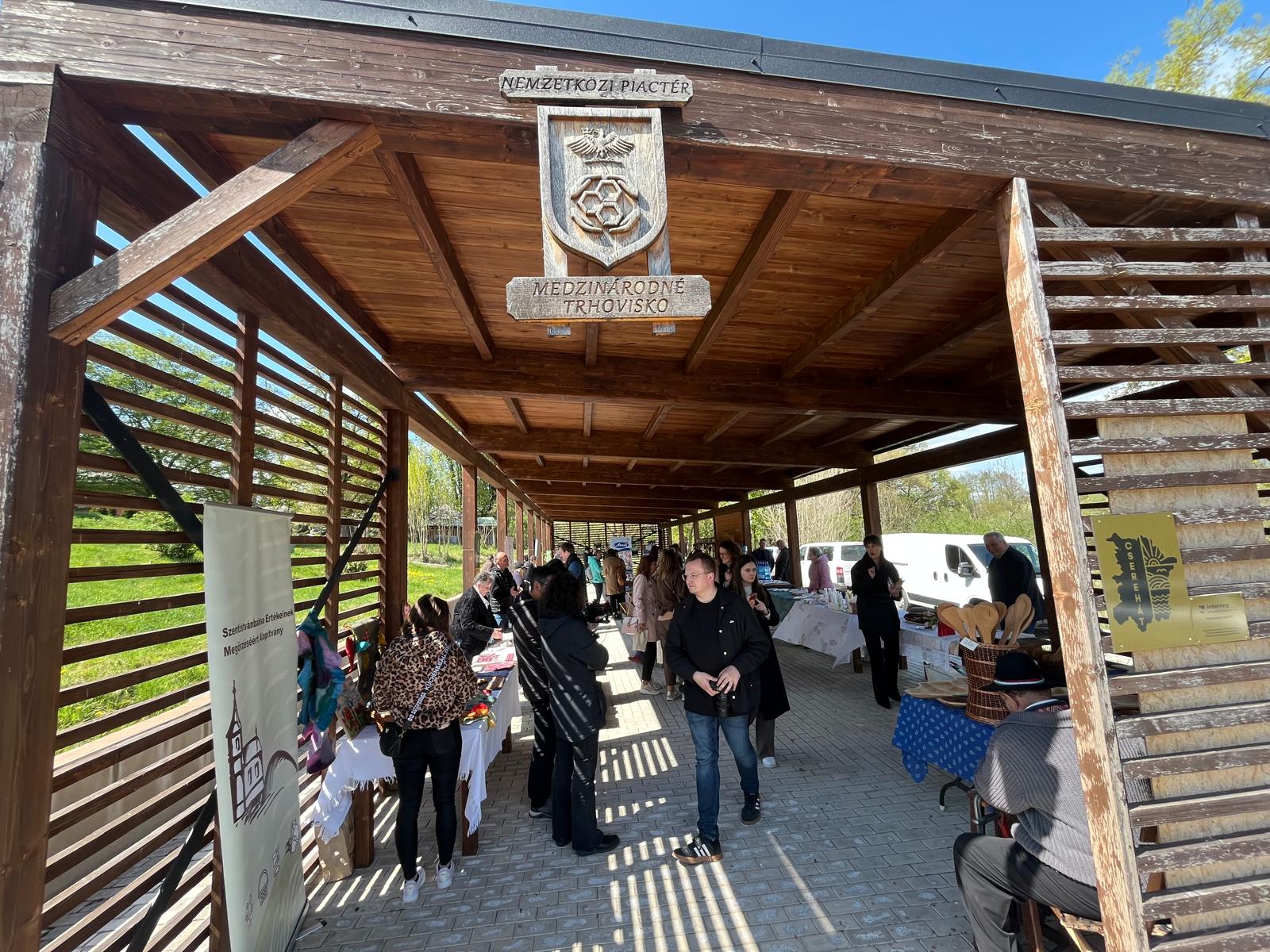
The workshop held in Košice, Slovakia on 21–22 April 2026, was organised by Interact in the format of a “policy lab on the move” and brought together representatives of Interreg programmes, EU institutions, national and regional authorities, project partners, local stakeholders and media from eight European countries. A central role was played by the Via Carpatia European Grouping of Territorial Cooperation (EGTC), whose headquarters in Košice served as the main meeting point and operational hub for the event, linking on‑site project visits with facilitated policy reflections.
As a highlighted example of good practice, Via Carpatia EGTC presented the Szép Cserehát project, developed within the framework of the Territorial Action Plan for Employment (TAPE). Introduced under Priority Axis 3 of the Interreg Slovakia–Hungary Programme, TAPE represents a unique, integrated territorial approach to addressing employment inequalities in cross‑border regions. Each TAPE is based on a geographically coherent area spanning both sides of the border and is built on a bundle of synergic and complementary projects designed to create jobs, enhance labour mobility and respond to clearly identified territorial needs.
The presentation illustrated how the Cserehát Action Plan, first contracted in 2019, combines multiple interventions related to employment support, social services and community development, demonstrating the added value of coordinated, place‑based strategies over isolated projects.
The programme also included field visits to Gagyvendégi, Hercegkút and Hidasnémeti, allowing participants to observe concrete results on the ground. These visits showed how even small‑scale local initiatives can generate tangible and positive impacts in border regions when embedded in coherent action plans and supported by strong cross‑border partnerships.
For RESILIENCE, participation in the Interact policy lab offered valuable inspiration on how job creation, social inclusion and the revitalisation of rural and peripheral areas can be tackled through integrated, project‑based approaches. The experience confirmed the importance of linking concrete project results with broader policy frameworks to strengthen regional resilience and inclusive development across Central Europe.