
As part of the GreenPATH project, project partner Technische Universität Berlin is developing a dynamic series of activities at the EUREF-Campus in Berlin aimed at encouraging more sustainable mobility behaviours among students and campus users.
Rather than focusing on a single intervention, the initiative combines awareness-raising activities, hands-on experiences and practical mobility solutions to make active and sustainable commuting more accessible, attractive and user-oriented.
At the heart of the campaign are several complementary activities designed to engage students directly in the transition towards greener mobility habits. These include the CO₂mmuting Challenge, cycling training sessions for students, bicycle repair workshops, e-bike and cargo-bike testing opportunities during campus events, as well as participatory workshops focused on rethinking mobility experiences on campus. Together, these initiatives promote not only behavioural change, but also a stronger sense of ownership and involvement among campus users.
One of the latest activities organised within this framework was Active Mobility Makers, an interactive co-design workshop dedicated to improving walking, cycling and shared mobility experiences at the EUREF-Campus.
The workshop brought students together to reflect on their everyday mobility experiences, identify challenges and collaboratively develop ideas for safer, more accessible and future-oriented campus mobility. Through campus mapping exercises, experience walks, group discussions and collaborative ideation sessions, participants explored issues related to walking and cycling infrastructure, accessibility and safety, campus navigation, parking and shared mobility services.
The initiative highlighted the importance of involving users directly in mobility planning processes. Participants shared practical insights into the barriers they encounter in their daily commuting routines while also contributing constructive and forward-looking ideas for improvement.
The activities also shed light on broader challenges linked to active mobility in urban environments. For many students — particularly international students — cycling in Berlin traffic can still feel unfamiliar or unsafe, underlining the importance of creating supportive environments, accessible infrastructure and confidence-building initiatives that encourage more people to choose active mobility options.
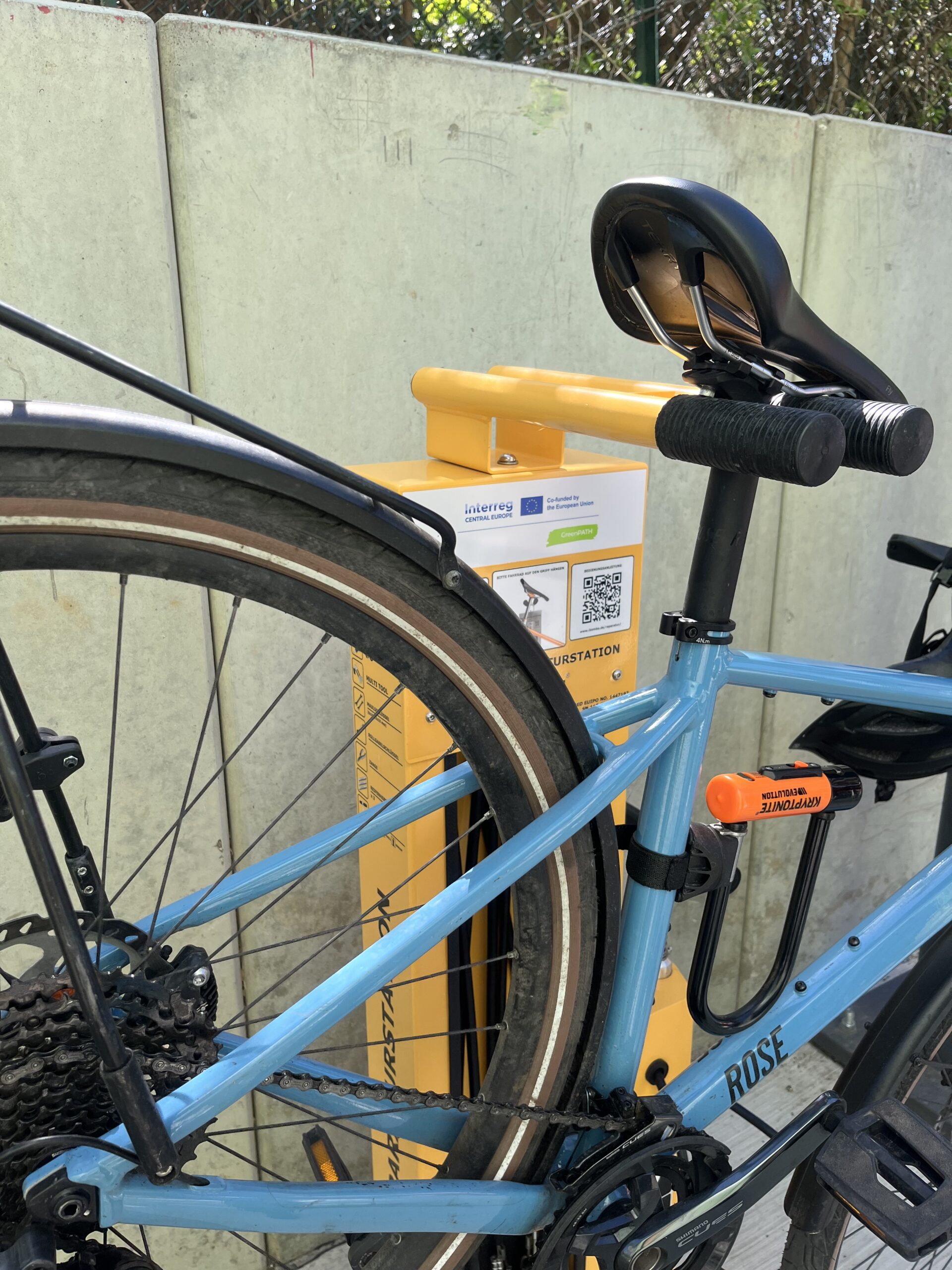
Alongside participatory workshops and awareness activities, Technische Universität Berlin has also introduced concrete infrastructure measures to support sustainable commuting on campus. One recent example is the inauguration of a new bicycle repair station at the EUREF-Campus, developed in collaboration with the campus management.
The repair station allows cyclists to carry out quick self-service repairs directly on site, helping to remove small but common barriers to everyday cycling, such as minor technical issues or maintenance needs. While simple in concept, the intervention represents a highly practical and visible measure to support active mobility within the campus community.
A strong emphasis throughout the campaign has been placed on direct participation and experiential learning. Many of the activities were intentionally designed to prioritise hands-on engagement and real interaction, creating opportunities for students not only to learn about sustainable mobility, but to actively experience and shape it themselves.
By combining awareness-raising, participatory design and practical mobility infrastructure, the activities carried out at the EUREF-Campus reflect GreenPATH’s broader ambition to support more sustainable, inclusive and people-centred mobility systems across Central European Functional Urban Areas.