
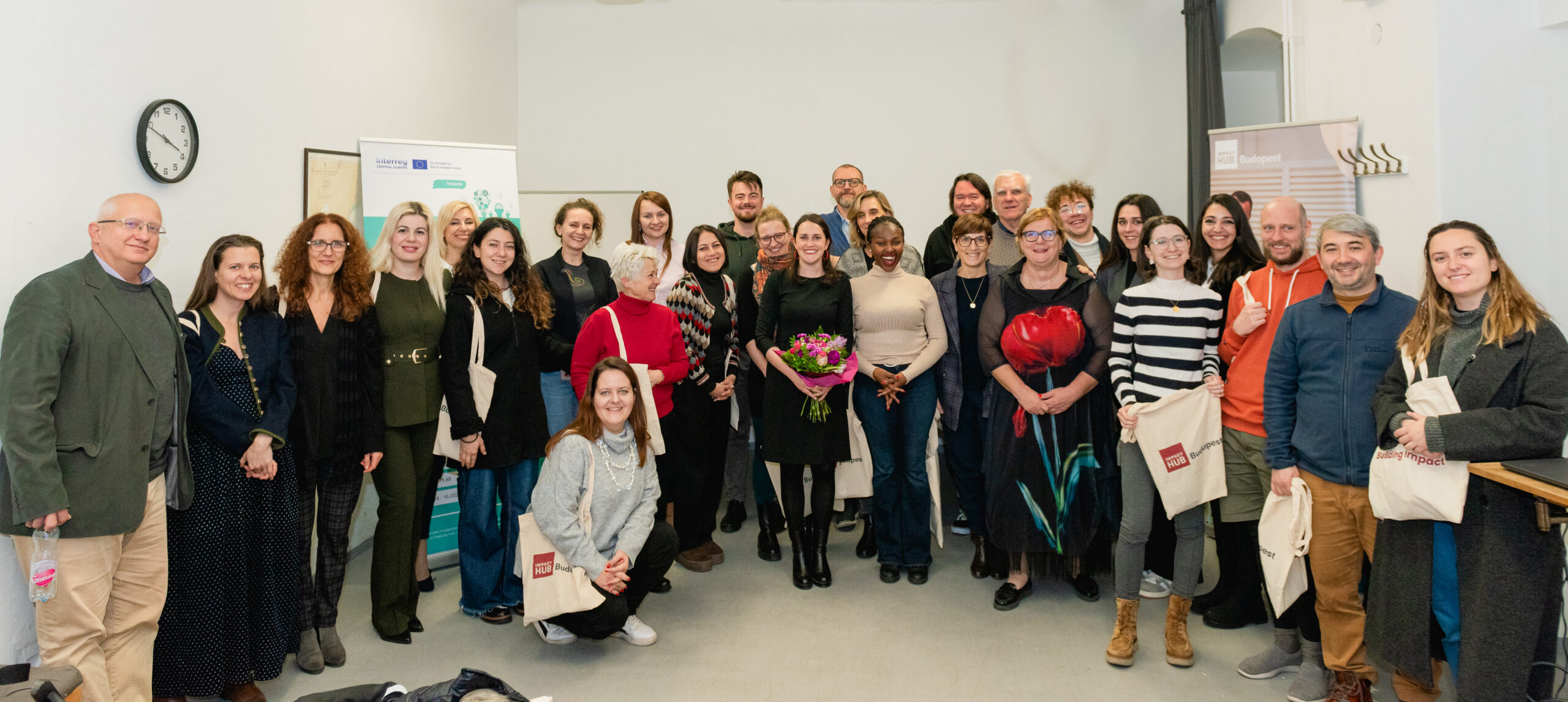
From the very beginning, TASK4ISI set out to do more than deliver isolated activities. Its ambition has been to strengthen inclusive entrepreneurship as a practical and strategic approach to regional development – one that opens opportunities for people and groups whose entrepreneurial potential is too often overlooked or underused. In this sense, the project has created value not only through its outputs, but also through the relationships, knowledge and local capacities built along the way.
One of the most visible contributions of TASK4ISI has been the creation and development of ISIHUBs – local spaces of cooperation that bring together public institutions, business support organisations, social economy actors, experts and entrepreneurs. These hubs have helped connect stakeholders who do not always work closely together in everyday practice. By creating room for dialogue, exchange and joint action, ISIHUBs have strengthened local ecosystems and made inclusive entrepreneurship more visible as a shared responsibility rather than a sectoral issue.
Another important area of impact has been the testing of practical support measures through pilot activities, including the Business Skills Programme and the Business Matchmaking Programme. These activities provided participants with access to knowledge, mentoring, networking and tools tailored to their needs and stage of development. Across regions, the pilots showed that inclusive entrepreneurship support works best when it is flexible, people-centred and grounded in local realities. The project has therefore not only offered support, but also generated valuable lessons about how this support should be designed and delivered.
A particularly meaningful aspect of the project has been its work with groups that are often underrepresented in entrepreneurial ecosystems, including young people, women, migrants and other communities facing structural barriers. TASK4ISI has demonstrated that inclusion in entrepreneurship is not only a question of access to training or services, but also of confidence, visibility, networks and the ability to navigate complex support systems. In many cases, the challenge is not that support does not exist, but that it remains fragmented, difficult to access or insufficiently adapted to users’ real situations. This insight is one of the project’s most important practical contributions.
The project has also shown the value of transnational cooperation. By bringing together partners from different countries and regional contexts, TASK4ISI created opportunities to compare approaches, learn from different models and transfer ideas across borders. This exchange has enriched local work and helped partners see their own systems more clearly – including both their strengths and their gaps. It has also reinforced the understanding that inclusive entrepreneurship is a European challenge that benefits from international learning and joint reflection.
Beyond the immediate activities, TASK4ISI has also laid foundations for longer-term change. The development of the Joint Strategy Agenda, Local Action Plan Packages, Toolkits for Inclusive Entrepreneurship and the Joint Networking Strategy gives the partnership a stronger basis for continuing cooperation and supporting the integration of inclusive entrepreneurship into policy and practice. These outputs are not only project deliverables; they are instruments that can help ensure continuity, scaling and future-oriented collaboration.
Another important dimension of the project’s impact has been the strengthening of cooperation between academia, local government, practitioners and business actors. Events organised within the project have shown how valuable this cross-sectoral cooperation can be when it comes to supporting entrepreneurship in a more open and responsive way. Young people, in particular, have emerged as an important group within this process – not only as beneficiaries, but as innovators, idea-creators and future drivers of more inclusive entrepreneurial ecosystems. Supporting their involvement is one of the project’s most promising long-term investments.
Reflecting on TASK4ISI also means recognising that impact does not end with the formal closing of project activities. Some of the most important outcomes of the project are the networks that have been formed, the trust that has been built and the practical understanding that has emerged from working together. These are often less visible than formal outputs, but they are essential for sustainability.
Ultimately, TASK4ISI shows that inclusive entrepreneurship is not only about creating new programmes. It is also about making systems more accessible, improving coordination, connecting actors more effectively and ensuring that existing opportunities can truly reach those who need them. The project has made an important contribution in this direction, and its results provide a strong foundation for further action in the years ahead.
As the partnership looks to the future, the experience of TASK4ISI offers a clear message: inclusive entrepreneurship grows where cooperation is strong, support is practical, and people are given the space, tools and confidence to turn ideas into action.
This publication has been developed within the CE0200771 TASK4ISI project, supported by the Interreg CENTRAL EUROPE Programme with co-financing from the European Union. Its content is the sole responsibility of the authors and the project partnership and does not necessarily reflect the views or positions of the Interreg CENTRAL EUROPE Programme, its programme bodies or the European Union. Neither the programme authorities nor the European Union can be held responsible for any use that may be made of the information contained herein.