
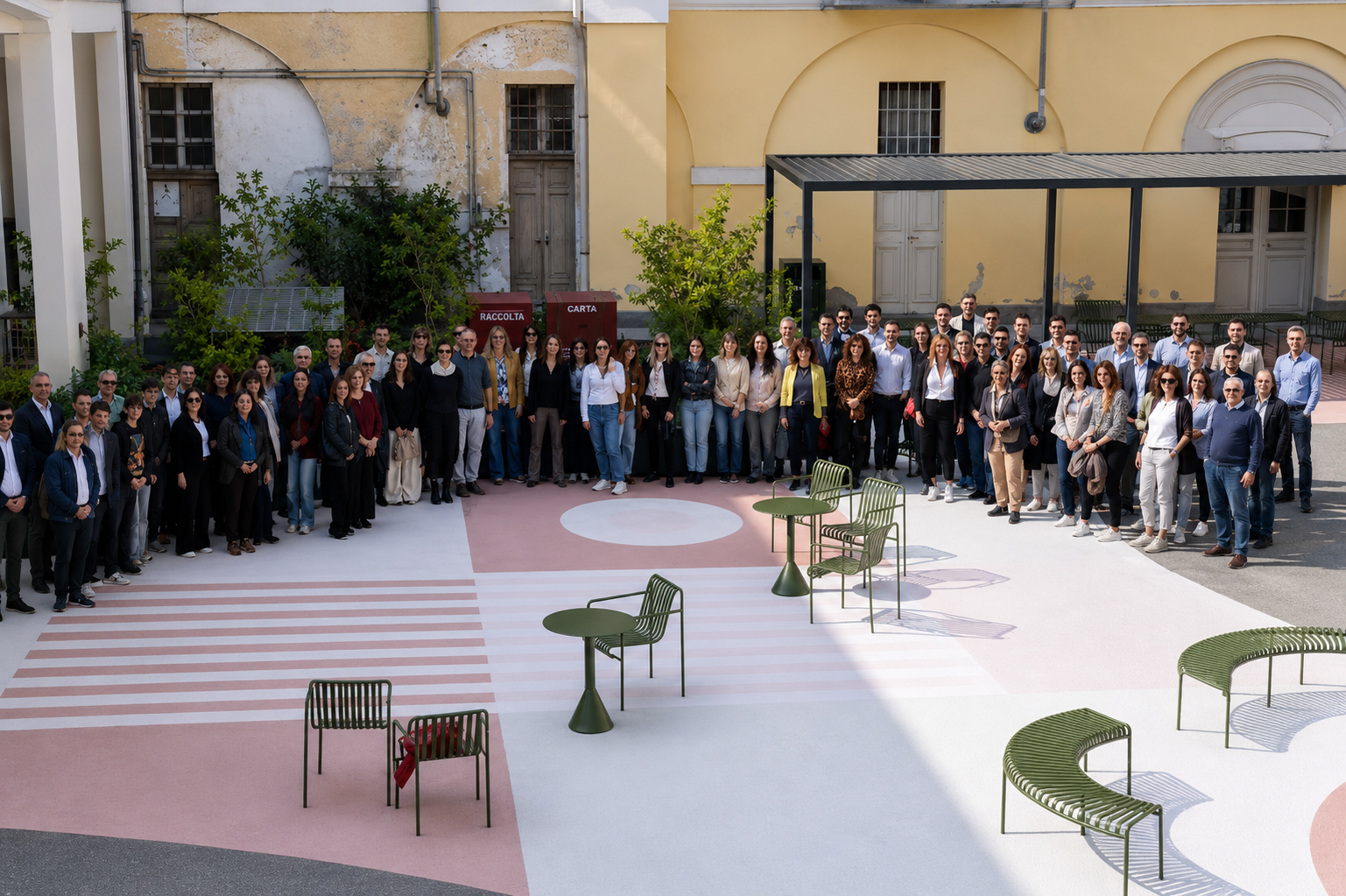
The inauguration took place on April 29, 2026, in the presence of local authorities and municipal employees. The intervention is part of the European initiative “RE-PUBLIC SPACES – Revitalisation of Public Spaces in Historic Cities”, co-funded by the Interreg Central Europe programme, which aims to transform historic courtyards into more sustainable, livable, and climate-resilient spaces.
Urban courtyards are often affected by the so-called “heat island” effect. Through targeted and innovative solutions, the project in Pinerolo demonstrates how these spaces can be adapted to mitigate rising temperatures, improve environmental conditions, and enhance the quality of urban life.
The redevelopment process was strongly participatory, involving more than half of the municipal staff. Employees contributed to identifying needs and priorities and actively took part in the implementation phase, including the creation of a large ground painting that now characterizes the courtyard.
Key interventions included:
– introduction of new vegetation, planters, and green areas
– installation of mobile furniture for relaxation and social interaction
– construction of a shaded pergola in the sunniest area
– application of light, high-reflectance surface coatings to reduce heat
– reduction of parking spaces in favor of more sustainable uses
A distinctive element of the project is the artistic intervention “Orizzonte Interno” by Oscar Cauda, which transformed the courtyard into a visual landscape inspired by the agricultural territory of Pinerolo. The artwork, designed with light and reflective colors, contributes to heat mitigation while strengthening the identity of the place. The space now functions as both an ecological and artistic environment.
The landscaping design, developed according to biophilic principles, includes a carefully selected variety of plants to reflect seasonal changes—from winter blooms to spring blossoms and summer aromatic species—enhancing both biodiversity and user experience.
The RE-PUBLIC SPACES project brings together nine partners from four European countries—Poland, Slovenia, Croatia, and Italy—including research institutions and cities. The initiative focuses on developing innovative methodologies and strategies to support climate adaptation in historic urban areas, with strong involvement from local communities.
The reopening of the Cortile Comunale marks an important milestone for Pinerolo, showcasing how cooperation, research, and citizen participation can contribute to more sustainable and resilient cities.