
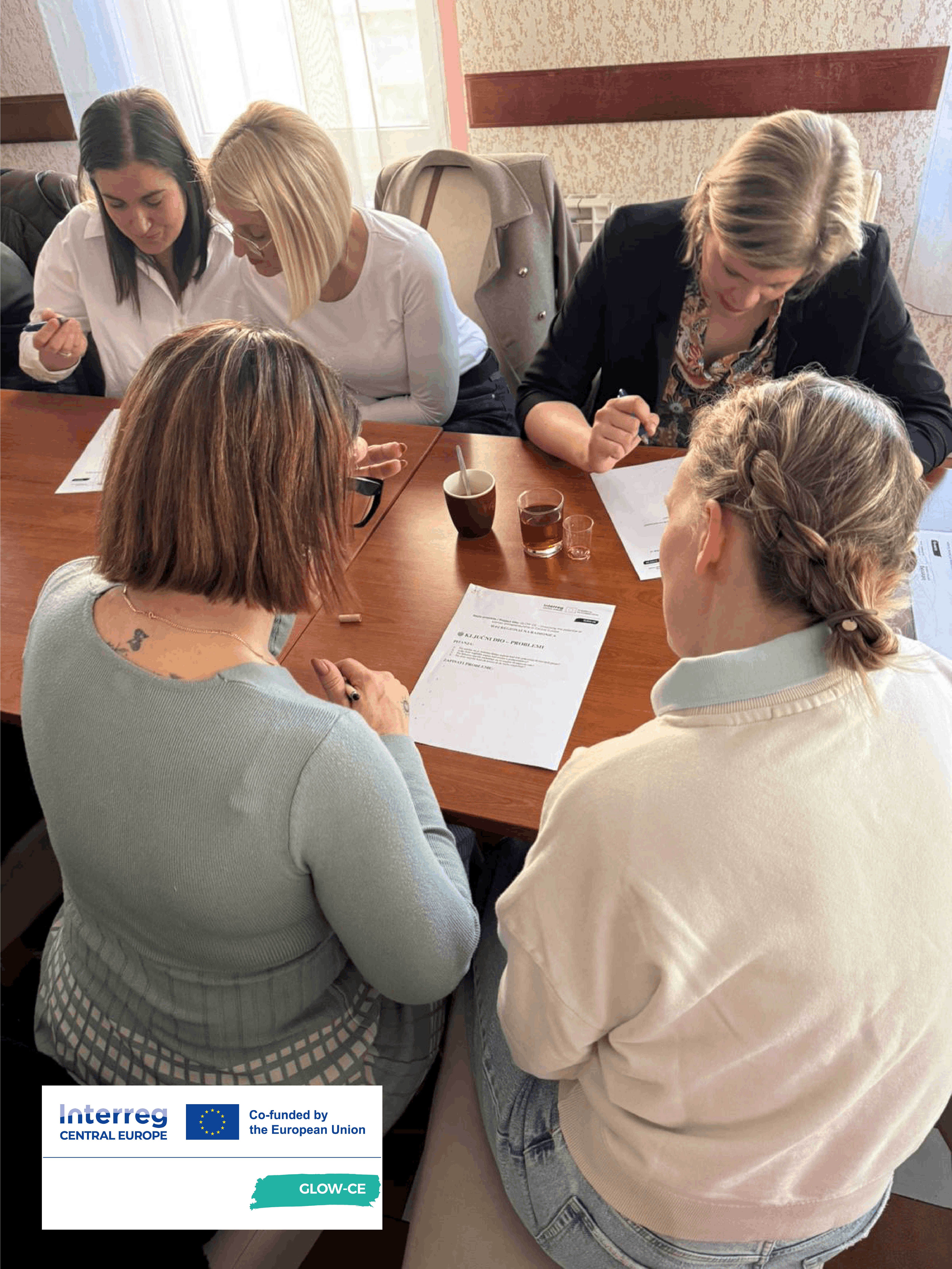
The workshop deliberately gathered women at different stages of their entrepreneurial journey – established entrepreneurs, women considering starting a business, and those not yet active but interested in doing so. Participants came from a range of sectors, including tourism, services, small-scale production and family businesses, which allowed for a wide variety of perspectives grounded in personal experience and the everyday realities of life in Gorski Kotar. The event was closely linked to the WP2 survey targeting the same group, serving as an additional channel to reach women who could not attend in person.
Rather than a series of presentations, the session was built around structured small-group work. Participants discussed key questions, documented their input, and mapped the challenges and possible solutions visually using post-it notes and group clustering. The results were then consolidated on a shared board, where participants jointly reviewed and prioritised the issues that mattered most to them. The participatory method encouraged open exchange and ensured that every voice contributed to the outcome.
A clear picture of interconnected barriers emerged from the discussion. Women pointed to a lack of clear, accessible information and the complexity of administrative procedures; financial obstacles such as limited initial capital and uncertain sustainability; and psychological barriers including fear of failure, self-doubt and a lack of support from their surroundings. Many also described the difficulty of balancing family responsibilities with business ambitions, alongside the weight of traditional expectations and a sense of isolation in smaller communities.
Just as clearly, participants articulated what would help. Their priorities included simpler, centralised information; practical training tailored to real needs in areas such as finance and marketing; and stronger networking and peer support among women entrepreneurs. They also called for more accessible funding, mentoring and advisory services, practical everyday support such as childcare, and – perhaps above all – a positive, encouraging environment that makes successful examples visible and builds confidence and initiative.
The workshop confirmed that women in Gorski Kotar are genuinely interested in entrepreneurship, but face a combination of structural, informational and psychological barriers that cannot be solved by financial support alone. Strong interest in the topic was further underlined when severe weather forced the original date to be postponed: although this reduced attendance at the rescheduled session, an accompanying survey gathered around 40 additional survey responses, mostly from women not yet active in business. The insights collected will now feed directly into the next steps of GLOW-CE – the design of pilot actions and locally tailored solutions – in line with the project’s commitment to building support together with the women it aims to serve.