
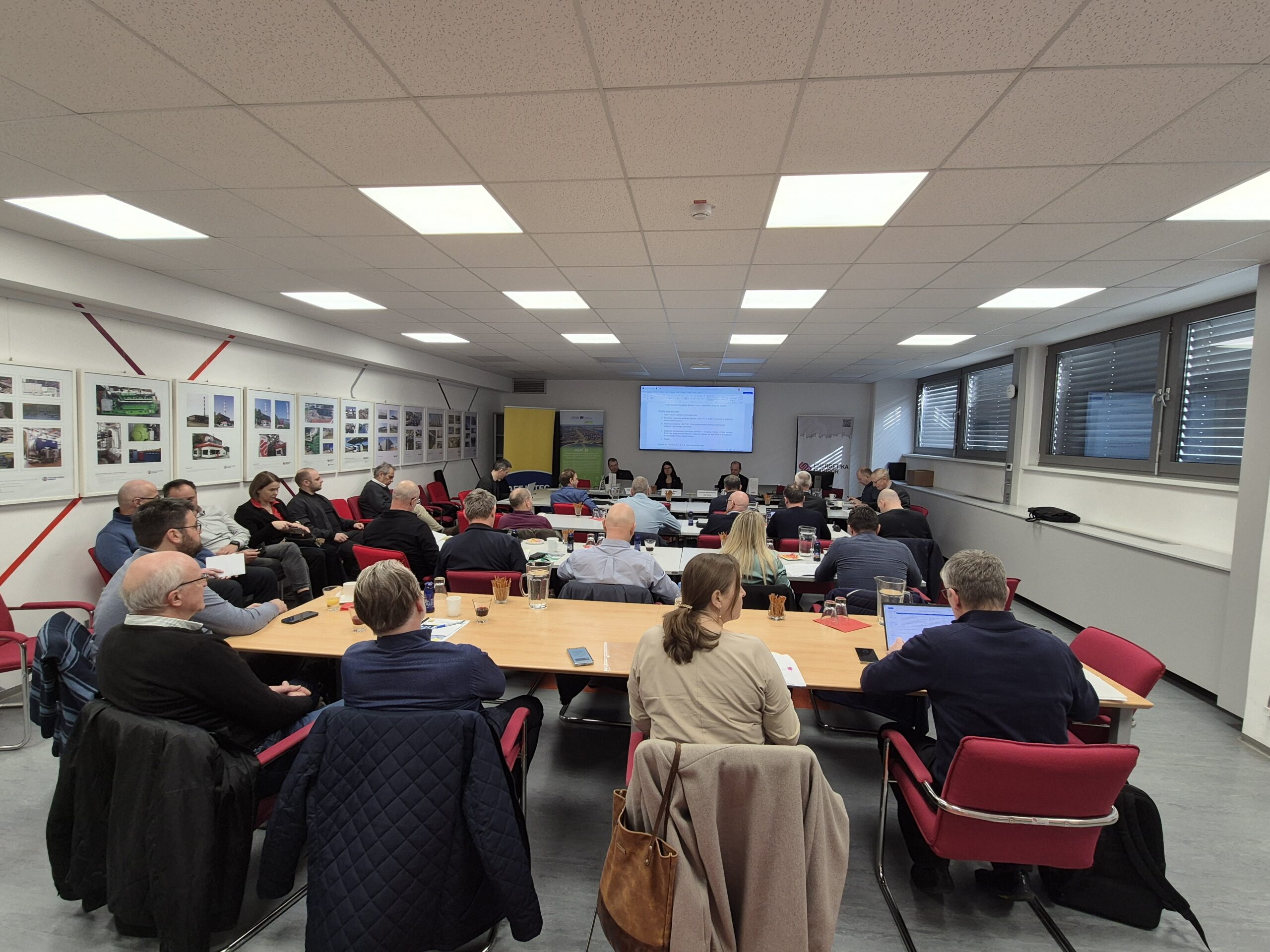
The workshop was organised in cooperation with Energetika Maribor, E-zavod, and AEE INTEC, and was held as part of the meeting of the District Heating Section of the Energy Chamber of Slovenia. The event provided an opportunity for practitioners and experts to exchange knowledge and explore practical tools that can support the long-term transformation of district heating systems towards more sustainable and efficient operation.
The programme started with a welcome address and introduction to the workshop, followed by a presentation by Ingo Leusbrock (AEE INTEC) on the transformation of district heating systems and the guidance provided in the IEA DHC Annex TS5 handbook. This was followed by a session led by Sabrina Metz (AEE INTEC) focusing on the Quality Management (QM) system, outlining key milestones, responsibilities, and tasks necessary for improving the management of district heating networks.
After a networking coffee break, the workshop continued with a presentation by Christian Ramerstorfer (AEE INTEC) on principles of QM design, key performance indicators (KPIs), and experiences from implementing quality management systems in district heating systems. The event concluded with an open discussion session where participants exchanged questions, insights, and experiences from their own operational contexts.
The workshop contributed to the objectives of the HEAT 35 project, which supports district heating operators and local authorities in developing strategies and tools for modernising heating systems and integrating renewable energy sources and waste heat. By strengthening knowledge exchange and practical capacity building, the project helps prepare district heating systems in Central Europe for a sustainable and resilient energy future.