
There is a moment, in any project about change, when the change stops being a plan and becomes a fact. For Green LaMiS, that moment is now.
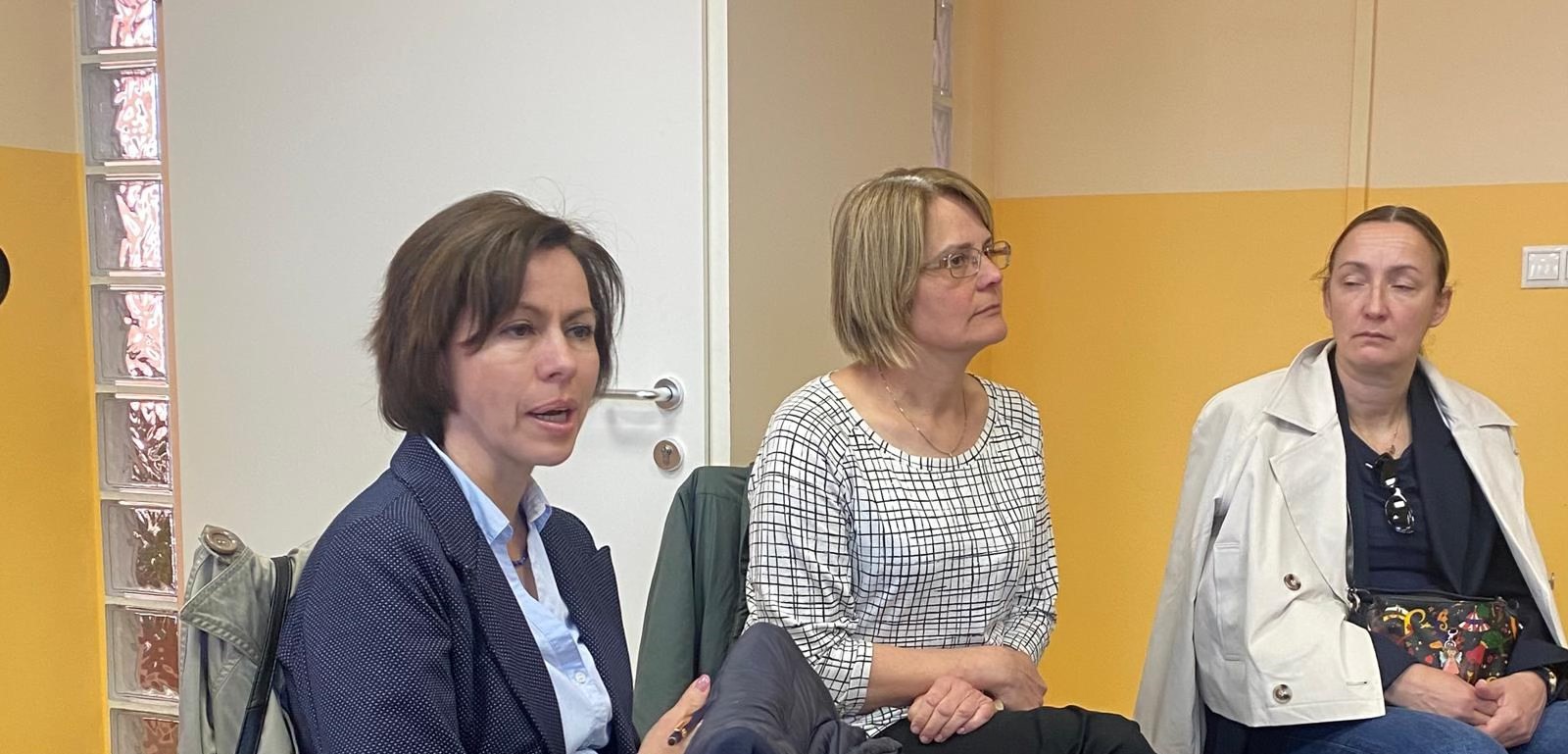
When the consortium gathered in Szombathely 22-23 April 2026, the conversation was no longer about what the project intends to do. Electric vehicles are running in the streets of Szombathely, Klis, and Bergamo — assigned to the workers who care for the elderly, the disabled, the vulnerable. Carbon footprints are being measured for the first time. Mobility managers exist where they did not before. Municipalities that had never thought about the environmental cost of a home visit are now tracking it, reporting it, discussing how to reduce it.
This is what Green LaMiS set out to prove: that greener urban social mobility is not a luxury for progressive capitals, but a practical and achievable step for mid-sized cities across Central Europe. The evidence is in.
The hardest part is not the technology
A visit to Palós social services in Szombathely made something clear that no report could fully capture. The workers there did not resist the shift to electric vehicles because the technology was difficult. They resisted it because change is always uncomfortable — until it isn’t. Once the vehicles were in place, once the charging infrastructure was there, once someone had taken the time to explain how it worked, the anxiety dissolved. What remained was something more valuable: a small but real conviction that this is a better way.
That shift — from reluctance to ownership — is the true measure of the project’s success. It cannot be captured in kilometres driven or CO2 saved, though those numbers matter too. It lives in the attitude of a driver who now thinks about routing before getting in the car, or a manager who factors in carbon footprint when planning a fleet replacement. Green LaMiS calls this a mindset shift. In Szombathely, it is already visible.
From pilot to policy
What happens after a pilot ends? This is the question that now drives the final phase of Green LaMiS. The project was never designed to electrify a handful of vehicles and move on. It was designed to show what is possible — and then to embed that possibility into the structures that outlast any EU funding cycle.
The Integrated Green Mobility Plans being developed with each partner municipality are one answer to that question: documents that translate the project’s findings into concrete local commitments. The policy recommendations being prepared for the final conference are another — a call to action addressed to decision-makers at city, national, and European level. The ambition is to produce something that functions like a manifesto: a clear, shared statement of what green social mobility requires from public policy, and why it cannot wait.
The capacity building programme — three workshops delivered across all partner cities simultaneously, in local languages — ensures that the knowledge generated by the project does not stay with the project team. It reaches practitioners, administrators, and local decision-makers who will still be in their roles long after the final report is filed.
The final stretch
The project concludes in late 2026 with a final conference in Bergamo. The format is still being shaped, but the intention is clear: not a standard project closure event, but a genuine conversation about legacy — what has been learned, what needs to change at the systemic level, and how the cities and organisations involved will carry this work forward.
Between now and then, the work continues: interviews, data, reports, workshops, videos, maps. But the most important work — proving that a different model is possible, and making that proof visible — is already done. Szombathely was a reminder of that.