
Gorica pri Slivnici – While rural areas across central Europe struggle with aging populations and youth outmigration, a new international initiative has started working on a concept that combines Community Based Organizations with Zero waste – with the goal to create better living conditions in peripheral rural areas.
International Partnership for Joint Solution
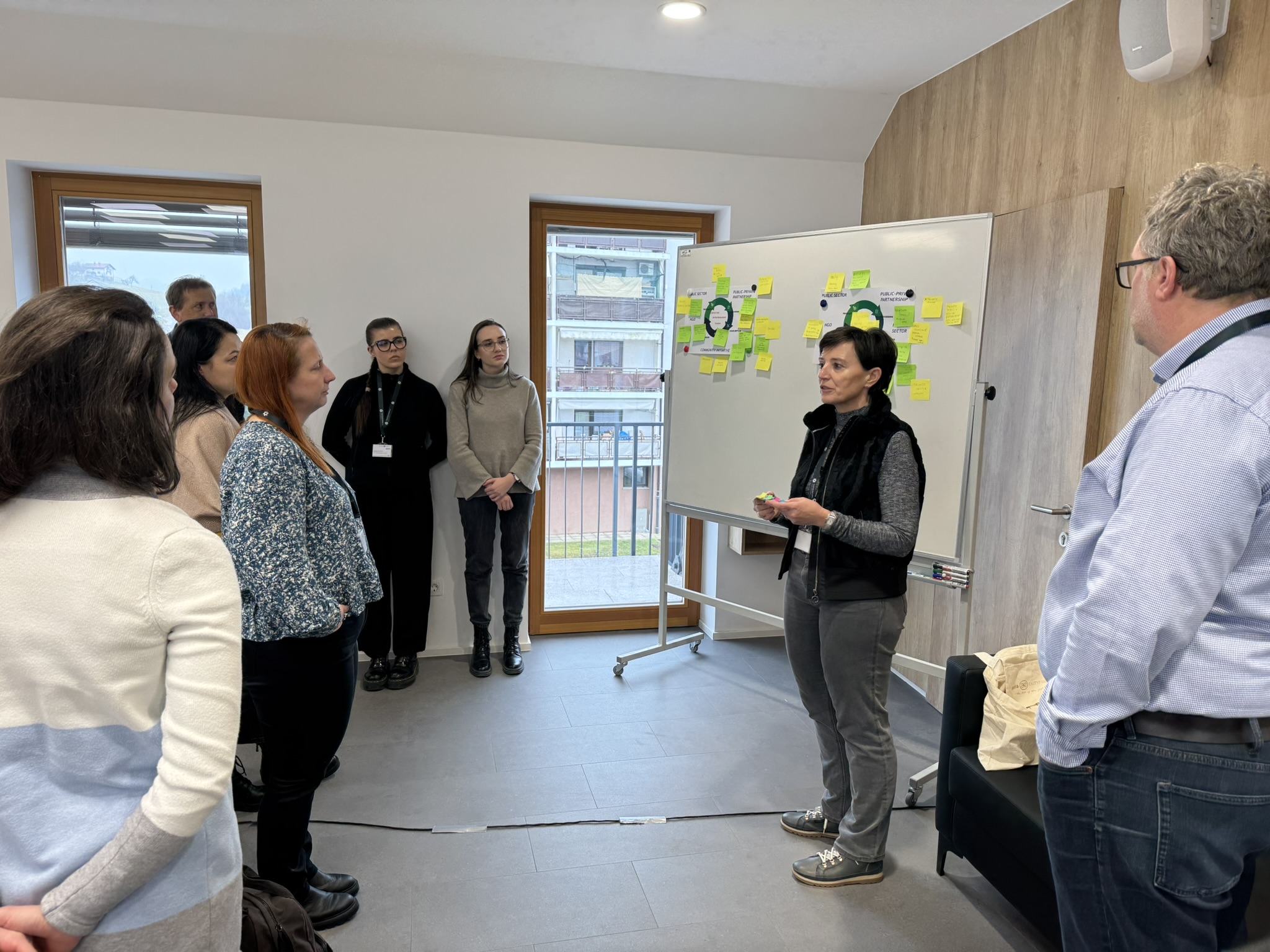
At the beginning of February, the AUREA Business Incubator in Gorica pri Slivnici became a hub for discussions on how “waste” can become a driver of development.
The RUREVIVE project, co-funded by the Interreg Central Europe programme, brings together partners from Slovenia, Croatia and Poland. The three regions share common challenges: outmigration of young people, an ageing population and undervalued local resources, ranging from agricultural products to cultural and natural heritage.
The Zero Waste Solution for Rural Challenges
RUREVIVE addresses these issues by setting up community-led “Zero Waste” organisations, where local communities, businesses, municipalities and organisations will work together to find practical solutions – from reuse and the circular economy to new skills and services.
Kick-Off Highlights
The kick-off meeting was dedicated to aligning partners on objectives, timeline and expectations. The event began with a hands-on workshop on what “waste” means in different languages and contexts, followed by a presentation of the project plan and the rules of the Interreg Central Europe programme.
The partners also went on field visits in the LAG From Pohorje to Bohor area to see local examples of good practice in reuse and sustainable resource management in the wider area, which will serve as inspiration for their further work.
What’s next?
In the coming months, the project partners will first collect needs and ideas in the three participating areas and then design and test a series of pilot trainings on Zero Waste and its application in entrepreneurship, education and communication. The training content will be recorded and compiled into a Dynamic Zero Waste Handbook and a toolkit for community organisations, while partners and stakeholders will establish a transnational network of Zero Waste centers.
The Consortium
Led by the Development Agency Kozjansko (Slovenia), the consortium includes the Zagorje Development Agency (Croatia), the Local Action Group Barycz Valley (Poland), and academic expertise from the Department of Geography at the Faculty of Arts, University of Ljubljana.
The project started on 1 February 2026 and will last 24 months.