
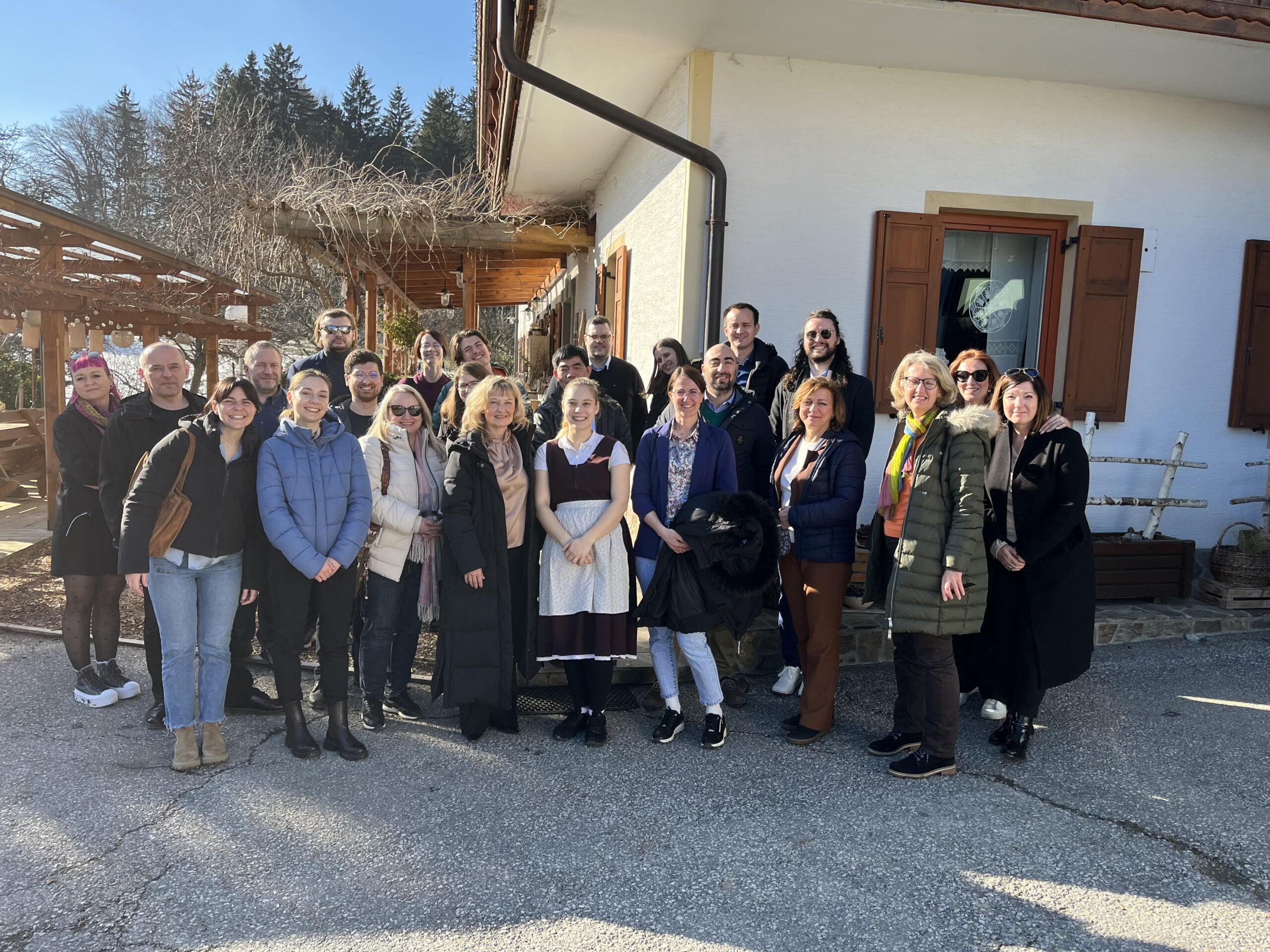
The Food4CE consortium gathered for its concluding Consortium Meeting on 25 February 2026 at the University of Maribor in Slovenia, marking a pivotal moment of reflection and strategic planning as the project reached its formal end.
This internal meeting offered partners the opportunity to take stock of three years of collaborative effort, from research and mapping to tool development, experimentation, policy engagement and transnational cooperation. Representatives from all regions shared insights into local achievements, challenges overcome, lessons learned and opportunities ahead.
Beyond a simple review, discussions focused strongly on sustainability and legacy: how to ensure that the platforms (KTP and MP), Innovation Hubs, digital tools and networks established by Food4CE continue to deliver value after the project’s conclusion. Participants emphasised that the strength of Food4CE lies not only in its tangible outputs, such as tools, methodologies and plans, but also in the relationships and trust built among actors across borders.
The partner meeting concluded with a shared commitment to sustaining active cooperation, leveraging project results and ensuring that Alternative Food Networks remain central to regional innovation strategies.
This preparatory exchange also set the stage for the public Final Conference held the following day, aligning the consortium’s vision with the broader stakeholder engagement planned for 26 February.
Field Insights from Maribor
A highlight of the meeting was the study visit to Tourist Farm Kovačnik and Turistična kmetija pri Baronu, two exemplary agro-food realities located in the Maribor region.
At Tourist Farm Kovačnik, partners explored a long-standing family-run organic farm that combines sustainable primary production, on-site processing and short supply chain distribution with rural hospitality. The farm is recognised for its environmentally friendly practices, including organic cultivation, renewable energy use and circular resource management. By integrating agricultural production with tourism and direct sales, Kovačnik demonstrates how multifunctional farming models can strengthen local economies while preserving biodiversity and traditional knowledge.
The visit continued at Turistična kmetija pri Baronu, an eco-certified farm and restaurant deeply rooted in regional culinary heritage. The farm operates according to ecological principles, offering seasonal, locally sourced dishes prepared from its own produce and from neighbouring farms. Its approach highlights the added value of territorial branding, short food chains and close cooperation between producers and consumers. For the consortium, this provided a tangible example of how Alternative Food Networks can generate economic resilience, environmental sustainability and social cohesion at local level.
The study visit effectively translated Food4CE’s strategic discussions into real-world practice, showcasing business models that embed innovation, sustainability and community engagement into everyday operations.
Stay tuned for future updates and follow-up initiatives as Food4CE’s results continue to inspire sustainable innovation in Alternative Food Networks across Central Europe!
Special thanks to the University of Maribor for their warm hospitality and excellent organisation of the final consortium meeting.