
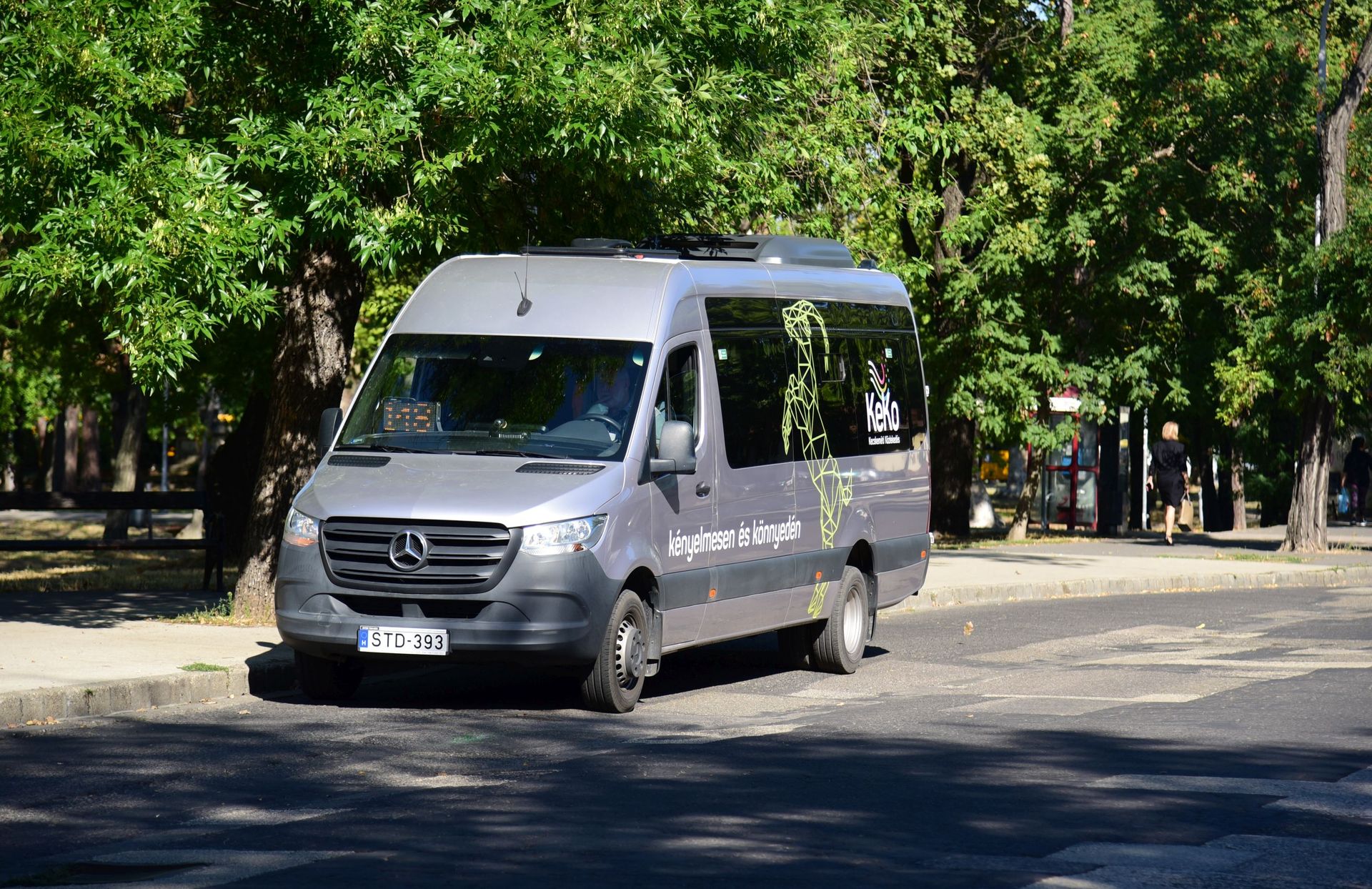
A new article published by GreenPATH project partner Mobilissimus explores the growing role of Demand Responsive Transport (DRT) in shaping more flexible and sustainable mobility systems. The publication examines how these innovative transport solutions can respond to real travel needs, improve accessibility in peripheral areas and optimise public transport operations.
Demand Responsive Transport refers to public transport services that adapt routes or schedules according to passenger demand, rather than operating strictly on fixed timetables and predefined routes. These flexible systems can help reduce unnecessary vehicle mileage, improve service coverage in low-density areas and offer more personalised mobility options.
The article highlights that while the concept of DRT is not new in Hungary, it has evolved significantly in recent years. Early models were often designed to address social mobility needs in remote areas, whereas today’s solutions increasingly rely on digital platforms, real-time data and integrated booking systems.
From pilots to real mobility solutions
Through several Hungarian examples — including initiatives in Budapest, Nyíregyháza, Kecskemét, Gödöllő and Zalaegerszeg — the article illustrates how demand-responsive services are being tested and refined in different contexts. These pilots demonstrate how flexible mobility can support industrial areas with irregular work shifts, improve connections to rail services, and provide transport solutions for sparsely populated neighbourhoods.
Importantly, the publication underlines that technology is no longer the main barrier. Instead, the key challenges lie in governance, contractual frameworks, and the need to involve users and stakeholders in designing mobility solutions that truly respond to local needs.
The GreenPATH perspective
These reflections align closely with the objectives of the Interreg CENTRAL EUROPE GreenPATH project, which aims to develop and test innovative mobility management tools and sustainable commuting solutions across functional urban areas in Central Europe.
Within GreenPATH, local and regional authorities, public transport operators, universities and research institutions collaborate to experiment with new mobility services, data-sharing approaches and digital tools that make daily commuting more efficient and environmentally friendly. The project also supports the integration of innovative solutions into existing Sustainable Urban Mobility Plans (SUMPs).
Demand-responsive mobility is one of the promising approaches being explored to complement traditional public transport networks and improve accessibility in areas where fixed routes may not be the most efficient solution.
Looking ahead
As cities and regions seek to reduce emissions and promote sustainable travel behaviour, flexible mobility services like DRT can play an increasingly important role. However, their long-term success depends on integration with existing transport networks, user-friendly booking systems and supportive policy frameworks.
The Mobilissimus article provides valuable insights into how these systems are evolving in Hungary and offers lessons that can contribute to broader discussions on future mobility solutions across Central Europe.
Read the full article (HU) here: https://iho.hu/hirek/rugalmas-mobilitas-a-mindennapokban-mit-adhat-az-igenyvezerelt-kozlekedes-1