
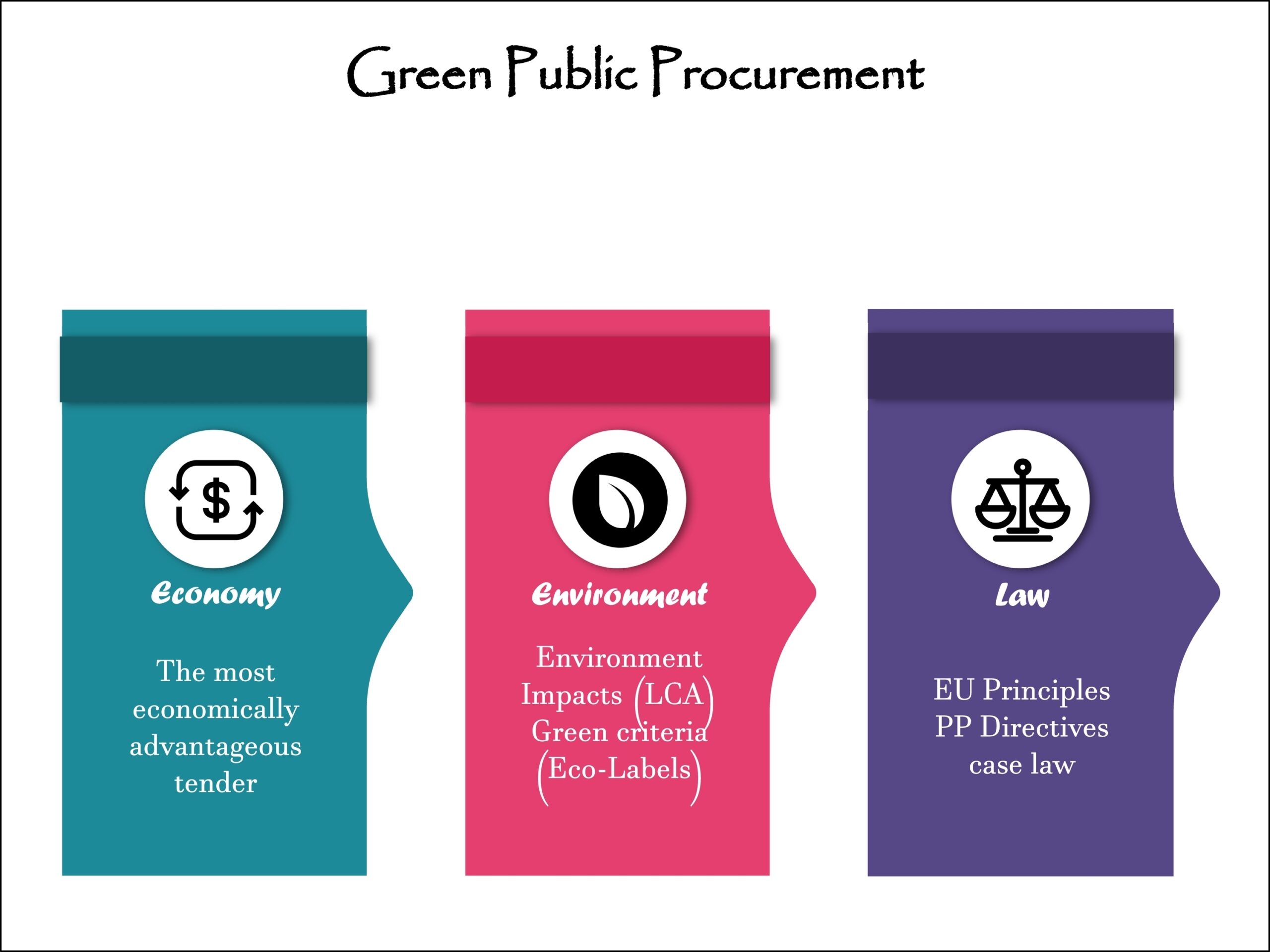
Here is an in-depth breakdown of Hungary’s Green Public Procurement (GPP) strategy, sector-specific legal mandates, and the meticulous criteria used to evaluate public tenders.
The primary objective of Hungary’s National Green Public Procurement Strategy for the 2022–2027 period is clear: green procurement procedures must constitute at least 30% of the total number of public procurements in Hungary by 2027.
To achieve this, the strategic framework actively addresses legacy hurdles, including contracting authorities’ historical risk aversion and a lack of specialized green expertise. By standardizing definitions and enforcing stricter environmental criteria than standard statutory requirements, the strategy aligns Hungary with major international and European obligations to reduce emissions and advancing circular economy action plans.
Hungary’s strategy heavily leverages the European Commission’s voluntary GPP criteria developed by the Joint Research Centre (JRC-IPTS). This framework establishes scientifically validated, verifiable lifecycle environmental standards across several key public sectors, such as:
- Technology: ICT devices (computers, monitors, tablets, smartphones) and data centers.
- Public Works & Transport: Road design, street lighting, public space maintenance, and road transport.
- Daily Operations: Electricity, indoor cleaning services, furniture, paints, and varnishes.
While the EU framework offers a voluntary baseline, Hungarian law mandates strict compliance across several targeted sectors:
A. Energy Efficiency
Central government bodies, ministries, and defense organizations are legally required to purchase only high energy-efficiency products, services, and buildings. This is designed to help Hungary hit its cumulative end-use energy savings target: an annual 0.8% reduction between 2021 and 2030 relative to the 2016–2018 base years.
B. Clean Road Transport Vehicles
When procuring or leasing vehicles (categories M1–M3 for passengers and N1–N3 for freight), contracting authorities must hit minimum quotas for “clean” or zero-emission vehicles. This applies to major public utility services, including waste collection, public transport, and parcel delivery.
C. Public Catering Services
Price can no longer be the sole deciding factor in public catering tenders. Bidders must hold valid “FELIR” food chain registration identifiers and fresh kitchen hygiene ratings. Furthermore, a strict Short Supply Chain Mandate requires at least 80% of the procured food value to come from local products or a short food supply chain involving at most one intermediary.
D. The 13 Green Product Groups
This pivotal regulation mandates strict environmental specifications for 13 distinct categories when contracts reach EU value thresholds. Notable examples include:
-
-
Copying and Graphic Paper: Must contain at least 50% recycled fibers or carry an official Type I Ecolabel.
-
Indoor Cleaning Products: At least 70% of cleaning agents must comply with EU Ecolabel or Hungarian “Környezetbarát Termék” standards regarding aquatic toxicity.
-
Furniture: 70% of wood components must be certified by FSC or PEFC, with formaldehyde emissions strictly capped below E1 thresholds.
-
ICT & Imaging Equipment: Requires a minimum 3-year warranty, battery health tracking software, high energy-efficiency ratings, and strict bans on halogenated plastics.
-
Infrastructure, design, and construction projects are subject to highly technical evaluation matrices overseen by the Ministry of Construction and Transport. Tenders utilize standardized scoring methods, such as direct or inverse proportionality formulas, verified continuously by technical inspectors.
The primary environmental evaluation metrics include:
|
Metric PPTX |
Measurement Unit PPTX |
Assessment & Verification Method PPTX |
|
Construction & Demolition Waste |
Weight % or Volume % |
Bidders must calculate waste separation by EWC/HAK codes. Verified via weighbridge tickets and landfill receipts. |
|
Reused/Recycled Raw Materials |
m3, weight %, or volume % |
Tracks the percentage of raw materials originating from prepared-for-reuse or recycled waste. Verified by delivery notes. |
|
Construction Carbon Footprint |
Tons of CO2 equivalent (CO2e) |
Measures emissions from material transport. Gives preference to local materials within a 50 km radius and Euro 5+ vehicles. |
|
Damage Mitigation Measures |
Score points |
Points awarded for explicit preventative actions (e.g., watertight tarpaulins, dust nets, rubber vibration dampening pads). |
|
Absolute Yes/No Commitments |
Binary points |
Flat points for guaranteeing selective waste management or ensuring 50%+ of heavy transport vehicles meet Euro III+ standards. |
|
In-house Added Value |
% |
Calculated as: Added Value=Construction Revenue-External Subcontractor Costs. |
Beyond construction, architectural design competitions must structurally prioritize sustainability from inception. Juries award points for optimized natural shading, passive energy solutions, low-carbon building materials, local biodiversity integration, and extensive rainwater harvesting systems.
Conclusion
Hungary’s roadmap to 2027 bridges the gap between high-level European climate targets and everyday public purchasing. By turning environmental considerations into mandatory, measurable tender metrics, the country is systematically reshaping its public market, proving that the greenest option is increasingly the only way to win a public contract.