
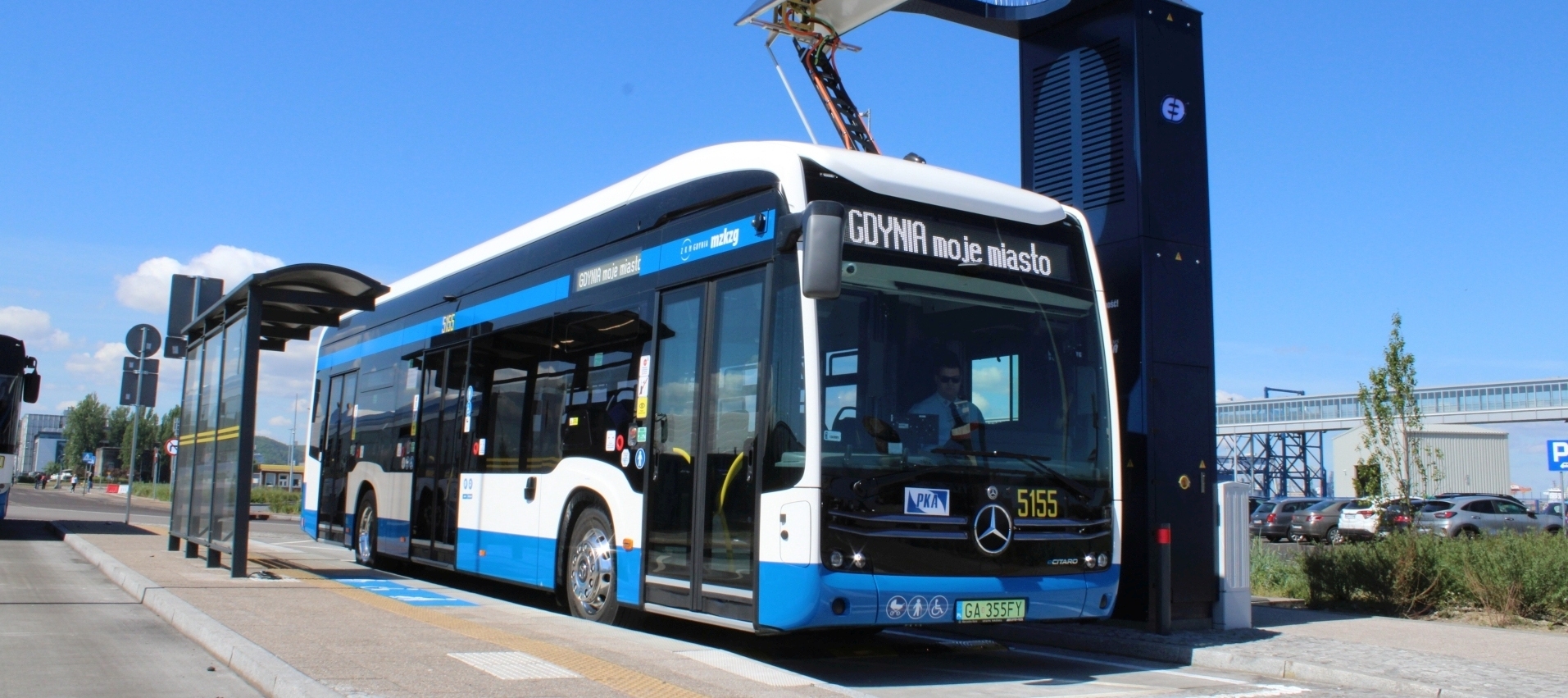
Pilot concept
The digital model developed within the pilot replicates real operating conditions of selected trolleybus and bus lines in Gdynia. It integrates timetable data, vehicle parameters, energy consumption profiles, and infrastructure constraints to simulate end-to-end energy flows across the system. The model evaluates different electrification configurations, including:
- In-Motion Charging (IMC) trolleybus operation
- conventional trolleybus systems with overhead infrastructure
- battery electric bus (e-bus) operation with opportunity charging
A key objective is to determine the optimal balance between infrastructure investment (e.g. overhead contact system extensions and substations) and fleet requirements, while ensuring operational feasibility over long-term service lifecycles. The simulation framework allows the testing of multiple scenarios to assess system robustness, energy demand, and operational constraints.
Implementation approach
The pilot was structured into three main phases:
Preparation phase
Development of the digital twin architecture, definition of system boundaries, data collection from real operations, and calibration of input parameters based on line 190 measurements and operational records.
Validation phase
Verification of the model against real-world operational data to ensure accuracy in energy consumption, vehicle performance, and timetable feasibility across selected lines.
Simulation phase
Execution of more than 110 simulation scenarios for the Western Corridor, comparing electrification options and assessing infrastructure needs, vehicle fleet requirements, and battery state-of-charge constraints over typical operational cycles.
Roles of the partners
The Gdynia pilot was implemented through close cooperation between public transport operators, technical experts, and system developers:
- PKA Gdynia / Gdynia Bus Transport Company Ltd – pilot lead and operational data provider
- KRUCH Railway Innovations – development of the digital twin model and energy flow simulation tool (EFS), including contribution to the simulation work and provision of key data inputs
- Municipal and technical stakeholders – validation of operational assumptions and electrification planning inputs
- City authorities – strategic alignment with long-term mobility and electrification goals
Key results and outcomes
The Gdynia pilot delivered several important insights:
- validation that all studied lines can operate under both IMC trolleybus and e-bus scenarios
- identification of differences in fleet size requirements between electrification options
- confirmation that infrastructure extensions are required for full IMC operation on several lines
- demonstration that electric bus deployment may increase fleet size needs on certain routes
- identification of line-specific feasibility, with some routes requiring no infrastructure upgrades
- proof of scalability of the digital twin approach for broader network planning
Impact and outlook
The Gdynia pilot highlights the value of simulation-based planning in supporting circular and energy-efficient electrification strategies in public transport. By enabling evidence-based comparisons of infrastructure-heavy versus battery-based solutions, the approach supports:
- more efficient investment planning
- reduced risk in long-term electrification decisions
- optimised energy use and operational design
- improved integration of circular economy principles into transport planning
The methodology is scalable and transferable to other cities and corridors, providing a robust framework for planning future-proof, resource-efficient, and circular public transport systems. A video summarizing the Gdynia pilot and its outcomes is available here: https://youtu.be/7XgOEWFs-0Y