
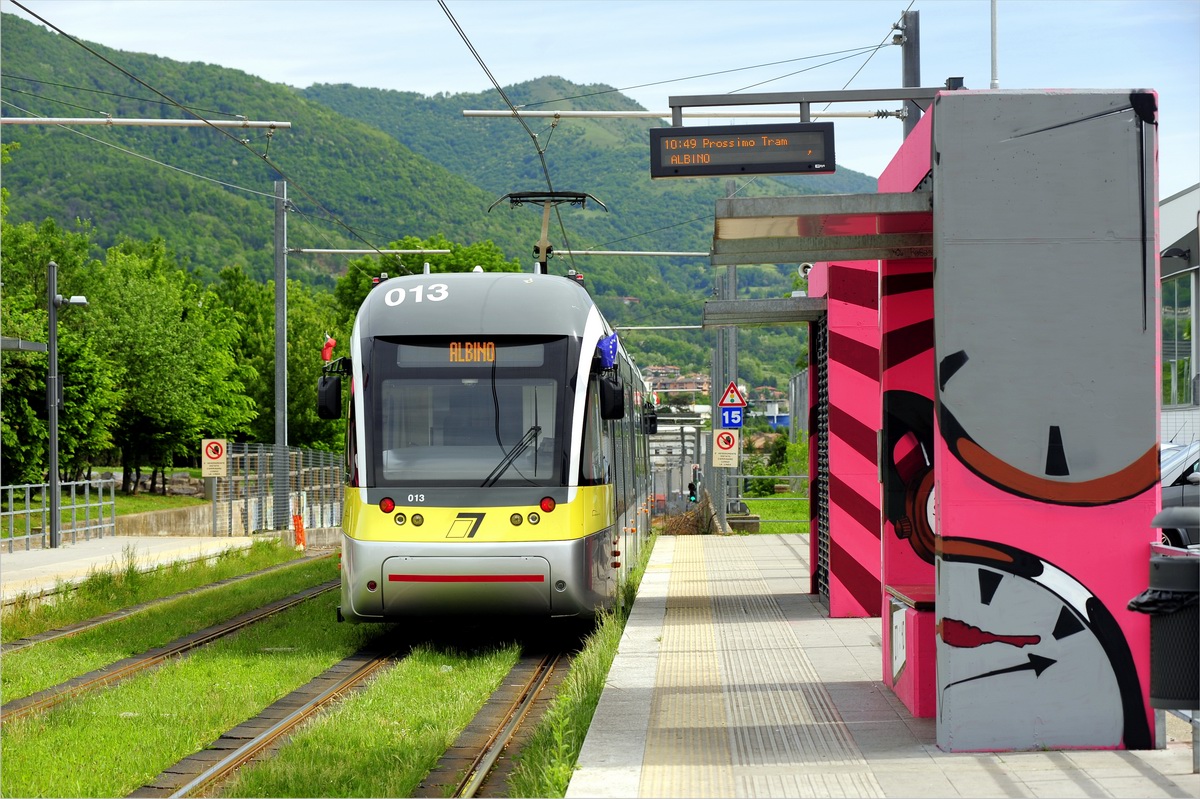
Pilot concept
Standard tram vehicles operating in daily passenger service were equipped with sensor systems, edge computing units, and communication devices to continuously monitor:
- overhead contact line condition
- pantograph–catenary interaction
- vehicle operational and energy data
- infrastructure-related dynamic behaviour
In parallel, a digital twin of the tram’s electrical network was developed to run extensive Energy Flow Simulations. These simulations enabled the analysis of hundreds of operational scenarios, supporting optimisation of energy use and braking energy recovery. By combining real-world data with simulation outputs, the pilot enables data-driven validation, early fault detection, and improved system optimisation.
Implementation approach
The pilot followed a structured three-phase approach:
Preparation phase
Definition of system requirements, sensor selection, preassembly and testing of modular units, and setup of data management and analytics systems.
Implementation phase
Installation of monitoring systems on a selected tram vehicle in Bergamo, activation of real-time data collection, calibration of sensors, and validation of system performance through comparison with simulation results.
Evaluation phase
Assessment of system performance under real operational conditions, identification of infrastructure anomalies, analysis of energy optimisation potential, and evaluation of predictive maintenance capabilities.
Roles of the partners
The Bergamo pilot was implemented through close cooperation between:
- ATB Bergamo – system operator and local implementation partner
- KRUCH Railway Innovations GmbH & Co. KG – system design, data architecture, and simulation modelling
- Ci4Rail GmbH – provision of rail-certified onboard hardware for data collection and transmission
- PANTOhealth GmbH – monitoring and diagnostic methods for pantograph–overhead line interaction
- Kruch-SIDOS – system integration and technical support during deployment and early operation
During the initial operational phase, system behaviour was supervised in real time in cooperation with all technical partners, ensuring stable operation and reliable data acquisition.
Key results and outcomes
The Bergamo pilot delivered important preliminary results:
- early detection of infrastructure irregularities and vibration patterns
- improved understanding of pantograph–overhead line interaction under real operating conditions
- validation of real-world data against simulation models
- identification of maintenance-relevant hotspot locations
- improved insights into energy consumption and optimisation potential
- enhanced decision support for maintenance and operational planning
Impact and outlook
The pilot demonstrates the strong potential of combining predictive maintenance with digital energy simulation in urban rail systems. This integrated approach enables:
- extended infrastructure and component lifetime
- reduced maintenance interventions and material use
- improved energy efficiency through scenario-based optimisation
- more reliable and data-driven infrastructure management
The Bergamo pilot provides a scalable model that can be transferred to other urban transport systems, supporting the broader transition towards circular, data-driven, and energy-efficient public transport networks across Europe. A video summarizing the Bergamo pilot and its outcomes is available here: https://youtu.be/oqyrS6mzCLo