
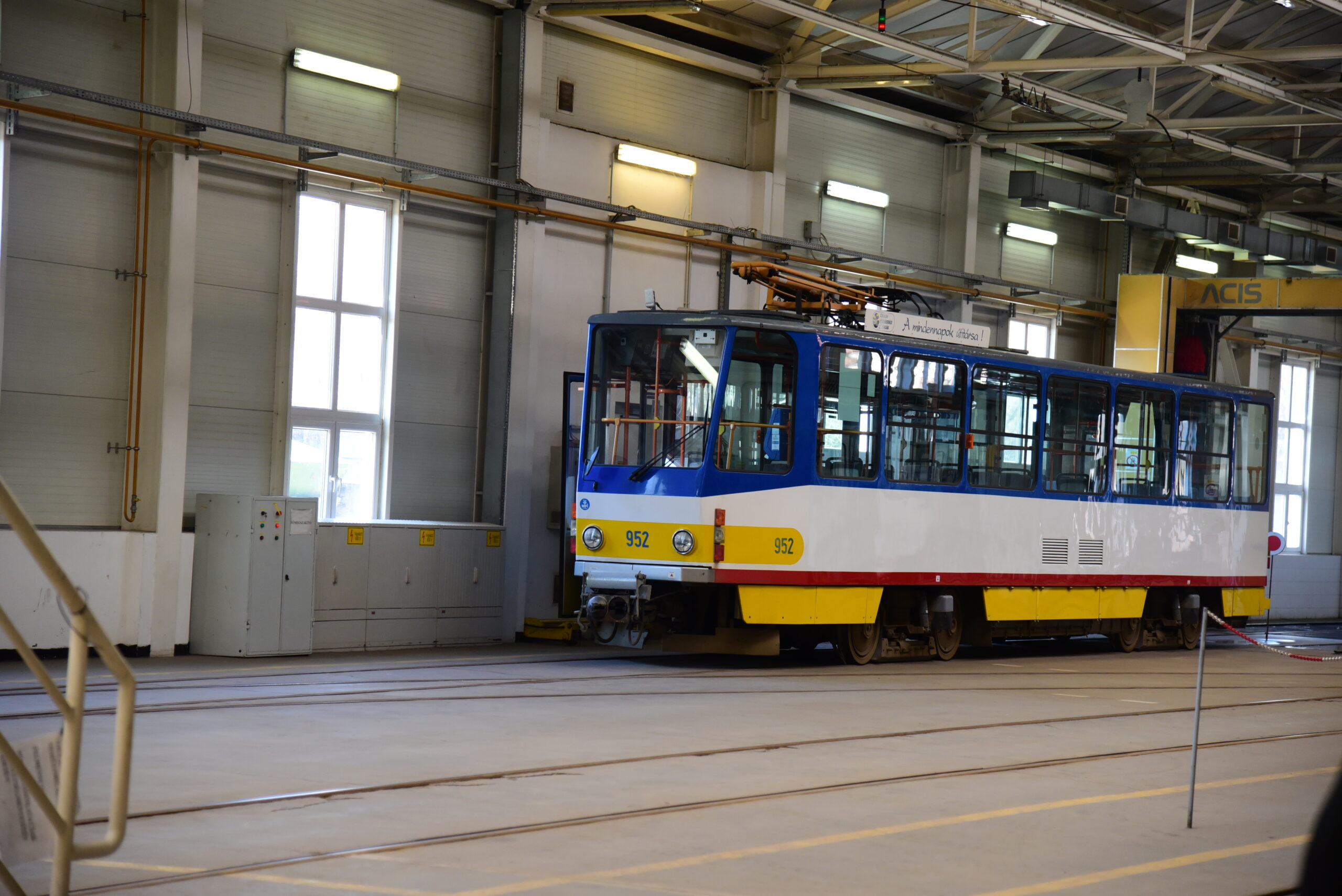
Pilot concept
The pilot implemented by Szegedi Közlekedési Társaság (SZKT) focused on the development and deployment of a universal door opening and closing control unit for Tatra T6A2 and KT4D-ME trams. The original control units, produced between 1992 and 1997, are no longer manufactured and spare parts are unavailable on the market. At the time of the pilot, 99 units were in operation across 28 tram vehicles in Szeged, meaning that the failure of a single unit could result in vehicle downtime and operational disruption. To address this challenge, the pilot developed a modern, parameterisable, and diagnosable replacement unit based on contemporary vehicle-industry components, supported by custom diagnostic software and approved by the relevant transport authorities. By replacing a small but critical component rather than the entire vehicle, the pilot ensures the continued operation of the existing tram fleet and significantly extends its service life.
Implementation approach
The pilot followed a structured development and deployment process:
Feasibility and design phase
Assessment of technical requirements, reverse engineering of the existing system, and identification of suitable modern replacement components.
Development phase
Design and production of prototype units, including integration of diagnostic capabilities and adaptation to regulatory requirements.
Testing and certification phase
Laboratory and field testing within SZKT’s technical environment, followed by external certification (TÜV) and national regulatory approval.
Deployment phase
Manufacture and installation of 40 units in operational tram vehicles, prioritising vehicles with higher failure risk or already defective systems.
Operational monitoring phase
Integration of performance monitoring into regular maintenance systems to ensure long-term reliability and support continuous improvement.
Roles of the partners
SZKT – Szegedi Közlekedési Társaság – system operator, responsible for development, testing, certification coordination, and fleet integration
External engineering and certification partners – supporting design, validation, and regulatory approval processes
Key results and outcomes
The Szeged pilot demonstrated several key outcomes:
- successful remanufacturing of a critical tram control component
- extension of the operational lifetime of 28 tram vehicles
- reduced dependency on unavailable spare parts and external suppliers
- improved operational reliability of the tram fleet
- development of in-house technical know-how for future component replacement
- alignment with circular economy principles through component-level lifecycle extension
Impact and outlook
The pilot demonstrates how remanufacturing and component substitution strategies can effectively address obsolescence in public transport systems. By replacing a single critical electronic unit instead of retiring entire vehicles, the approach maximises the value of existing assets, reduces waste, and significantly extends vehicle lifetimes. The Szeged pilot provides a scalable and transferable model for other transport operators facing similar challenges with ageing fleets and unavailable spare parts, supporting a broader transition towards circular and resource-efficient public transport systems. A video summarizing the Szeged pilot and its outcomes is available here: https://youtu.be/6XrQIU4qmFE