
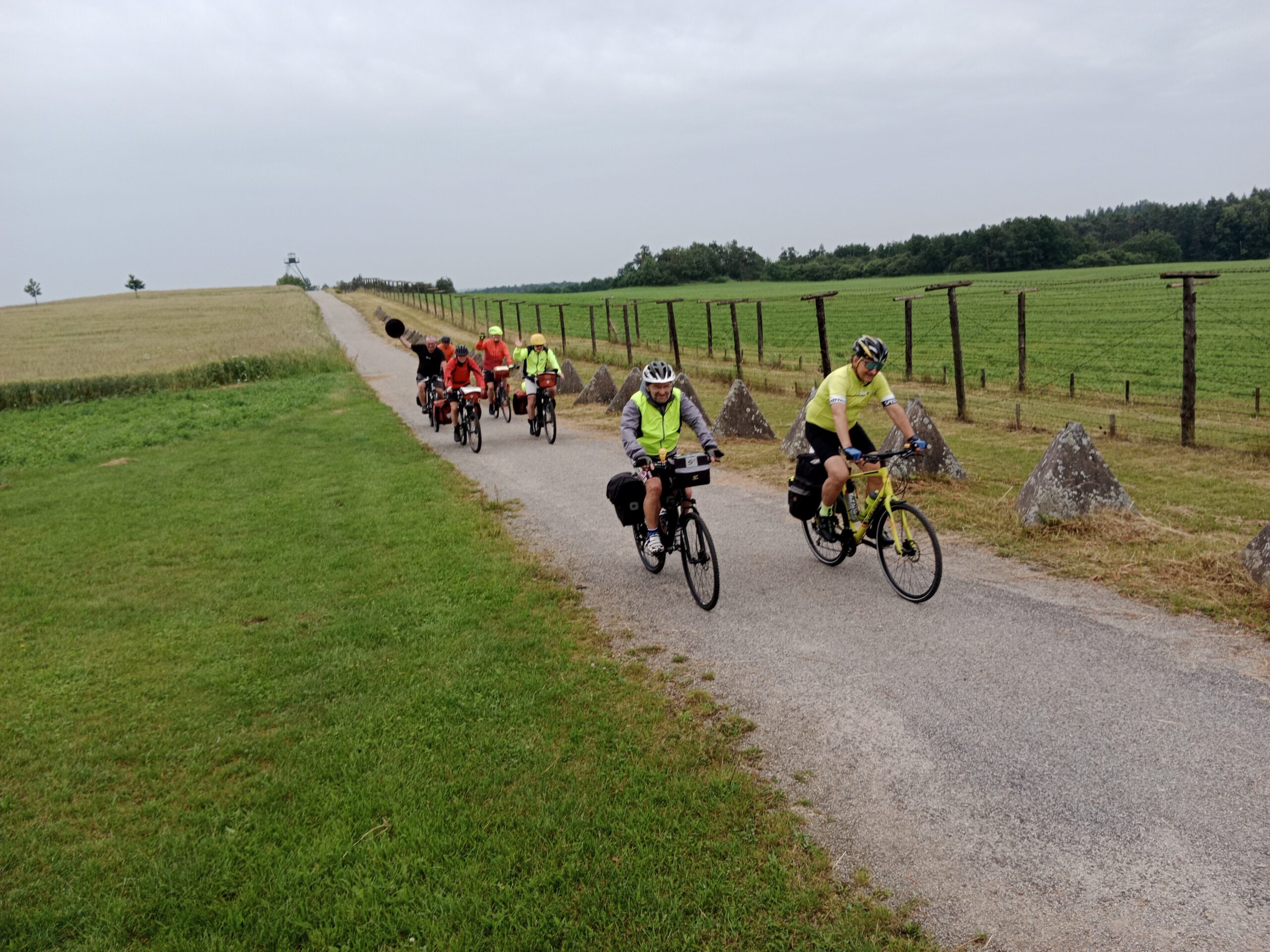
Methodology Overview: A Multi-National Perspective
The study’s findings are based on a standardized survey conducted during the peak season of 2025 (July–September). A total of 275 valid responses were collected across eight Central European countries: Austria, Czechia, Croatia, Germany, Hungary, Poland, Slovakia, and Slovenia. Data collection combined direct on-site interviews at key viewpoints and rest areas with indirect distribution via QR codes and paper forms at hotels and tourist information centres. This balanced approach ensured a multinational sample that accurately reflects the perspectives of diverse target groups, from long-distance tourers to regional day-trippers.
Key Findings & Visitor Profiles: Who cycles EuroVelo 13?
The data paints a clear picture of the typical EuroVelo 13 – Iron Curtain Trail user. The market is currently predominantly male (69%), with the most significant age group being 30–59 years old (72%). Interestingly, seniors (60+) represent 14% of the total, though this segment is notably stronger in countries like Austria (38%).
Key behavioral patterns include:
- Trip Duration: Short recreational trips dominate, with 30% of users on one-day trips and 21% on half-day excursions. However, multi-day tourism remains a vital segment, accounting for 49% of the total.
- Travel Groups: Most cyclists travel in pairs (37%) or with friends (31%), while solo travellers make up 15%. Organised group tours are nearly non-existent (1%), highlighting the route’s appeal to independent adventurers.
- Motivations: Nature and active sport are the primary drivers (28% each), closely followed by an interest in history and sightseeing (20%).
- Independent Planning: An overwhelming 91% of respondents organize their trips themselves, relying heavily on digital resources.
Infrastructure and Services Evaluation: High Satisfaction with Room for Improvement
Cyclists generally perceive the EuroVelo 13 – Iron Curtain Trail infrastructure and hospitality very positively. Hospitality in accommodation and dining received the highest marks, reflecting a warm welcome for cyclists along the corridor. Signposting is also rated as “good” or “very good” by most users, though its consistency varies across borders.
However, the study identifies critical areas for development:
- Surface Quality: This remains the most variable factor, with several countries showing higher dissatisfaction rates, suggesting that infrastructure investment should prioritize surface consistency.
- Specialised Services: The availability of services for cyclists, such as repair points and rentals, is perceived as weaker than general hospitality.
- E-bike Readiness: With 28.4% of users already on e-bikes, there is an urgent need to expand charging infrastructure to accommodate this growing, higher-spending segment.
Economic Impact and Spending Patterns
The EuroVelo 13 is a significant driver of local economies. The majority of cyclists fall into a moderate spending bracket, typically expending between €21 and €60 per person per day.
- Gastronomy is King: The largest share of expenditure goes to dining and refreshments (44%), followed by regional products and souvenirs (19%).
- Accommodation Trends: 41% of multi-day cyclists change their accommodation every night, confirming the ICT’s role as a long distance cycle route. Hotels and B&Bs are the preferred choices, though camping remains structurally important for 23% of visitors.
Strategic Recommendations: Navigating the Future
Based on the qualitative results, the study provides a roadmap for management and marketing:
Management Recommendations:
- Prioritize Surface Quality: Close the gaps in surface consistency to ensure a seamless cross-border experience.
- Boost Intermodality: Strengthen bike-and-rail integration to reduce car dependency and improve accessibility.
- Digital Integration: Ensure accurate GPX tracks are integrated into major platforms like Komoot (the most used app at 60%) and Mapy.com (the most used App in Czechia and Slovakia).
- E-bike Infrastructure: Explicitly expand charging station networks to future-proof the route.
Marketing Recommendations:
- Promote Gastronomy: Use regional food experiences as a primary marketing hook to increase economic impact.
- Stage-Based Itineraries: Instead of promoting the entire 10,500 km corridor, package the route into manageable 3–7 day segments to attract independent cyclists.
- Target the “Gender Gap”: Develop campaigns aimed at increasing participation among female cyclists.
- “Return to Complete” Concept: Build loyalty by encouraging visitors to return and explore different stages of the trail.
Conclusion: A Sustainable Vision for EuroVelo 13
The qualitative monitoring study confirms that EuroVelo 13 has achieved remarkable visitor loyalty, with a staggering 95% of respondents intending to visit again. By focusing on infrastructure consistency, embracing the e-bike revolution, and leveraging its unique historical and natural narrative, the Iron Curtain Trail is well-positioned to remain a flagship of sustainable European tourism. As an independent, nature-oriented, and economically vital corridor, the EuroVelo 13 – Iron Curtain Trail not only preserves history but also pedals toward a greener, more connected future for Central Europe.