
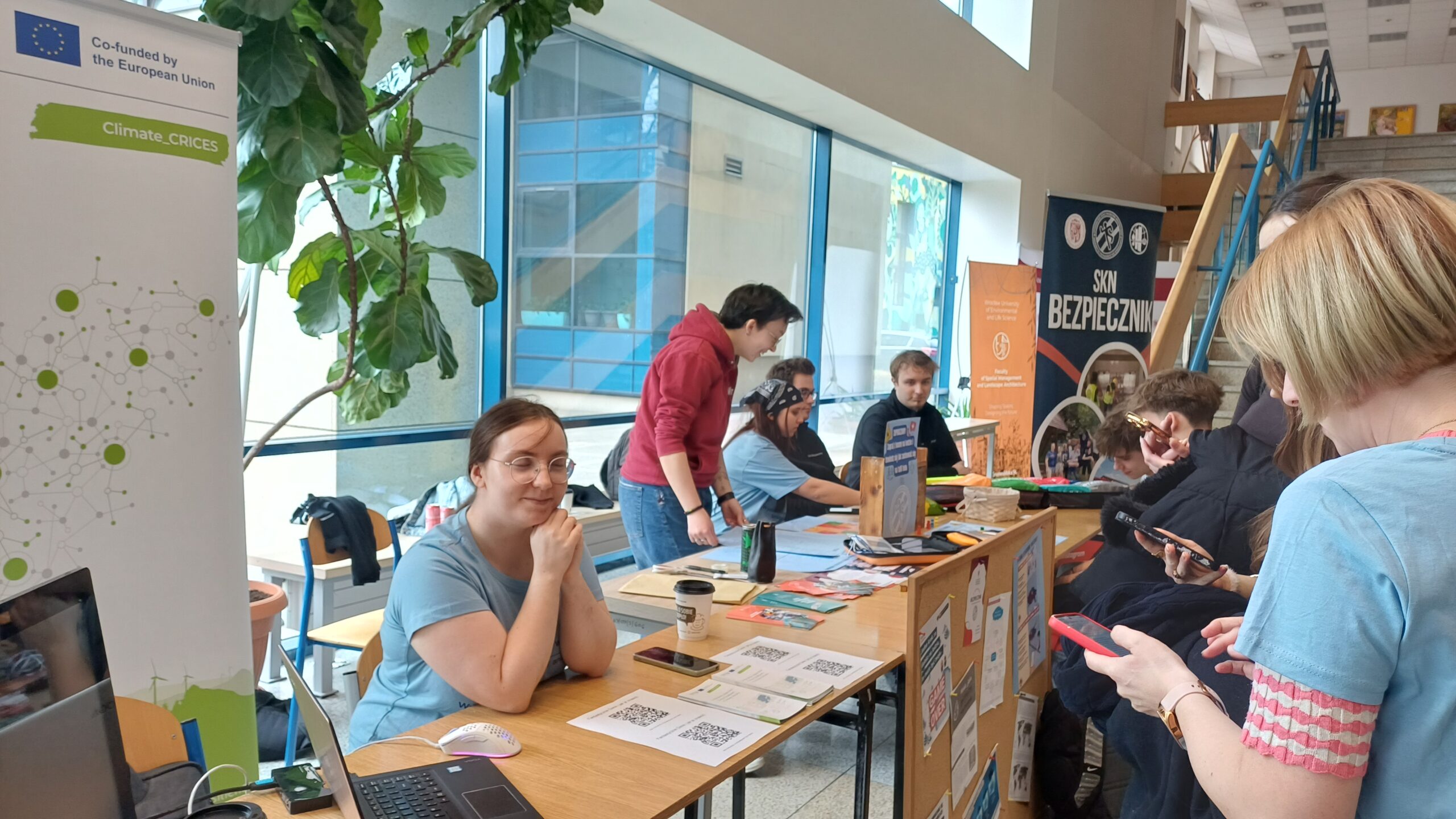
The project was featured at the Climate Days of the Wrocław Academic Community, an interdisciplinary event hosted across universities in Wrocław. As part of the programme, researchers from the Wrocław University of Environmental and Life Sciences (UPWr) organised a study visit to the Agro- and Hydrometeorology Observatory in Wrocław-Swojec. Participants explored both traditional and modern meteorological measurement techniques and gained insight into how environmental data are collected, processed, and applied. The session also introduced innovative tools and mobile data sources developed within the Climate_CRICES project, highlighting new ways of communicating climate information.
The project was further presented during World Water Day 2026 at UPWr, which brought together representatives of public institutions and administration. Contributions focused on making water-related data more accessible and actionable for non-expert users, as well as showcasing the Climate_CRICES dashboard concept. Project representatives also participated in expert panel discussions addressing key challenges in water management, such as governance across river basins, the role of nature-based solutions, and the importance of data-informed decision-making. In parallel, an interactive stand titled “Fantastic Data and Where to Find It” engaged participants in exploring available climate and environmental datasets.
On 24 March 2026, the project was represented at the national conference “Safety and Resilience”, organised by the Ministry of Climate and Environment. The event marked the launch of work on Poland’s new climate adaptation strategy. During the expert panel “Science – how to use knowledge supporting adaptation and where to find it”, discussions highlighted the need to bridge the gap between data availability and practical implementation. Key messages emphasised that while large volumes of data exist, challenges remain in interpretation, integration into policy, and translating knowledge into action. Participants also underlined the importance of interdisciplinary cooperation and more coherent workflows linking science, policy, and implementation.
Through participation in these events, the Climate_CRICES project strengthened dialogue between science and policy, engaged with a wide range of stakeholders, and promoted the uptake of innovative, data-driven solutions for climate resilience.