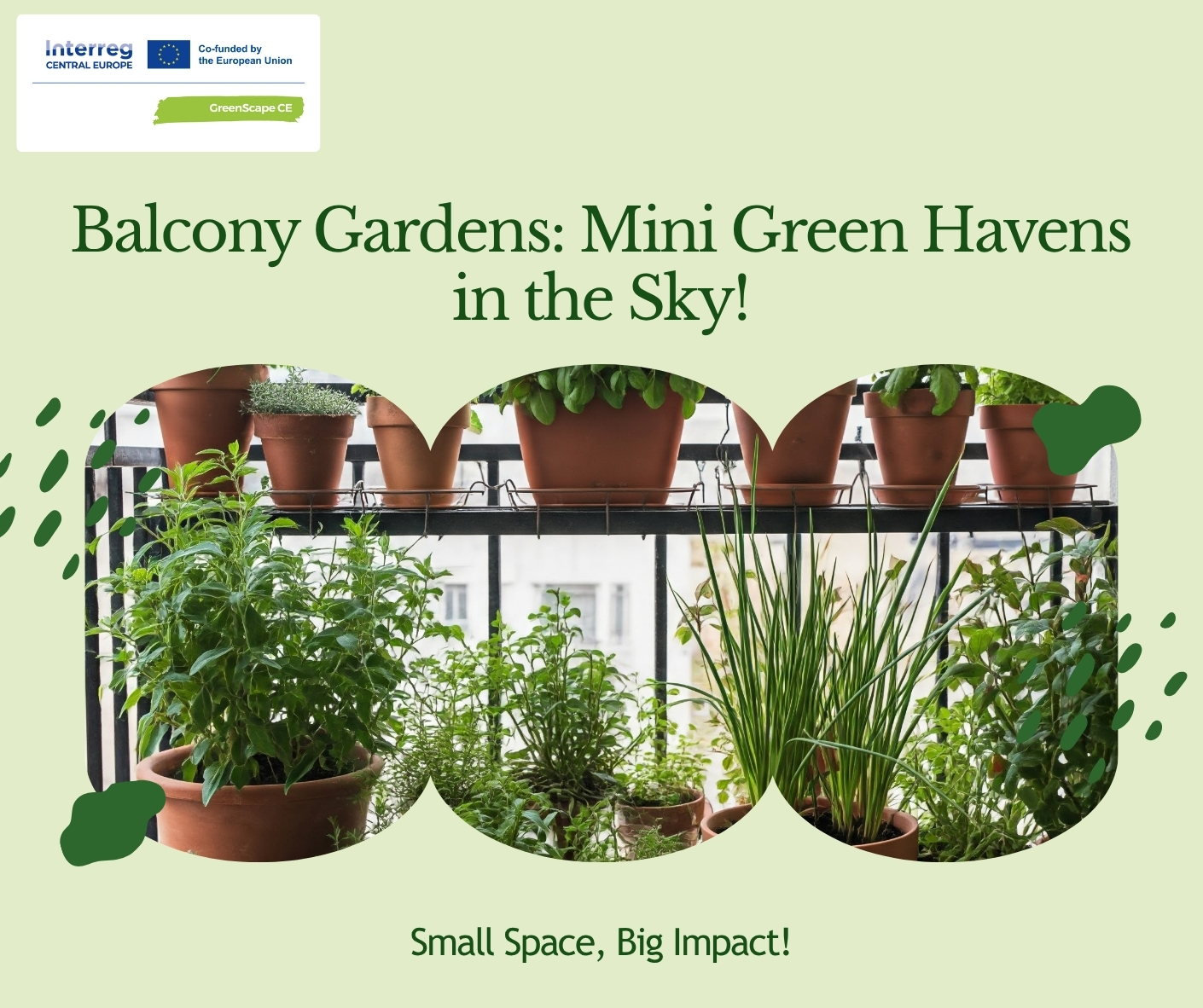
In the context of dense urban environments, even the smallest green spaces can contribute meaningfully to climate adaptation and urban resilience. Balcony Gardens – compact, vertical green installations – are emerging as accessible and impactful nature-based solutions (NbS). As highlighted by the GreenScape CE project, these miniature ecosystems offer a range of environmental, social, and aesthetic benefits for residents and cities alike. Balcony Gardens are not just decorative features; they serve multiple climate and health functions, making them a practical option for widespread urban greening. Key Benefits of Balcony Gardens: • Natural temperature regulation: Vegetation on balconies provides shading and cooling, reducing indoor temperatures during summer months. • Air quality improvement: Plants help capture fine dust and filter urban pollutants, contributing to healthier living environments. • Noise reduction: Dense foliage acts as a buffer, softening ambient city noise and improving acoustic comfort. • Urban biodiversity: Even small gardens can attract birds, insects, and pollinators, fostering biodiversity in built-up areas. • Climate mitigation: Greenery contributes to carbon sequestration, increases humidity, and supports microclimate regulation. When designed correctly – with appropriate containers, root-protective membranes, and efficient irrigation systems – balconies can safely host thriving green spaces without compromising building structures. Balcony Gardens embody the GreenScape CE vision: transforming grey infrastructure into multifunctional green assets that support climate resilience, improve urban health, and enhance the quality of life across Central European cities.